Waking up to a perfect cup of coffee is one of life’s simple pleasures, but what happens when your once-reliable coffee grinder starts letting you down? If your morning brew tastes flat, inconsistent, or just not right, the culprit might be dull burrs. Many coffee enthusiasts face this dilemma, wondering if their trusty grinder is destined for the bin or if there’s a way to restore its grinding prowess. This article delves into the intriguing question of whether you can sharpen old coffee grinder burrs, exploring the methods, challenges, and what it truly means for your coffee quality.
Understanding Coffee Grinder Burrs
At the heart of every great cup of coffee is a consistent grind. Unlike blade grinders, which haphazardly chop beans into uneven fragments, burr grinders work by milling beans between two abrasive surfaces—one stationary and one rotating. This precise action cuts the beans into uniform particles, which is the “holy grail” for optimal flavor extraction. When your burrs are sharp, they slice cleanly, ensuring each coffee particle is roughly the same size. This uniformity is crucial for even extraction; if your grind is inconsistent, some particles will over-extract (leading to bitterness) while others under-extract (resulting in sourness), creating a muddy and undesirable brew.
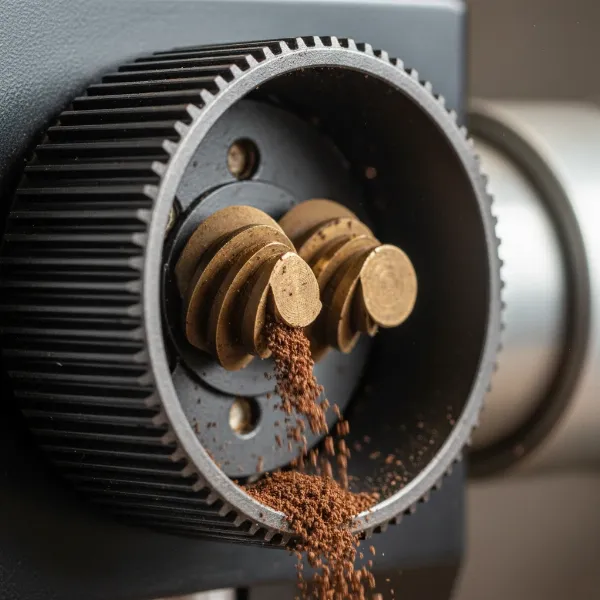 Close-up of conical coffee grinder burrs, illustrating grinding mechanism for consistent particle size
Signs Your Coffee Grinder Burrs Are Dull
Identifying dull burrs is the first step in addressing your grinder’s performance issues. Keep an eye out for these tell-tale signs:
- Inconsistent Grind: Perhaps the most obvious indicator. You might notice a mix of very fine dust and large chunks (often called “boulders”) in your ground coffee, even when set to a specific grind size.
- Adjusting to a Finer Setting: If you find yourself constantly needing to dial your grinder to a finer setting than usual to achieve the same grind size, your burrs are likely losing their edge. They’re no longer efficiently cutting the beans.
- Longer Grinding Time: Dull burrs have to work harder to process beans, leading to noticeably longer grinding cycles for the same amount of coffee.
- Changes in Taste: A tell-tale sign of uneven extraction from dull burrs is a bitter, sour, or generally “off” taste in your brewed coffee.
- Rough Burr Feel: If you can safely access and inspect your burrs (when the grinder is unplugged, of course), run your finger lightly over the teeth. Sharp burrs should feel consistently crisp, while dull ones might feel rough, rounded, or lumpy.
Can You Really Sharpen Coffee Grinder Burrs?
This is the million-dollar question for many coffee lovers. The short answer is: yes, to some extent, but it’s often more complex and less effective than you might hope, especially for electric burr grinders. Burrs are not like simple knives with a single, easily accessible blade. Their intricate, multi-faceted design with dozens of cutting teeth makes precision sharpening a significant challenge. While it’s possible for certain types of burrs and dedicated enthusiasts, it’s essential to manage expectations. For many, cleaning or replacement offers a more reliable path to better coffee.
Methods for “Sharpening” Coffee Grinder Burrs
When considering how to address dull burrs, two main approaches often come up:
The Rice “Sharpening” Method (and Its True Benefit)
You might have heard the tip to grind uncooked rice in your coffee grinder to clean or even sharpen the burrs.
- How it’s done: Place about a quarter cup of uncooked rice into your bean hopper and run your grinder as you would with coffee beans.
- Claimed benefits: Many suggest that the hard structure of the rice helps to “chip away” at the dull surface of the burrs, thereby sharpening them. It’s also widely touted for removing accumulated coffee oils and residue.
- Reality: While grinding rice can effectively clean your burrs by dislodging stubborn coffee oils and old grounds, its ability to truly sharpen worn steel or ceramic burrs is highly debated and generally considered minimal at best. Rice can remove rust and buildup, which might make the burrs seem sharper by improving their cutting action, but it’s unlikely to restore a factory-sharp edge. For burrs that primarily crush beans, cleaning is paramount to prevent rust.
|
Our Picks for the Best Coffee grinder in 2026
As an Amazon Associate I earn from qualifying purchases.
|
||
| Num | Product | Action |
|---|---|---|
| 1 | Cuisinart Coffee Grinder, Electric One-Touch Automatic Burr Coffee Grinder with 18-Position Grind Selector, Cup Size Selector for 4 – 18 Cups, DBM-8P1, Black Stainless |

|
| 2 | SHARDOR Professional Conical Burr Coffee Grinder, Coffee Bean Grinder with 48 Grind Settings for Espresso, Drip & French Press, Upgraded Anti-Static Technology, Precision Timer, Stainless Steel |
|
| 3 | Hamilton Beach Fresh Grind Electric Coffee Grinder for Beans, Spices and More, Stainless Steel Blades, Removable Chamber, Makes up to 12 Cups, Black |
|
| 4 | Automatic Coffee Machine, 20-Bar Pressure Espresso Maker with Built-in Grinder, 15-Precision Settings, One-Touch Latte & Cappuccino System, Smart Self-Cleaning |
|
| 5 | Cuisinart Coffee Grinder, One Touch Control Coffee Bean Grinder with Stainless Steel Bowl and Blades, 2.5 oz/70g Capacity Enough for 12 Cups, On/Off Switch with Safety Interlock, DCG-20BKN, Black |
|
| 6 | Wancle Electric Coffee Grinder, Spice Grinder, One Touch Coffee Mill for Beans, Spices and More, with Clean Brush Black |
|
| 7 | Amazon Basics Electric Coffee Grinder, Coffee Bean and Spice Grinder, With Heavy-Duty Stainless Steel Grind Blades |
|
| 8 | Hamilton Beach Custom Grind Electric Coffee Grinder for 4-14 Cups, One-Press Hand-Free Operation with Auto Shutoff, Removable Grinding Bowl For Easy Pour and Clean, Stainless Steel (80406) |
|
| 9 | OXO Brew Conical Burr Coffee Grinder - Silver, Stainless Steel Burrs, One-Touch Automatic Smart Grind |
|
| 10 | BLACK+DECKER One Touch Coffee Grinder, 2/3 Cup Coffee Bean Capacity, Spice Grinder, One Touch Push-Button Control -150 Watts -Stainless Steel Blades |
|
Manual Filing for Dedicated Enthusiasts
For those with patience, steady hands, and the right tools, manual sharpening is a more direct approach, primarily suited for accessible burrs in manual grinders.
- Tools needed: A small, triangular diamond needle file is often recommended.
- Process:
- Disassembly and Cleaning: Crucially, you cannot sharpen dirty burrs. Coffee oils bake onto the metal, creating a sticky residue that mimics dullness. Fully disassemble your grinder and thoroughly clean the burrs. Soak them in hot water with a coffee detergent (like Cafiza) or scrub with a stiff toothbrush and soapy water. Ensure they are completely dry before proceeding.
- Securing the Burr: Hold the burr firmly. A vice with soft jaws is ideal to prevent damage and keep the burr stable.
- Matching the Angle: Carefully place the diamond file against the existing cutting angle of each burr tooth. The goal is not to create a new angle but to precisely follow the factory geometry. This step requires extreme precision to avoid altering the burr’s original design, which is critical for consistent grinding.
- Gentle Filing: Push the file forward along the tooth with light pressure. Do not apply pressure on the backstroke. Repeat this action 2-3 times per tooth.
- Rotate and Repeat: Move to the next tooth and meticulously repeat the process until all cutting surfaces have been addressed.
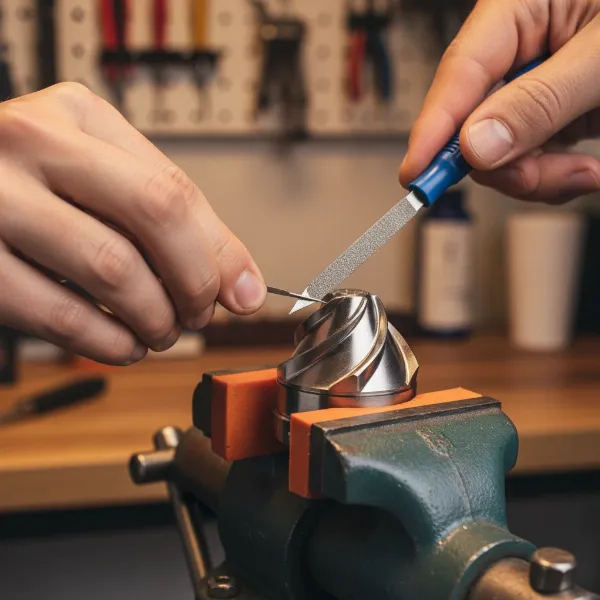 Person using a diamond file to carefully sharpen a coffee grinder burr
“When burrs become dull, they stop cutting the beans and start crushing them instead. This creates an uneven mixture of large chunks (boulders) and dust (fines), leading to an extraction nightmare where some coffee is sour and under-cooked while the rest is bitter and burnt.”
When Sharpening Might Not Be Enough (or Recommended)
While the idea of restoring your burrs is appealing, there are several situations where sharpening is either impractical, ineffective, or simply not the best solution:
- Severe Wear or Damage: If your burrs have significant physical damage, nicks, or are severely worn down, sharpening will likely not restore them. At this point, the geometry is compromised beyond simple re-edging.
- Electric Grinder Complexity: Disassembling and reassembling many electric burr grinders can be complicated, risky, and may void your warranty. The internal components are often more intricate and less accessible than those of manual grinders.
- Ceramic Burrs: Ceramic burrs are incredibly hard and challenging to sharpen with conventional tools. Attempting to do so often leads to damage rather than improvement. Replacement is almost always the only viable option for worn ceramic burrs.
- Cost vs. New Burrs/Grinder: For many grinders, especially mid-range or entry-level models, the time, effort, and specialized tools required for effective sharpening might outweigh the cost of simply replacing the burr set or upgrading to a new grinder. High-quality replacement burrs are often available from manufacturers or third-party suppliers.
Maintenance to Extend Burr Life
Prevention is always better than cure. Regular maintenance can significantly extend the life of your coffee grinder burrs and delay the onset of dullness:
- Regular Cleaning: This is the most critical step. Coffee oils build up and become rancid, clogging the burrs and hindering their performance. Use a stiff brush, vacuum, or dedicated grinder cleaning tablets (like Urnex Grindz) regularly. Disassemble your grinder for a deeper clean periodically.
- Avoid Grinding Foreign Objects: Be careful not to let small rocks or other hard objects accidentally fall into your bean hopper, as these can quickly chip or dull your burrs.
- Use High-Quality Beans: While not directly related to sharpening, fresh, properly roasted beans grind more consistently and leave less problematic residue than stale or overly oily beans.
Conclusion
So, can you sharpen old coffee grinder burrs? While some manual intervention with a diamond file can provide a degree of restoration for certain burrs, it’s a meticulous process with no guarantee of achieving factory sharpness or perfect grind consistency. For most electric grinders and ceramic burrs, it’s often more practical to focus on thorough cleaning or consider replacement burrs. Ultimately, understanding the signs of dullness and maintaining a rigorous cleaning routine are your best allies in ensuring your coffee grinder continues to deliver delicious, consistent grounds for years to come. What’s your go-to method for keeping your coffee grinder in top shape?
Frequently Asked Questions
How often do coffee grinder burrs need sharpening?
True sharpening of coffee grinder burrs is rarely needed for home users, as burrs are designed for durability. Instead, regular deep cleaning every 1-3 months is recommended to remove coffee oils and buildup, which commonly mimic dullness. Replacement of burrs is generally considered after several years of consistent daily use, depending on the material and grinder quality.
Can you sharpen ceramic burrs?
Sharpening ceramic burrs is generally not recommended or feasible for the average home user. Ceramic is an extremely hard material, requiring specialized tools and techniques that are not readily available. Attempting to sharpen them manually can easily damage the burrs, making replacement the only viable option when they become dull or worn.
Is it better to sharpen or replace burrs?
For most coffee enthusiasts, especially with electric grinders, replacing dull burrs is often the more effective and reliable solution than attempting to sharpen them. Replacement burrs restore the grinder to its original performance specifications, ensuring optimal grind consistency and coffee flavor. Sharpening can be a temporary fix for manual grinders, but achieving factory precision is difficult.
How do you clean coffee grinder burrs effectively?
To effectively clean coffee grinder burrs, start by unplugging the grinder. Disassemble the burrs according to your grinder’s manual. Use a stiff brush, vacuum, or compressed air to remove loose grounds. For stubborn oil buildup, soak metal burrs in hot, soapy water with a coffee detergent, then scrub thoroughly and ensure they are completely dry before reassembly.