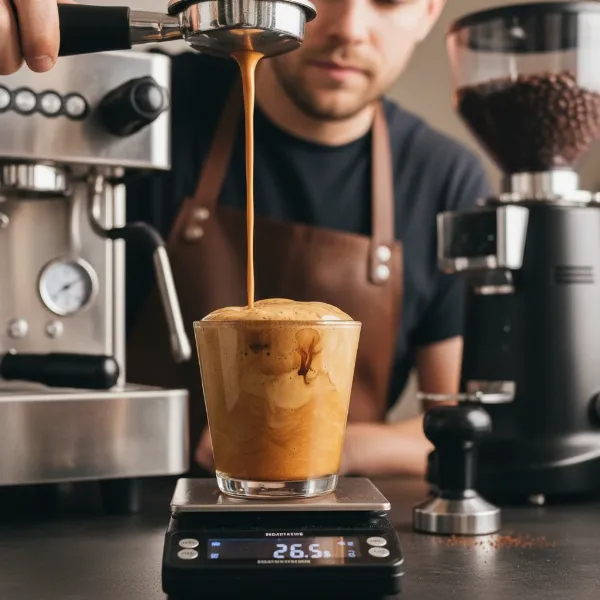
For every home barista, the quest for the perfect espresso shot often leads to a crucial realization: your espresso is only as good as your grinder. While it might seem like top-tier espresso demands a hefty investment, the landscape of coffee equipment has evolved. Today, it’s entirely possible to find an exceptional espresso grinder under $500 that delivers professional-grade consistency and precision, transforming your daily coffee ritual into an art. This comprehensive guide will navigate the best options available in 2026, ensuring you can dial in those exquisite shots without breaking the bank.
Understanding Espresso Grinder Types
The foundation of outstanding espresso lies in a consistent and precise grind. Unlike general coffee grinders, espresso grinders must produce an exceptionally fine and uniform particle size to allow for proper extraction under high pressure. This critical task is best handled by burr grinders, which come in two primary configurations: conical and flat.
Conical Burr Grinders
Conical burrs consist of two cone-shaped abrasive elements, one nestled inside the other. Beans are crushed and ground as they pass through the gap between these burrs.
- Advantages: Often praised for producing a wider range of grind sizes, making them versatile for various brewing methods. They typically run cooler, reducing heat transfer to the coffee, and can be quieter. Many budget-friendly espresso grinders utilize conical burrs effectively.
- Disadvantages: Some argue they produce a slightly less uniform grind particle distribution compared to high-end flat burrs, though this distinction is often negligible for home use.
- Best for: Beginners and those seeking a versatile grinder that can handle espresso and other brew methods, often at a more approachable price point.
|
Our Picks for the Best Coffee grinder in 2026
As an Amazon Associate I earn from qualifying purchases.
|
||
| Num | Product | Action |
|---|---|---|
| 1 | Hamilton Beach Fresh Grind Electric Coffee Grinder for Beans, Spices and More, Stainless Steel Blades, Removable Chamber, Makes up to 12 Cups, Black |

|
| 2 | OXO Brew Conical Burr Coffee Grinder - Silver, Stainless Steel Burrs, One-Touch Automatic Smart Grind |
|
| 3 | Amazon Basics Electric Coffee Grinder, Coffee Bean and Spice Grinder, With Heavy-Duty Stainless Steel Grind Blades |
|
| 4 | Automatic Coffee Machine, 20-Bar Pressure Espresso Maker with Built-in Grinder, 15-Precision Settings, One-Touch Latte & Cappuccino System, Smart Self-Cleaning |
|
| 5 | BLACK+DECKER One Touch Coffee Grinder, 2/3 Cup Coffee Bean Capacity, Spice Grinder, One Touch Push-Button Control -150 Watts -Stainless Steel Blades |
|
| 6 | Cuisinart Coffee Grinder, One Touch Control Coffee Bean Grinder with Stainless Steel Bowl and Blades, 2.5 oz/70g Capacity Enough for 12 Cups, On/Off Switch with Safety Interlock, DCG-20BKN, Black |
|
| 7 | Wancle Electric Coffee Grinder, Spice Grinder, One Touch Coffee Mill for Beans, Spices and More, with Clean Brush Black |
|
| 8 | Cuisinart Coffee Grinder, Electric One-Touch Automatic Burr Coffee Grinder with 18-Position Grind Selector, Cup Size Selector for 4 – 18 Cups, DBM-8P1, Black Stainless |
|
| 9 | Hamilton Beach Custom Grind Electric Coffee Grinder for 4-14 Cups, One-Press Hand-Free Operation with Auto Shutoff, Removable Grinding Bowl For Easy Pour and Clean, Stainless Steel (80406) |
|
| 10 | SHARDOR Professional Conical Burr Coffee Grinder, Coffee Bean Grinder with 48 Grind Settings for Espresso, Drip & French Press, Upgraded Anti-Static Technology, Precision Timer, Stainless Steel |
|
Flat Burr Grinders
Flat burr grinders feature two parallel rings with cutting surfaces that lie flat against each other. Coffee beans are fed between the two burrs, one stationary and one rotating, and are ground as they travel from the center outwards.
- Advantages: Widely celebrated for their exceptional grind consistency and uniformity, often resulting in a clearer, more defined flavor profile in espresso shots. They are typically preferred by enthusiasts seeking to highlight specific tasting notes in their coffee.
- Disadvantages: Can be louder and may generate more heat, though many modern designs mitigate this. They often come with a higher price tag.
- Best for: Espresso purists and those who prioritize maximum consistency and flavor clarity in their shots, willing to invest a bit more for precision.
Blade grinders, which merely chop coffee beans, are universally unsuitable for espresso due to their inability to produce a consistent grind, leading to uneven extraction and a poor-tasting shot. When aiming for quality espresso, always opt for a burr grinder.
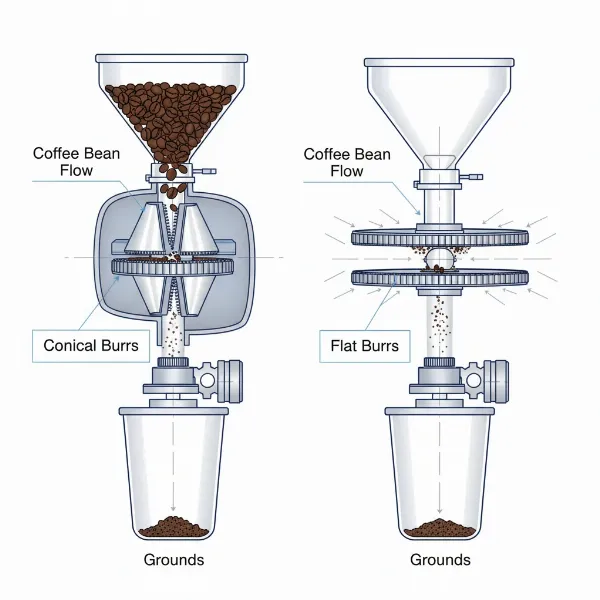 Diagram showing the internal mechanisms of conical and flat burr espresso grinders.
Comparison Table: Top Espresso Grinders Under $500 (2026)
| Feature | Baratza Encore ESP | Fellow Opus | Eureka Mignon Zero | Turin DF54 Gen 2/DF64 Gen 2 |
|---|---|---|---|---|
| Burr Type | Conical | Conical | Flat (55mm) | Flat (54mm/64mm) |
| Grind Adjustment | Stepped (Micro/Macro) | Stepped (Macro/Micro) | Stepless Micrometric | Stepless Micrometric |
| Best For | Beginners, versatile | Beginners, versatile | Single-dosing, espresso | Single-dosing, espresso, upgradeability |
| Retention | Low | Low | Zero | Very Low |
| Noise Level | Moderate | Moderate | Quiet | Moderate |
| Workflow | Dosing cup, timed | Single-dose, magnetic catch | Single-dose, bellows | Single-dose, bellows/portafilter fork |
| Price (Approx.) | $200 | $200 | $450 | $215-$499 |
Key Factors to Consider When Buying an Espresso Grinder
Choosing the right espresso grinder under $500 involves more than just price; it’s about matching features to your brewing style and preferences.
Grinder Type: Burr vs. Blade (and Conical vs. Flat)
As established, a burr grinder is non-negotiable for espresso. The choice between conical and flat burrs often comes down to personal taste and budget. Conical burrs are generally more forgiving for beginners and offer versatility for various brew methods, while flat burrs are favored by those seeking ultimate consistency and clarity in espresso.
Grind Consistency and Adjustability
Espresso demands a very fine and consistent grind. Look for grinders with micrometric or stepless adjustment, which allow for infinite, minute changes to grind size. This precision is vital for “dialing in” your espresso, enabling you to fine-tune extraction times for optimal flavor. Stepped grinders with numerous micro-adjustments can also be suitable for beginners, offering enough variability without overwhelming the user.
Burr Material
High-quality burrs are typically made from hardened steel or ceramic.
- Stainless Steel Burrs: Durable, stay sharp for a long time, and are excellent for cutting beans cleanly. Many premium grinders feature steel burrs.
- Ceramic Burrs: Extremely durable and can retain sharpness longer than steel. They often generate less heat during grinding, which helps preserve coffee’s delicate flavors. However, they can be more brittle than steel.
Motor Power and Speed
A robust motor ensures consistent grinding, especially with lighter roasts that are denser. Grinders with lower RPM (revolutions per minute) motors can be advantageous as they generate less heat, which is critical for preserving the delicate oils and flavors in your coffee beans. This often contributes to a more uniform grind as well.
Retention
“Retention” refers to the amount of ground coffee left inside the grinder after use. High retention means older, stale grounds can mix with fresh ones, impacting flavor.
- Low Retention/Zero Retention: These grinders are designed to minimize residual grounds, making them ideal for single-dosing (grinding only the amount of beans needed for each shot) and ensuring maximum freshness. Many newer models, like the Eureka Mignon Zero and DF series, excel in this area.
Noise Level
Grinders can be notoriously loud. For home baristas, especially those making early morning coffee, a quieter grinder can significantly improve the user experience. Brands like Eureka Mignon are often highlighted for their sound-dampening technology.
Build Quality and Durability
An espresso grinder is an investment. Look for models with solid construction, preferably with metal housings and robust internal components. Durable materials like stainless steel not only contribute to longevity but also to stability during grinding, which aids consistency. A 2-3 year warranty is a good indicator of manufacturer confidence.
Ease of Use and Cleaning
A grinder should be intuitive to operate and easy to clean. Features like removable burrs for cleaning, simple grind adjustment mechanisms, and thoughtful dosing solutions (e.g., portafilter forks, dosing cups) enhance the daily workflow. Some grinders offer programmable dosing by time or even weight, adding convenience and consistency.
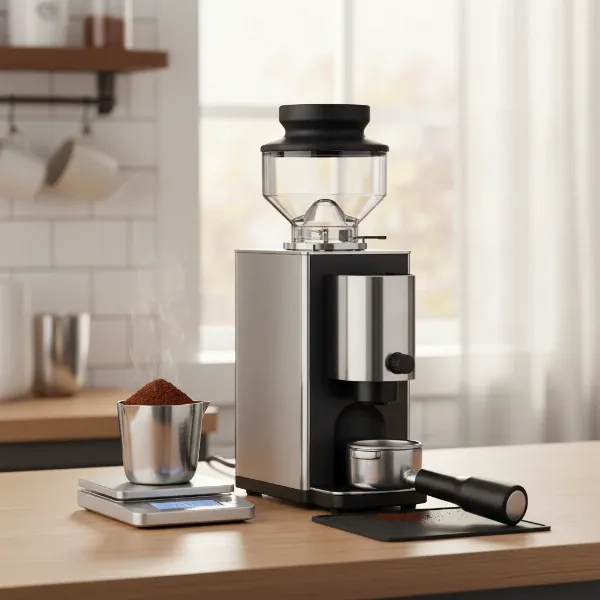 A sleek, modern espresso grinder designed for single-dosing with low retention.
Top Picks: Best Espresso Grinders Under $500 in 2026
Based on current trends, expert reviews, and user feedback, here are some of the standout espresso grinders you can confidently choose in 2026 for under $500.
1. Eureka Mignon Specialita
The Eureka Mignon Specialita is a perennial favorite, often lauded as the best overall value for espresso enthusiasts.
- Pros: Renowned for exceptional grind consistency with 55mm flat burrs, incredibly quiet operation thanks to its sound-insulated casing, and stepless micrometric adjustment for precise dialing-in. Its compact Italian design fits well in most kitchens. It often features a user-friendly touchscreen for timed dosing.
- Cons: While excellent, the precise adjustment can have a steeper learning curve for absolute beginners, requiring some technique to master.
2. Baratza Sette 270
Purpose-built for espresso, the Baratza Sette 270 offers unique features that make it a compelling choice for its price.
- Pros: Features 270 macro and micro adjustments, allowing for incredible precision in grind size for espresso. It boasts incredibly low retention, making it excellent for single-dosing. Its innovative design dispenses grounds directly into a portafilter, reducing mess.
- Cons: The Sette 270 is famously loud, which can be a consideration for early morning use. Some users have noted that its plastic gear drive can be a point of concern over time, though Baratza’s customer service is highly regarded for support and free repairs.
3. Eureka Mignon Zero
A newer addition to Eureka’s lineup, the Mignon Zero is specifically designed for a single-dosing workflow, catering to those who prioritize freshness and minimal waste.
- Pros: Offers zero retention and stepless micrometric adjustment, ensuring every shot is made with freshly ground beans and allowing for incredibly precise grind changes. It comes with a rubber bellows system and a 58mm dosing cup for a clean workflow. Like other Mignon models, it features durable construction and quiet operation.
- Cons: As a single-dose grinder, it requires weighing out beans for each shot, which might not suit those who prefer a traditional hopper-fed workflow.
4. Turin DF64 Gen 2 (or DF54)
The Turin DF series, including the DF64 Gen 2 and the newer DF54, has rapidly gained popularity among home baristas for its impressive performance and value, especially for single-dosing flat burr grinders.
- Pros: Known for very low retention and often comes with 64mm (DF64) or 54mm (DF54) flat burrs, delivering excellent grind consistency. These grinders are stepless for fine adjustments and highly upgradeable, allowing users to swap burrs for different profiles (e.g., SSP burrs). Many models include a “blow-up” system with bellows to clear retained grounds.
- Cons: Some versions might require minor modifications or “mods” to optimize performance (though Gen 2 models have improved significantly). The initial setup for dialing in can sometimes be more involved.
“The difference a quality grinder makes for espresso is night and day. It’s the most impactful upgrade you can make to your home coffee setup after getting fresh beans.” – Admin, Coffeegrinderchoice.com
Conclusion
Investing in a high-quality espresso grinder under $500 in 2026 is one of the most significant steps you can take to elevate your home coffee experience. From the quiet precision of the Eureka Mignon series to the single-dosing efficiency of the Baratza Sette 270 or Turin DF grinders, excellent options abound. By focusing on burr type, grind adjustability, consistency, and build quality, you can find a grinder that not only fits your budget but also consistently delivers the exceptional grind necessary for truly satisfying espresso. Which of these impressive grinders will become the heart of your home espresso setup?
Frequently Asked Questions
Why is a good espresso grinder so important?
A high-quality espresso grinder provides a consistent and precise grind, which is crucial for even extraction. Inconsistent grinds lead to uneven water flow through the coffee puck, resulting in shots that can be either sour (under-extracted) or bitter (over-extracted). A good grinder ensures you can properly “dial in” your shots for optimal flavor.
What’s the difference between flat and conical burrs, and which is better for espresso?
Flat burrs typically produce a very uniform particle size, often favored for clarity in espresso. Conical burrs can yield a slightly wider particle distribution, which some prefer for a fuller body. Both can make excellent espresso; the “better” choice often comes down to personal taste preference and specific coffee bean characteristics, with many high-performing options in both categories under $500.
Can I use a regular coffee grinder for espresso?
Most regular coffee grinders, especially blade grinders, cannot produce the fine, consistent grind required for espresso. Using them will result in an inconsistent extraction, producing weak, sour, or bitter shots. It is essential to use a grinder specifically designed for espresso or one with a very fine and precise adjustment range.
What is “stepless adjustment,” and why is it important for espresso?
Stepless adjustment means the grinder allows for infinite, minute changes to the grind size, rather than predefined “steps.” This level of precision is vital for espresso because even tiny adjustments can significantly impact extraction time and flavor. It allows baristas to precisely dial in their grind to perfectly match their coffee, machine, and desired shot parameters.
How often should I clean my espresso grinder?
Regular cleaning is essential to maintain optimal performance and taste. For daily espresso drinkers, it’s recommended to clean your grinder weekly with grinder cleaning tablets or by disassembling and brushing out retained grounds. A thorough deep clean, including burr removal, should be done monthly or every few months depending on usage, to prevent oil buildup and ensure consistent grinding.