For true coffee enthusiasts, the journey to a perfect cup often begins not with the brew itself, but with the grind. When crafting exceptional pour-over coffee, whether with a delicate Hario V60 or a robust Kalita Wave, the consistency of your coffee grounds is the single most critical factor determining flavor. Without it, even the finest beans and most precise brewing techniques can fall flat, resulting in a cup that is either disappointingly weak or overwhelmingly bitter. This guide will explore the best coffee grinders specifically designed to unlock the full potential of your pour-over experience.
Understanding Grind Consistency for Pour Over Coffee
The magic of pour-over brewing lies in its ability to highlight the nuanced flavors of specialty coffee. This method relies on hot water passing evenly through a bed of coffee grounds, dissolving desirable compounds to create a balanced, aromatic cup. However, this delicate process is highly susceptible to inconsistencies in grind size. If your coffee particles vary wildly in size, water will inevitably find the path of least resistance, flowing too quickly through coarser grounds (leading to under-extraction) and lingering too long in finer particles (resulting in over-extraction). This phenomenon, known as “channeling,” produces an unbalanced cup that lacks clarity, sweetness, and a clean finish.
This is precisely why blade grinders are a resounding “no” for pour-over coffee. They don’t grind; they smash and chop beans into an unpredictable mix of dust and boulders. For a consistently delicious pour-over, a burr grinder – either conical or flat – is absolutely essential. These grinders crush coffee beans between two abrasive surfaces, producing a uniform particle size that allows for even water flow and optimal extraction. The ideal grind for pour-over is generally a medium texture, akin to coarse sand, providing the perfect balance for water to extract flavor without impediment. Precise, micron-level adjustments on your grinder are key to fine-tuning your brew.
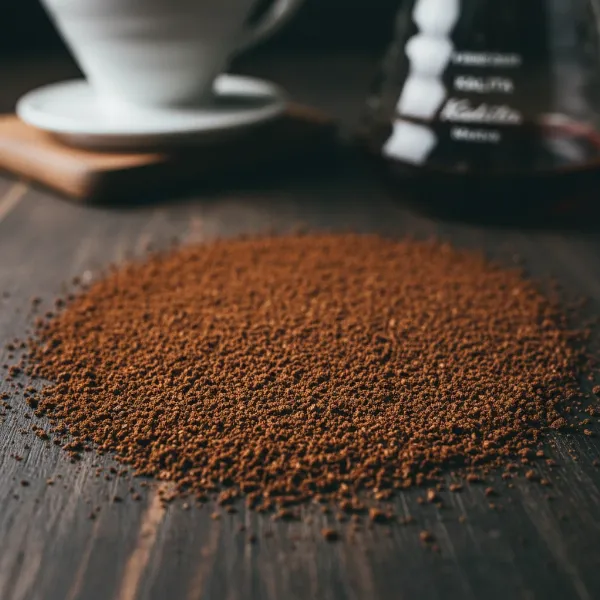 Close-up of perfectly consistent medium coffee grounds for pour over brewing.
Types of Coffee Grinders for Pour Over
When selecting a grinder for your V60 or Kalita Wave, you’ll primarily choose between manual hand grinders and electric burr grinders, each offering distinct advantages.
Manual Hand Grinders
|
Our Picks for the Best Coffee grinder in 2026
As an Amazon Associate I earn from qualifying purchases.
|
||
| Num | Product | Action |
|---|---|---|
| 1 | Hamilton Beach Fresh Grind Electric Coffee Grinder for Beans, Spices and More, Stainless Steel Blades, Removable Chamber, Makes up to 12 Cups, Black |

|
| 2 | Hamilton Beach Custom Grind Electric Coffee Grinder for 4-14 Cups, One-Press Hand-Free Operation with Auto Shutoff, Removable Grinding Bowl For Easy Pour and Clean, Stainless Steel (80406) |
|
| 3 | SHARDOR Professional Conical Burr Coffee Grinder, Coffee Bean Grinder with 48 Grind Settings for Espresso, Drip & French Press, Upgraded Anti-Static Technology, Precision Timer, Stainless Steel |
|
| 4 | BLACK+DECKER One Touch Coffee Grinder, 2/3 Cup Coffee Bean Capacity, Spice Grinder, One Touch Push-Button Control -150 Watts -Stainless Steel Blades |
|
| 5 | Wancle Electric Coffee Grinder, Spice Grinder, One Touch Coffee Mill for Beans, Spices and More, with Clean Brush Black |
|
| 6 | OXO Brew Conical Burr Coffee Grinder - Silver, Stainless Steel Burrs, One-Touch Automatic Smart Grind |
|
| 7 | Automatic Coffee Machine, 20-Bar Pressure Espresso Maker with Built-in Grinder, 15-Precision Settings, One-Touch Latte & Cappuccino System, Smart Self-Cleaning |
|
| 8 | Amazon Basics Electric Coffee Grinder, Coffee Bean and Spice Grinder, With Heavy-Duty Stainless Steel Grind Blades |
|
| 9 | Cuisinart Coffee Grinder, Electric One-Touch Automatic Burr Coffee Grinder with 18-Position Grind Selector, Cup Size Selector for 4 – 18 Cups, DBM-8P1, Black Stainless |
|
| 10 | Cuisinart Coffee Grinder, One Touch Control Coffee Bean Grinder with Stainless Steel Bowl and Blades, 2.5 oz/70g Capacity Enough for 12 Cups, On/Off Switch with Safety Interlock, DCG-20BKN, Black |
|
Manual hand grinders are the preferred choice for many pour-over aficionados due to their exceptional portability and the precise control they offer over the grind. Often featuring high-quality burrs comparable to premium electric models, they deliver superb consistency without the hefty price tag of top-tier electric options. Hand grinders are also remarkably quiet, making them ideal for early morning brewing without disturbing the household. They connect you intimately with the coffee preparation process, transforming grinding into a meditative ritual.
However, the main trade-off is the manual effort required. Grinding larger batches can be time-consuming and physically demanding. While excellent for single servings or small batches, they may not be suitable for those who brew for multiple people or prefer a quicker morning routine. Some users also note that careful dosing is needed to avoid spills, and some models may require more frequent brushing to clear retained grounds.
Electric Burr Grinders
Electric burr grinders offer unparalleled convenience and speed, making them a popular choice for daily pour-over brewers. With just the press of a button, they deliver consistent grounds quickly, an undeniable advantage when time is short. Many electric models come equipped with precise adjustment dials, allowing for easy and repeatable fine-tuning to perfectly match different beans or brewing methods. They are built for daily reliability and generally offer a consistent grind distribution without manual effort.
On the downside, quality electric grinders typically come with a higher price tag compared to their manual counterparts. They also occupy more counter space and can be significantly louder, which might be a consideration for shared living environments. It’s also worth noting that some electric grinders designed specifically for filter brewing, like the Fellow Ode Gen 2, are not suitable for espresso, meaning you might need a separate grinder if you also enjoy espresso.
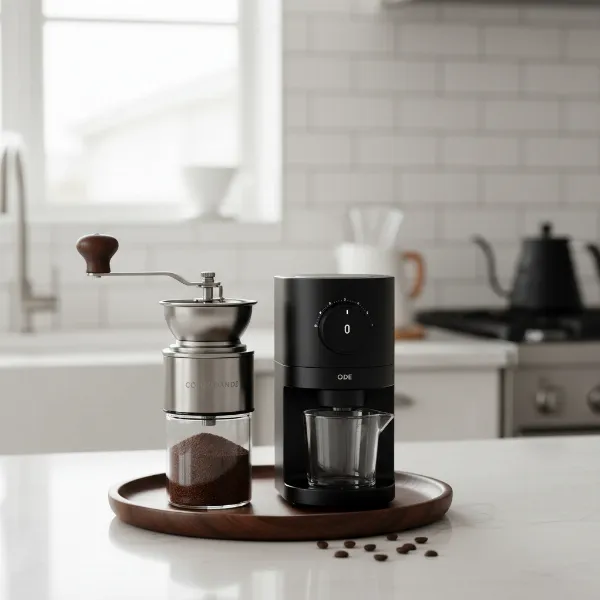 Side-by-side comparison of a sleek manual coffee grinder and a modern electric burr grinder.
Comparison Table: Manual vs. Electric Burr Grinders
| Feature | Manual Hand Grinder | Electric Burr Grinder |
|---|---|---|
| Grind Quality | Excellent (high-end models) | Excellent |
| Price | Low – Mid | Mid – High |
| Portability | High | Low |
| Speed | Slow (manual effort) | Fast |
| Noise Level | Very Quiet | Can be Loud |
| Consistency | Very good | Very good |
| Effort | High | Low |
| Counter Space | Minimal | Moderate to Large |
Key Factors to Consider When Buying a Pour Over Grinder
Choosing the right grinder means considering several elements beyond just manual or electric. Each plays a vital role in your daily brewing experience and the quality of your pour over coffee.
Grind Consistency & Burr Quality
This is the most critical factor. A high-quality burr grinder will produce uniform particles, essential for a balanced extraction. Look for burrs made from durable materials like stainless steel or ceramic. Both conical and flat burrs can excel for pour over. Flat burrs are often lauded for creating slightly more uniform particle sizes, potentially leading to clearer flavors. Conical burrs, on the other hand, are typically quieter and more compact, and they are excellent at producing the consistent medium grinds needed for pour-over.
Grind Adjustment Settings
The ability to precisely adjust your grind size is paramount for pour over. Different beans, roast levels, and even daily environmental factors can necessitate minor adjustments to achieve optimal flavor. A good pour-over grinder should offer a wide range of settings, ideally with small, incremental steps (sometimes referred to as “micrometric” adjustments or numerous click settings on manual grinders) to allow you to dial in your brew perfectly.
Speed and Efficiency
Your lifestyle should dictate whether a manual or electric grinder suits you best. If you primarily brew single cups and appreciate the ritual, a manual grinder’s slower pace might be part of the appeal. However, if you brew for multiple people, value speed, or have a busy morning routine, an electric grinder will offer significant time savings and convenience.
Durability and Build Material
A coffee grinder is an investment, so opting for one with robust construction is wise. Metal bodies, sturdy burrs, and reliable internal components contribute to longevity and consistent performance over time. A well-built grinder will withstand daily use and maintain its precision for years.
Budget
Grinders for pour over range widely in price, from budget-friendly options around $60 to premium models exceeding $300. While cheaper blade grinders should be avoided, you don’t necessarily need the most expensive model to achieve excellent results. Many mid-range options offer fantastic value and consistency. Determine your budget and seek the best burr grinder within that range.
Noise Level
Electric grinders generally produce more noise than their manual counterparts. If you live in an apartment, have light sleepers in your home, or simply prefer a quieter start to your day, a manual grinder or a specific low-noise electric model might be a higher priority.
Portability
For those who travel frequently or enjoy brewing coffee away from home, the compact size and lack of power requirement make manual grinders an obvious choice. Electric grinders, by contrast, are typically designed for stationary home use.
Versatility
Many enthusiasts wonder if one grinder can handle both espresso and pour over. While some grinders claim to do both, expert consensus suggests that grinders typically excel at one or the other. Espresso demands an extremely fine and precise grind, while pour over requires a consistent medium grind. Investing in a specialized grinder for pour over will likely yield superior results for that specific brewing method.
Top Grinder Picks for V60 and Kalita Wave
Drawing from extensive experience and insights, here are some of the best coffee grinders that consistently deliver the precision needed for exceptional V60 and Kalita Wave brews.
Manual Grinders
1Zpresso JX-Pro S – Precision in Your Palm
The 1Zpresso JX-Pro S is a standout manual grinder, celebrated for its incredibly smooth and consistent medium grind, perfectly suited for pour-over. Its adjustment dial boasts over 200 settings, providing unparalleled precision to dial in your Chemex, V60, or Kalita Wave with ease. Users praise its precision, portability, and excellent value for the quality it delivers. The robust build and fine-tuned adjustments make it a favorite for those seeking café-quality results on the go.
Comandante C40 MK4 – The Professional’s Choice
A true cult favorite among coffee enthusiasts and professional baristas, the Comandante C40 MK4 delivers buttery smooth hand-grinding and unbeatable consistency at medium grind sizes. It features top-tier build quality, often with high-nitrogen steel burrs, precise grind adjustment, and exceptional longevity. While it comes with a premium price tag, its performance and durability make it a worthwhile investment for serious pour-over devotees seeking maximum flavor clarity.
Timemore Chestnut C3 – Budget-Friendly Brilliance
For those new to pour-over or seeking a high-performing grinder without breaking the bank, the Timemore Chestnut C3 is an excellent choice. This budget-friendly option features stainless steel burrs that consistently produce reliable medium grinds. Its compact size and durable construction make it an ideal companion for travel or a dependable daily grinder for beginners. While it offers fewer adjustment steps than more premium hand grinders, its quality for the price is hard to beat.
Electric Grinders
Baratza Encore ESP – The Everyday Workhorse
The Baratza Encore ESP is an upgraded version of the legendary Encore, renowned as a reliable workhorse for home brewing. The ESP offers micrometric grind steps, making it effortless to achieve that perfect medium grind for pour over. It is highly regarded for its reliability, ease of use, and consistent grind distribution, making it an excellent choice for daily pour-over brewing. While it might be louder than some high-end electric grinders, its performance and user-friendliness are exceptional for its price point.
Fellow Ode Gen 2 – Designed for Filter
The Fellow Ode Gen 2 was specifically designed with filter brewing in mind, making it an ideal candidate for V60 and Kalita Wave users. It features large 64mm flat burrs that create superbly uniform medium grounds, ensuring clean and flavorful extractions. Its sleek design, low grind retention, and relatively quiet operation further enhance its appeal. It’s important to note that the Ode Gen 2 is dedicated solely to filter brewing and is not suitable for espresso.
Eureka Filtro – Clarity in Every Cup
The Eureka Filtro is a fantastic electric flat burr grinder that offers exceptional performance for pour-over coffee, often available for under $200. It produces minimal fines, which is crucial for preventing bitterness and achieving a very clear and flavorful cup. This grinder is highly recommended for those seeking an electric option that prioritizes clarity and taste in their filter brews without a professional-grade price tag.
Conclusion
The pursuit of the perfect pour-over brew is a rewarding endeavor, and at its heart lies the quality of your grind. As Summer, a passionate barista at Frothy Fusion, aptly puts it: “For pour-over lovers, grind consistency is the secret ingredient to brewing café-quality coffee at home.” Whether you opt for the tactile precision of a manual grinder like the 1Zpresso JX-Pro S or the convenient consistency of an electric model like the Baratza Encore ESP, investing in a dedicated pour-over grinder will fundamentally transform your coffee experience. By understanding the importance of uniform particle size and choosing a grinder that aligns with your brewing habits and budget, you can consistently unlock clarity, sweetness, and balance in every single cup.
What kind of unique flavors are you hoping to discover with your next pour-over grinder?
Frequently Asked Questions
What grind size is best for pour-over coffee?
A medium grind, with a texture similar to coarse sand, is generally considered ideal for pour-over coffee. This size allows for balanced water flow and optimal extraction, preventing both sour under-extraction and bitter over-extraction.
Can I use a blade grinder for pour over?
No, blade grinders are strongly discouraged for pour-over coffee. They chop beans inconsistently, creating an uneven mix of fine powder and coarse chunks, which leads to unpredictable and often unpleasant flavors in your cup.
Is a manual or electric grinder better for pour over?
The “better” choice depends on your personal preferences and brewing habits. Manual grinders offer portability, precision, and quiet operation, ideal for small batches and travel. Electric grinders provide speed, convenience, and repeatability, best suited for daily home use and larger quantities.
How much should I spend on a pour-over grinder?
You can find good conical burr grinders starting around $60, but investing between $100 and $300 often provides a significant leap in grind quality and consistency. While higher prices generally mean better performance, excellent options exist across various budget points.
Can one grinder handle both espresso and pour over?
Most grinders cannot excel at both espresso and pour-over brewing simultaneously. Espresso requires extremely fine, precise adjustments, while pour-over benefits from a consistent medium grind. It is generally recommended to use specialized grinders for each method to achieve optimal results.
What’s the difference between flat burr and conical burr grinders for pour over?
Both flat and conical burr grinders can produce excellent results for pour-over. Flat burrs are often credited with yielding a more uniform particle size distribution, which can contribute to a cleaner cup. Conical burrs, conversely, tend to be quieter, more compact, and are highly effective at producing the medium grind necessary for pour over.