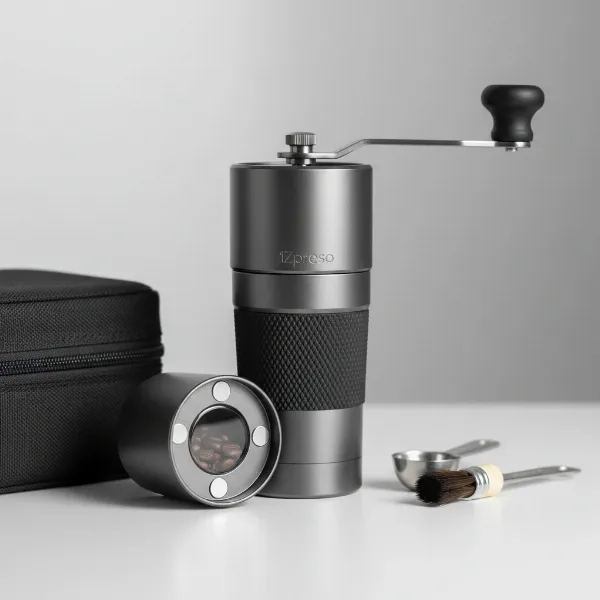
Craving the rich, robust flavor of authentic Turkish coffee? The secret to its unique taste and distinctive texture lies not just in the brewing method, but fundamentally in the coffee itself – specifically, its ultra-fine grind. Achieving this elusive, flour-like consistency at home can seem daunting, yet it’s entirely possible with the right tools and techniques. This guide will demystify the process, walking you through everything you need to know to create perfect Turkish coffee powder, ensuring every cup you brew is a truly aromatic and satisfying experience.
Understanding the Unique Grind for Turkish Coffee
Turkish coffee stands apart from other brewing methods due to its incredibly fine grind. Unlike espresso, which requires a very fine grind, Turkish coffee powder must be even finer, resembling powdered sugar or flour. This powdery consistency is not merely a preference; it’s essential for the traditional brewing process in a cezve (or ibrik), where the coffee grounds are immersed directly in water and brought to a foam without filtering. The ultra-fine particles allow for maximum flavor extraction and contribute to the rich body and characteristic “sludge” at the bottom of the cup, which is a hallmark of authentic Turkish coffee. Without this specific fineness, the coffee will not extract properly, leading to a weak, unsatisfying brew.
Essential Tools for Achieving the Perfect Turkish Coffee Powder
The right grinder is paramount to success when making Turkish coffee powder at home. Not all grinders are created equal for this task, and choosing wisely will save you frustration and elevate your coffee experience.
Manual Burr Grinders
- Advantages: Manual burr grinders offer exceptional control over the grind size. Many traditional Turkish coffee grinders are hand-cranked, often made of copper or brass, and are specifically designed to achieve the necessary powder-fine consistency. They are also quiet, portable, and require no electricity, making them a great option for those who appreciate the ritual of coffee preparation.
- Disadvantages: Grinding by hand can be laborious and time-consuming, especially for larger quantities. It requires patience and consistent effort to achieve a uniform grind.
- Recommendation: Look for manual grinders with ceramic or hardened steel conical burrs that offer a wide range of adjustment, including extremely fine settings.
|
Our Picks for the Best Coffee grinder in 2026
As an Amazon Associate I earn from qualifying purchases.
|
||
| Num | Product | Action |
|---|---|---|
| 1 | Cuisinart Coffee Grinder, Electric One-Touch Automatic Burr Coffee Grinder with 18-Position Grind Selector, Cup Size Selector for 4 – 18 Cups, DBM-8P1, Black Stainless |

|
| 2 | Automatic Coffee Machine, 20-Bar Pressure Espresso Maker with Built-in Grinder, 15-Precision Settings, One-Touch Latte & Cappuccino System, Smart Self-Cleaning |
|
| 3 | BLACK+DECKER One Touch Coffee Grinder, 2/3 Cup Coffee Bean Capacity, Spice Grinder, One Touch Push-Button Control -150 Watts -Stainless Steel Blades |
|
| 4 | SHARDOR Professional Conical Burr Coffee Grinder, Coffee Bean Grinder with 48 Grind Settings for Espresso, Drip & French Press, Upgraded Anti-Static Technology, Precision Timer, Stainless Steel |
|
| 5 | OXO Brew Conical Burr Coffee Grinder - Silver, Stainless Steel Burrs, One-Touch Automatic Smart Grind |
|
| 6 | Cuisinart Coffee Grinder, One Touch Control Coffee Bean Grinder with Stainless Steel Bowl and Blades, 2.5 oz/70g Capacity Enough for 12 Cups, On/Off Switch with Safety Interlock, DCG-20BKN, Black |
|
| 7 | Amazon Basics Electric Coffee Grinder, Coffee Bean and Spice Grinder, With Heavy-Duty Stainless Steel Grind Blades |
|
| 8 | Hamilton Beach Fresh Grind Electric Coffee Grinder for Beans, Spices and More, Stainless Steel Blades, Removable Chamber, Makes up to 12 Cups, Black |
|
| 9 | Wancle Electric Coffee Grinder, Spice Grinder, One Touch Coffee Mill for Beans, Spices and More, with Clean Brush Black |
|
| 10 | Hamilton Beach Custom Grind Electric Coffee Grinder for 4-14 Cups, One-Press Hand-Free Operation with Auto Shutoff, Removable Grinding Bowl For Easy Pour and Clean, Stainless Steel (80406) |
|
Electric Burr Grinders
- Advantages: Electric burr grinders provide convenience and speed, allowing you to produce Turkish coffee powder with minimal effort. High-quality electric burr grinders can offer consistent results across many grind settings.
- Disadvantages: Not all electric burr grinders can achieve the ultra-fine, powdery consistency required for Turkish coffee. Many entry-level burr grinders stop at an espresso-fine setting, which is often not fine enough. You’ll need to invest in a model known for its ability to grind exceptionally fine.
- Recommendation: Prioritize models with precision burr sets (conical or flat) and a micro-adjustment system that allows for incremental changes to fineness. Read reviews specifically mentioning their performance with Turkish coffee.
Blade Grinders
- Advantages: Blade grinders are generally inexpensive and readily available. They can pulverize coffee beans quickly.
- Disadvantages: Blade grinders are strongly discouraged for Turkish coffee. They chop and smash beans rather than grinding them uniformly, resulting in an inconsistent particle size. This inconsistency leads to uneven extraction, where some particles are over-extracted (bitter) and others under-extracted (sour), ultimately compromising the flavor and texture of your Turkish coffee. They also generate heat, which can negatively impact the coffee’s delicate aromas.
- Recommendation: Avoid blade grinders if possible. While some sources might suggest them as a last resort, they will not deliver an an authentic Turkish coffee experience.
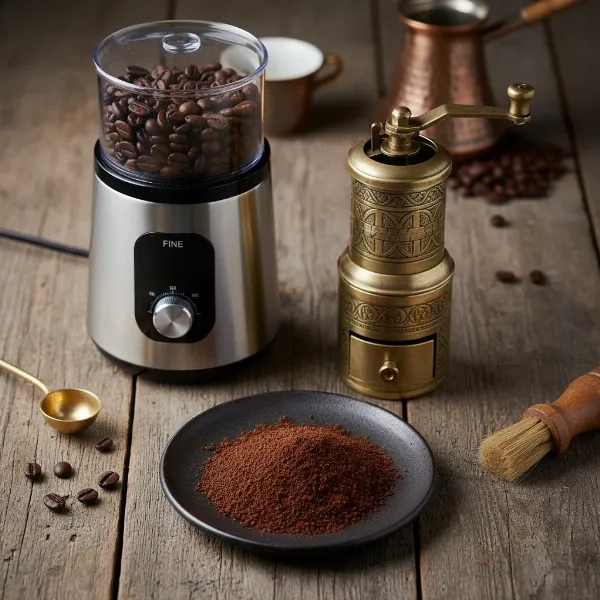 Selection of manual and electric burr grinders for achieving ultra-fine Turkish coffee powder.
Step-by-Step Guide: Making Turkish Coffee Powder at Home
With the right grinder in hand, follow these steps to create your own perfectly ground Turkish coffee powder:
- Select Your Coffee Beans: Start with fresh, high-quality whole beans. Medium to medium-dark roasts are typically preferred for Turkish coffee, as they offer the balance of flavor and body needed without being overly oily (which can clog grinders). Arabica beans are a popular choice, often from regions like Brazil or Ethiopia.
- Measure Your Beans: Accurately measure the amount of coffee beans you need. A good starting point is about 1 tablespoon (approximately 7-8 grams) of whole beans per 4 fluid ounces of water. For consistency, using a digital scale is highly recommended.
- Set Your Grinder to the Finest Setting: Adjust your burr grinder to its absolute finest setting. If using a manual grinder, turn the adjustment knob until the burrs are almost touching, then back off slightly to allow for grinding.
- Grind Slowly and Carefully:
- Manual Grinders: Begin grinding with a slow, steady motion. This helps prevent overheating and ensures a more consistent grind. You may need to grind in small batches to maintain control and achieve the desired fineness.
- Electric Grinders: If your electric burr grinder has a very fine setting, grind the beans according to its instructions. Again, grinding in smaller batches can sometimes help achieve a finer result and prevent the grinder from getting clogged.
- Achieving the Right Fineness: The key is to check the consistency. The coffee should feel like fine flour or powdered sugar between your fingertips, without any noticeable grittiness. It should clump together slightly when pressed. If it’s too coarse, adjust your grinder and re-grind.
- Sifting (Optional but Recommended): For the absolute finest and most uniform powder, you can sift your freshly ground coffee through a very fine mesh sieve (like a tea strainer or a dedicated flour sifter). This removes any larger particles, ensuring an even extraction and a smoother cup. Re-grind any coarser particles caught in the sieve.
- Store Properly: Once you’ve achieved the perfect powder, store it immediately in an airtight container, away from light, heat, and moisture. Oxygen is coffee’s enemy, and fine grounds stale much faster than whole beans.
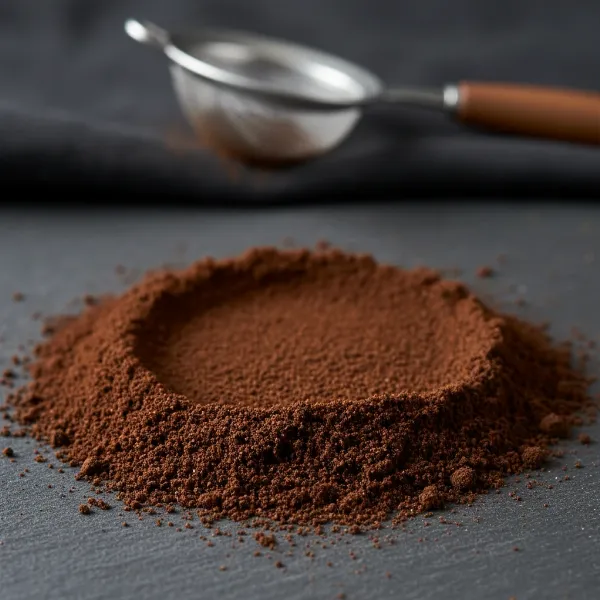 Close-up of perfectly ground Turkish coffee powder, showing its flour-like consistency.
Choosing the Best Coffee Beans for Turkish Coffee
The choice of coffee beans significantly impacts the final taste of your Turkish coffee. While personal preference plays a role, certain characteristics are traditionally favored:
- Bean Type: Arabica beans are most commonly used for Turkish coffee. They offer a sweeter, more aromatic, and less bitter profile compared to Robusta beans, which are known for their higher caffeine content and bolder, rubbery taste.
- Roast Level: Medium to medium-dark roasts are ideal. A medium roast brings out the bean’s inherent flavors and acidity, while a medium-dark roast adds body and a hint of smoky richness without becoming overly bitter or oily. Avoid very dark, oily roasts, as the oils can clog grinders and mask the nuanced flavors.
- Freshness: Always use freshly roasted beans. The volatile aromatic compounds that give coffee its flavor degrade rapidly after roasting. Grinding fresh whole beans just before brewing (or just before making your powder) ensures the richest, most vibrant flavor.
Common Pitfalls to Avoid When Grinding Turkish Coffee
Making Turkish coffee powder at home is a rewarding process, but there are common mistakes that can hinder your success:
- Using Pre-Ground Coffee: While convenient, pre-ground coffee (even if labeled “Turkish grind”) often lacks freshness and may not be consistently fine enough, leading to a less flavorful and authentic brew.
- Grinding Too Coarse: If your grind isn’t fine enough, the coffee won’t extract properly in the cezve, resulting in a weak, watery, and unsatisfying cup. The grounds also won’t settle as effectively.
- Using a Blade Grinder: As discussed, blade grinders create inconsistent particle sizes, leading to uneven extraction and a muddled flavor profile.
- Overheating the Beans: Grinding too quickly or with an inefficient grinder can generate excessive heat, which “cooks” the coffee and strips away delicate aromas and flavors, resulting in a flat or burnt taste.
- Incorrect Storage: Exposure to air, light, and moisture will rapidly degrade the quality of your freshly ground powder. Always store it in an airtight, opaque container in a cool, dark place.
Expert Tips for a Superior Turkish Coffee Experience
Beyond the basic steps, these expert tips can help you elevate your homemade Turkish coffee powder and overall brewing experience:
- Grind in Small Batches: Especially with manual grinders, processing smaller quantities at a time allows for greater control over fineness and reduces the effort required, ensuring a more consistent end product.
- Clean Your Grinder Regularly: Coffee oils and fine particles can build up in your grinder, affecting its performance and imparting stale flavors to new batches. Disassemble and clean your burrs regularly according to the manufacturer’s instructions.
- Experiment with Beans: Don’t be afraid to try different medium-roast Arabica beans from various origins. Each will offer a unique flavor profile that can enhance your Turkish coffee experience.
- Practice Makes Perfect: Achieving the perfect Turkish grind takes a bit of practice. Don’t be discouraged if your first attempts aren’t flawless. With each batch, you’ll refine your technique and eye for the correct consistency.
- Consider a Sieve: For the most uniform grind, especially if your grinder struggles with absolute fineness, a very fine mesh sieve can make a significant difference. It helps separate the truly powdery particles from any coarser bits, ensuring optimal extraction.
“The true magic of Turkish coffee lies in the precision of its grind. It’s an art that transforms ordinary beans into a beverage of unparalleled richness.”
Conclusion
Mastering the art of making Turkish coffee powder at home is a rewarding endeavor that unlocks a world of rich, aromatic flavor. By understanding the unique requirements of the ultra-fine grind, investing in the right burr grinder, and meticulously following the grinding process, you can consistently produce the perfect powder for an authentic Turkish coffee experience. This dedication to detail ensures that every cup brewed is a testament to tradition and a celebration of exquisite taste. So, why not embark on this journey and elevate your home brewing? What’s your favorite coffee bean to transform into this magical powder?
Frequently Asked Questions
Can I use a regular coffee grinder for Turkish coffee?
Most standard home coffee grinders, especially blade grinders, cannot achieve the extremely fine, powdery consistency required for Turkish coffee. While some high-end electric burr grinders might have a fine enough setting, manual burr grinders designed for Turkish coffee or spice grinders are often more suitable for this ultra-fine grind.
How do I know if my grind is fine enough for Turkish coffee?
The ground coffee should feel like powdered sugar or fine flour between your fingers, with no discernible gritty particles. When gently pressed, it should clump together slightly. If it feels coarse or sandy, it’s not fine enough and needs further grinding.
What’s the best type of bean for Turkish coffee?
Medium to medium-dark roasted Arabica beans are generally recommended for Turkish coffee. These beans offer a balanced flavor profile and sufficient aromatics without being excessively oily, which can interfere with the grinding process and the final taste. Brazilian Arabica beans are a popular traditional choice.