Few things are as frustrating for a coffee enthusiast as a jammed grinder, especially when you’re craving that morning brew. If you’ve ever dealt with a grinder that suddenly stops, struggling to process your favorite beans, chances are oily residue is the culprit. Oily coffee beans, while often delivering rich flavors, can lead to a sticky buildup within your grinder’s mechanism, causing clogs and frustrating interruptions. This guide will walk you through understanding why oily beans cause issues, how to effectively clear a jammed grinder, and most importantly, how to prevent these sticky situations from recurring, ensuring a smooth and consistent grind every time.
Common Types of Coffee Grinders and Their Interaction with Oily Beans
Understanding your grinder type is the first step in addressing and preventing jams from oily beans. Each design has unique characteristics that affect how it handles and accumulates coffee oils.
Manual Grinders
Manual, or hand grinders, are often praised for their portability and quiet operation. They typically feature ceramic or steel burrs that you operate with a hand crank.
- Pros: Compact, no electricity needed, offers precise grind control, often easy to disassemble for thorough cleaning.
- Cons: Requires physical effort, lower output, can be slower.
- Best for: Travelers, small batches, those who enjoy a hands-on approach and appreciate direct access to burrs for cleaning oily residue.
|
Our Picks for the Best Coffee grinder in 2026
As an Amazon Associate I earn from qualifying purchases.
|
||
| Num | Product | Action |
|---|---|---|
| 1 | Wancle Electric Coffee Grinder, Spice Grinder, One Touch Coffee Mill for Beans, Spices and More, with Clean Brush Black |

|
| 2 | Hamilton Beach Fresh Grind Electric Coffee Grinder for Beans, Spices and More, Stainless Steel Blades, Removable Chamber, Makes up to 12 Cups, Black |
|
| 3 | OXO Brew Conical Burr Coffee Grinder - Silver, Stainless Steel Burrs, One-Touch Automatic Smart Grind |
|
| 4 | Hamilton Beach Custom Grind Electric Coffee Grinder for 4-14 Cups, One-Press Hand-Free Operation with Auto Shutoff, Removable Grinding Bowl For Easy Pour and Clean, Stainless Steel (80406) |
|
| 5 | Cuisinart Coffee Grinder, Electric One-Touch Automatic Burr Coffee Grinder with 18-Position Grind Selector, Cup Size Selector for 4 – 18 Cups, DBM-8P1, Black Stainless |
|
| 6 | BLACK+DECKER One Touch Coffee Grinder, 2/3 Cup Coffee Bean Capacity, Spice Grinder, One Touch Push-Button Control -150 Watts -Stainless Steel Blades |
|
| 7 | Amazon Basics Electric Coffee Grinder, Coffee Bean and Spice Grinder, With Heavy-Duty Stainless Steel Grind Blades |
|
| 8 | SHARDOR Professional Conical Burr Coffee Grinder, Coffee Bean Grinder with 48 Grind Settings for Espresso, Drip & French Press, Upgraded Anti-Static Technology, Precision Timer, Stainless Steel |
|
| 9 | Cuisinart Coffee Grinder, One Touch Control Coffee Bean Grinder with Stainless Steel Bowl and Blades, 2.5 oz/70g Capacity Enough for 12 Cups, On/Off Switch with Safety Interlock, DCG-20BKN, Black |
|
| 10 | Automatic Coffee Machine, 20-Bar Pressure Espresso Maker with Built-in Grinder, 15-Precision Settings, One-Touch Latte & Cappuccino System, Smart Self-Cleaning |
|
Electric Blade Grinders
Blade grinders chop coffee beans using a spinning blade, similar to a blender. They are generally the most affordable option.
- Pros: Inexpensive, widely available, simple to use.
- Cons: Produces an inconsistent grind, generates heat that can negatively impact coffee flavor, and is highly susceptible to sticky build-up due to the pulverizing action rather than true grinding.
- Best for: Beginners, those on a very tight budget, or for grinding spices rather than coffee. Not recommended for consistent coffee grinding, especially with oily beans.
Electric Burr Grinders (Disc or Conical)
Electric burr grinders use two abrasive surfaces (burrs) to crush coffee beans into uniform particles. These can be either flat disc burrs or conical burrs, usually made of steel or ceramic.
- Pros: Provides a highly consistent grind, minimal heat generation, preserves coffee flavor. Many models offer a wide range of grind settings.
- Cons: Higher initial cost, can be louder than manual grinders, and internal mechanisms can still accumulate oil, though many are designed for easier access for cleaning.
- Best for: Serious coffee lovers, home baristas, and anyone seeking high-quality, consistent grounds for various brewing methods.
Comparison of Coffee Grinder Types
| Feature | Manual Grinder | Electric Blade Grinder | Electric Burr Grinder |
|---|---|---|---|
| Grind Quality | Excellent | Poor, Inconsistent | Excellent, Consistent |
| Price | Low – Medium | Low | Medium – High |
| Noise Level | Very Quiet | Loud | Moderate – Loud |
| Durability | High | Low | Medium – High |
| Portability | High | Low | Low |
| Oily Bean Susceptibility | Medium (but easy to clean) | High (sticky mess) | Medium (requires cleaning) |
| Cleaning Difficulty for Oils | Easy (disassembly) | Difficult (messy) | Medium (can vary by model) |
Why Oily Beans Jam Your Grinder
Coffee beans naturally contain oils, which are more pronounced in darker roasts. These oils are part of what gives coffee its rich flavor and aroma. However, when these oily beans are ground, the friction and pressure can cause a sticky residue to build up within the grinder’s burrs, chute, and chamber. Over time, this sticky mixture of coffee oils and fine grounds hardens, creating a dense blockage that prevents the burrs from spinning freely or the grounds from exiting the machine. A common sign of this is when the motor runs but no coffee is dispensed, or the beans aren’t feeding properly into the burrs. In severe cases, a harsh whirling sound might indicate a struggling motor or stripped gears.
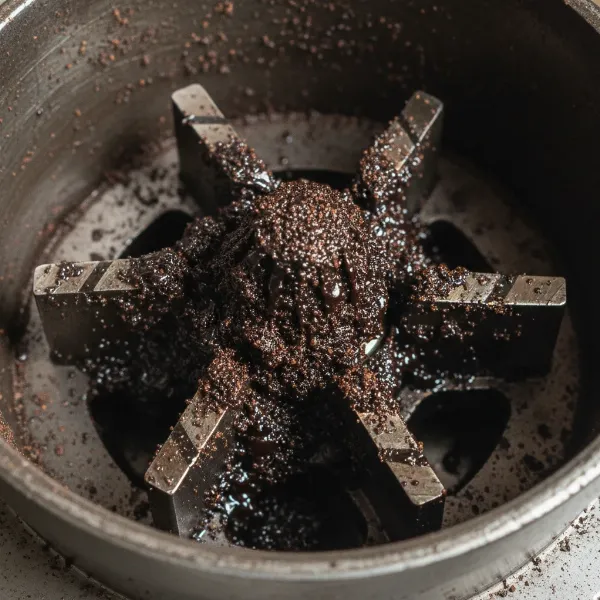 Close-up of a coffee grinder burr with visible sticky, oily residue and jammed coffee grounds.
How to Fix a Jammed Coffee Grinder from Oily Beans
A jammed grinder can be frustrating, but most clogs are solvable with a few key steps. Before starting any cleaning process, always prioritize safety.
- Unplug the Grinder (Safety First): This is the most crucial step. Always ensure your grinder is completely disconnected from power before attempting any cleaning or maintenance.
- Clear the Hopper: Remove any remaining whole coffee beans from the hopper. You might need to gently shake the grinder or use a small brush to dislodge them.
- Adjust Grind Setting to Coarsest: If your grinder has adjustable settings, set it to the coarsest possible grind. This can help create more space between the burrs and potentially loosen some of the jammed particles when the grinder is run again.
- Utilize Grinder Cleaning Tablets: Commercial grinder cleaning tablets, such as Urnex Grindz, are designed to absorb coffee oils and dislodge stale coffee particles without the need for disassembly.
- How to Use: Deposit a cap-full of cleaning tablets into the empty hopper.
- Run through: Run the grinder on its coarsest setting, as if grinding coffee beans. As the tablets are ground, they will help scrub away the oily residue.
- Gradual Adjustment: While the grinder is still running, slowly adjust the setting to finer grinds to clear smaller particles. Avoid jumping directly to a fine setting, as this could cause a new jam.
- Dispose of Residue: Discard the powdery residue produced by the tablets, as it’s not meant for consumption.
- Manual Disassembly and Cleaning: If cleaning tablets aren’t sufficient, or for a deeper clean, manual cleaning is necessary.
- Access Burrs: Carefully remove the hopper and any upper burr components according to your grinder’s manual. Most burr grinders allow for easy removal of the upper burr.
- Brush Away Debris: Use a stiff brush (often provided with the grinder), a toothbrush, or a wooden toothpick to meticulously clean the burrs, grind chamber, and chute. Focus on removing all visible oily grounds and sticky residue.
- Vacuuming: A small vacuum cleaner with a hose attachment can be effective for sucking up loose grounds and debris from hard-to-reach areas. Be cautious not to vacuum up any small, crucial parts or screws.
- Wipe Down: For the hopper and external parts, a damp cloth can be used. For stubborn oil stains, a very mild soapy water solution can be applied, but ensure these parts are thoroughly rinsed and completely dry before reassembling.
- Crucial Warning: Avoid using water or excessive moisture directly on the burrs or inside the grinding chamber, especially if your grinder has steel burrs, as this can lead to rust and corrosion, damaging your machine.
- Alternative: Grinding Oats: Some suggest grinding a small amount of rolled oats or instant oats to absorb residual oils. While effective for oil absorption, some express concern that oats can leave behind sticky gelatinized starches. If you choose this method, follow up with a thorough brushing.
- Addressing Stubborn Jams: If a very hard blockage persists after manual cleaning, you might need to gently pry it out with a wooden skewer or toothpick. Never use metal objects that could damage the burrs. For super-automatic machines, if the clog is severe and has been present for a long time, professional servicing might be required.
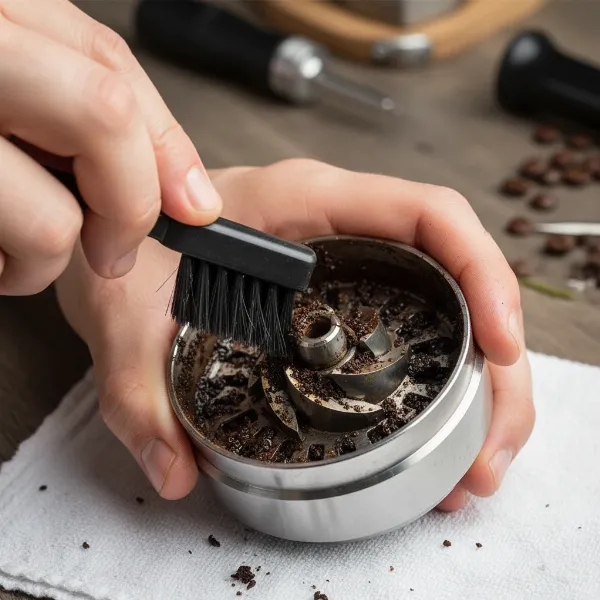 Hands using a small brush to clean sticky, oily residue from a coffee grinder's burrs.
“Regular cleaning is not just about taste; it’s about preserving the lifespan and efficiency of your grinder, especially when dealing with the realities of oily, flavorful beans.” – Admin, Coffeegrinderchoice.com
Preventing Future Jams from Oily Beans
Prevention is always better than cure. By adopting a few simple habits, you can significantly reduce the likelihood of your grinder jamming due to oily beans.
- Regular Cleaning Routine: Establish a consistent cleaning schedule. For daily users of oily beans, a quick brush-out every few days and a deeper clean with tablets or disassembly every 2-4 weeks can make a huge difference. Regular cleaning prevents oil and grounds from hardening into stubborn clogs.
- Choose the Right Beans: While dark roasts are often desired for their rich, oily characteristics, they are more prone to causing jams. Consider alternating with medium or lighter roasts, or store oily beans in smaller quantities to reduce exposure to air and oil degradation. For super-automatic machines, it’s often recommended to stick to medium roasts to avoid internal clogging.
- Proper Grind Settings: Avoid grinding oily beans at extremely fine settings, especially if your grinder tends to struggle. Finer settings mean less space between burrs, making it easier for sticky grounds to pack and jam.
- Brush After Each Use (Especially Oily Beans): A quick brush of the chute and burr area after grinding can dislodge fresh grounds before they have a chance to solidify with oils.
Top Picks – Recommended Grinder Features for Oily Beans
While specific model recommendations can vary, certain features make coffee grinders more resilient and easier to maintain when regularly used with oily beans. Prioritize grinders that offer:
Easily Accessible and Removable Burrs
- Key Advantage: Allows for quick and thorough manual cleaning, which is essential for removing sticky residue from oily beans. Many hand grinders and some electric burr grinders excel in this.
- What to Look For: Simple disassembly mechanisms, often requiring just a few twists or clicks to remove the upper burr.
Durable Steel or Ceramic Burrs
- Key Advantage: These materials are robust and less prone to wear from sticky buildup, maintaining their grinding efficiency longer.
- What to Look For: High-quality burr sets that promise longevity and consistent performance.
Anti-Static Features or Design
- Key Advantage: Minimizes static cling of grounds, reducing the amount of fine particles that stick to the grind chamber and chute, thereby lowering the chances of a sticky, oily build-up.
- What to Look For: Grinders marketed with anti-static technology or those with well-designed chutes that reduce retention.
Conclusion
A jammed coffee grinder, particularly one clogged by oily beans, is a common issue for many coffee lovers. However, it’s rarely a sign of a broken machine, but rather an indication that it’s time for some crucial maintenance. By understanding that accumulated coffee oils and fine particles are the primary culprits, you can effectively tackle the problem. Whether through the targeted action of cleaning tablets or a meticulous manual clean, bringing your grinder back to life is entirely achievable. More importantly, establishing a proactive cleaning routine and making informed choices about your beans and grind settings will ensure your coffee grinder operates smoothly, delivering delicious, consistent coffee for years to come. Don’t let oily beans stand between you and your perfect cup – with these steps, you’ll always be ready for your next brew. What’s your go-to method for keeping your coffee grinder pristine?
Frequently Asked Questions
Can I use rice to clean my coffee grinder?
While some people suggest grinding rice to clean a coffee grinder, it’s generally not recommended. Rice can be too hard for the burrs and may cause damage, especially in some electric grinders. Commercial grinder cleaning tablets or oats are safer alternatives for removing oily residue.
How often should I clean my coffee grinder if I use oily beans?
If you regularly use oily beans, a quick brush-out after every few uses is beneficial. A deeper clean using cleaning tablets or partial disassembly should be performed every 2-4 weeks to prevent significant oil buildup and potential jams.
What kind of coffee beans are considered “oily”?
Darker roasts, such as French Roast, Italian Roast, or Espresso Roast, tend to be more oily as the roasting process brings the oils to the surface of the bean. These beans often have a visible sheen.
Can a jammed grinder be permanently damaged?
While most jams are resolvable, prolonged struggle against a severe jam can potentially damage a grinder’s motor or strip its internal gears, particularly if it’s forced. Regular maintenance helps prevent such extreme scenarios.
Why do my coffee beans sometimes not feed into the grinder?
This often happens with very oily beans, which can stick together or to the hopper walls, preventing them from falling into the grinding chamber. A clean hopper and gently agitating the beans can help, alongside managing oil buildup in the burrs themselves.