Every coffee lover knows that the secret to a truly exceptional cup begins with the grind. While the beans and brew method get most of the attention, the unsung hero is often the burr grinder. But within the world of burr grinders, a common debate brews: ceramic versus steel burrs. Each material brings distinct characteristics to the table, impacting everything from your grinder’s lifespan to the very flavor of your morning brew.
As a technician with over a decade of hands-on experience in coffee grinders, I’ve seen countless burr sets in action. This guide will explore the critical differences between ceramic and steel burrs, focusing on their durability, heat generation, and how these factors influence your coffee experience. By understanding these nuances, you’ll be empowered to choose the perfect grinder for your specific needs, ensuring every cup is as fresh and flavorful as possible.
Understanding Coffee Grinder Burrs
At its core, a coffee grinder uses burrs to uniformly break down whole coffee beans into consistent particles. Unlike blade grinders that chop beans haphazardly, burr grinders crush them between two abrasive surfaces—one stationary, one rotating—allowing for precise control over grind size. This precision is paramount because consistent particle size is key to even extraction, which ultimately dictates the taste of your coffee. The material of these burrs is not just a minor detail; it’s a fundamental aspect that influences performance, longevity, and even the subtle flavors in your cup.
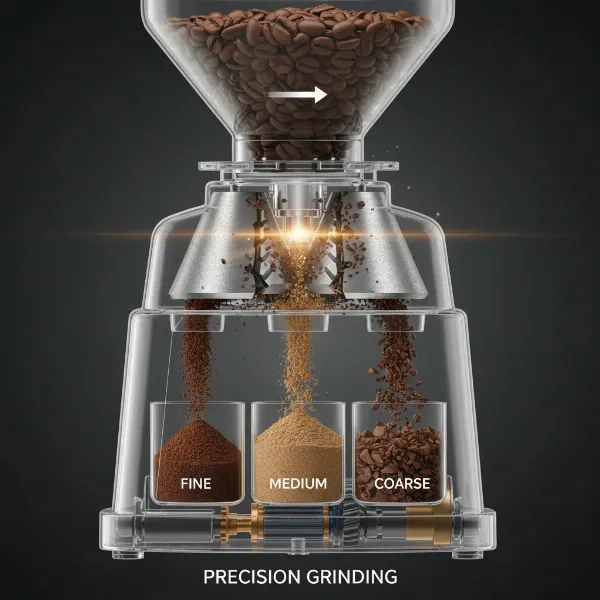 Illustration of coffee grinder burrs showing the grinding mechanism and particle size.
Ceramic Burrs: Precision and Flavor Preservation
Ceramic burrs are often lauded by coffee enthusiasts for their unique properties, offering a distinct set of advantages and a few considerations.
Advantages of Ceramic Burrs
- Exceptional Longevity and Sharpness Retention: Ceramic is an incredibly hard material, enabling ceramic burrs to maintain their sharp edges for extended periods. For an average home user grinding 1-2 pounds of coffee per month, ceramic burrs can impressively last 15 years or more. Studies even suggest ceramic coatings can resist wear up to three times longer than 420 stainless steel, particularly when grinding high-acid light roasts.
- Low Heat Generation: One of the most significant benefits of ceramic burrs is their low thermal conductivity. They generate less heat during the grinding process and don’t retain as much as their steel counterparts. This is crucial because excessive heat can “cook” delicate coffee oils, leading to a burnt or altered flavor profile. Ceramic’s cooler operation helps preserve the volatile aromatics, ensuring your coffee’s true essence shines through.
- Superior Corrosion Resistance: Ceramic is naturally resistant to rust and corrosion, making it an excellent choice for grinders used in humid environments. This inert quality also means ceramic won’t react with coffee oils or impart any metallic taste to your grounds.
- Ideal for Fine Grinds: The inherent hardness and stability of ceramic burrs make them particularly well-suited for achieving very fine, consistent grinds, such as those required for espresso.
- Quieter Operation: Generally, ceramic burrs tend to operate with less noise compared to steel burrs, contributing to a more peaceful grinding experience.
|
Our Picks for the Best Coffee grinder in 2026
As an Amazon Associate I earn from qualifying purchases.
|
||
| Num | Product | Action |
|---|---|---|
| 1 | Hamilton Beach Custom Grind Electric Coffee Grinder for 4-14 Cups, One-Press Hand-Free Operation with Auto Shutoff, Removable Grinding Bowl For Easy Pour and Clean, Stainless Steel (80406) |

|
| 2 | OXO Brew Conical Burr Coffee Grinder - Silver, Stainless Steel Burrs, One-Touch Automatic Smart Grind |
|
| 3 | BLACK+DECKER One Touch Coffee Grinder, 2/3 Cup Coffee Bean Capacity, Spice Grinder, One Touch Push-Button Control -150 Watts -Stainless Steel Blades |
|
| 4 | Hamilton Beach Fresh Grind Electric Coffee Grinder for Beans, Spices and More, Stainless Steel Blades, Removable Chamber, Makes up to 12 Cups, Black |
|
| 5 | Automatic Coffee Machine, 20-Bar Pressure Espresso Maker with Built-in Grinder, 15-Precision Settings, One-Touch Latte & Cappuccino System, Smart Self-Cleaning |
|
| 6 | Wancle Electric Coffee Grinder, Spice Grinder, One Touch Coffee Mill for Beans, Spices and More, with Clean Brush Black |
|
| 7 | Cuisinart Coffee Grinder, One Touch Control Coffee Bean Grinder with Stainless Steel Bowl and Blades, 2.5 oz/70g Capacity Enough for 12 Cups, On/Off Switch with Safety Interlock, DCG-20BKN, Black |
|
| 8 | Amazon Basics Electric Coffee Grinder, Coffee Bean and Spice Grinder, With Heavy-Duty Stainless Steel Grind Blades |
|
| 9 | SHARDOR Professional Conical Burr Coffee Grinder, Coffee Bean Grinder with 48 Grind Settings for Espresso, Drip & French Press, Upgraded Anti-Static Technology, Precision Timer, Stainless Steel |
|
| 10 | Cuisinart Coffee Grinder, Electric One-Touch Automatic Burr Coffee Grinder with 18-Position Grind Selector, Cup Size Selector for 4 – 18 Cups, DBM-8P1, Black Stainless |
|
Disadvantages of Ceramic Burrs
- Brittleness: Despite their hardness, ceramic burrs are more fragile and susceptible to chipping or cracking if they encounter hard foreign objects, like small stones occasionally found in coffee beans, or if dropped.
- Higher Initial Cost: Grinders equipped with ceramic burrs typically come with a higher price tag than those with steel burrs, reflecting their manufacturing complexity and long-term durability.
- Not Resharpenable: Unlike some steel burrs, ceramic burrs generally cannot be professionally resharpened once they show significant wear. They must be replaced.
“For maintaining the integrity of delicate coffee flavors, especially in manual grinders, ceramic burrs are often the go-to. Their low heat transfer is a game-changer for preserving those nuanced aromatics.” – Maria Reyes, Professional Barista Trainer
Steel Burrs: Strength and Efficiency
Steel burrs are the most common type found in both home and commercial coffee grinders, prized for their robustness and efficient performance.
Advantages of Steel Burrs
- High Impact Resistance: Steel burrs are notably more robust and durable when it comes to resisting impacts. They are less likely to chip or break if a stray object inadvertently enters the grinding chamber, making them a reliable choice for heavy-duty use.
- Initial Sharpness and Speed: Steel burrs are known for their initial razor-sharp edges, which allow them to cut through coffee beans quickly and efficiently. This speed is a significant advantage in busy settings or for those who prioritize a rapid grinding process.
- Cost-Effective: Typically, grinders with steel burrs are more affordable upfront, offering excellent value and making them accessible to a wider range of coffee enthusiasts.
- Excellent Grind Consistency: While steel can generate more heat, high-quality steel burrs, particularly flat burrs, are widely accepted for producing a remarkably consistent and uniform particle size distribution, which is crucial for optimal extraction across various brewing methods. They excel in high-speed applications.
- Potential for Resharpening: Some types of steel burrs can be professionally resharpened when they start to dull, potentially extending their lifespan before needing full replacement.
Disadvantages of Steel Burrs
- Wear and Sharpness Deterioration: Over extended periods of use, steel burrs tend to lose their sharpness faster than ceramic burrs. Standard steel burrs typically last 8-12 years for home users before requiring replacement or resharpening.
- Higher Heat Generation: Steel is a conductor of heat, meaning steel burrs can generate more heat during grinding, especially during longer sessions or with finer grind settings. This heat transfer can subtly affect the delicate flavor compounds of coffee beans, potentially leading to a slightly “cooked” taste if not managed well.
- Corrosion Potential: Stainless steel, while resistant, is not entirely immune to rust or corrosion, particularly if regularly exposed to moisture or acidic coffee oils and not properly dried after cleaning.
- Louder Operation: Grinders with steel burrs generally produce more noise during operation compared to their ceramic counterparts.
Ceramic vs. Steel Burrs: A Side-by-Side Comparison
To simplify your decision, here’s a quick overview of how ceramic and steel burrs stack up against each other:
| Feature | Ceramic Burrs | Steel Burrs |
|---|---|---|
| Durability (Wear) | Maintain sharpness longer (15+ years, 3x longer wear resistance) | Lose sharpness faster over time (8-12 years for standard steel) |
| Durability (Impact) | Brittle; prone to chipping/cracking from hard objects | High impact resistance; less likely to break |
| Heat Generation | Generate less heat; preserve delicate flavors | Generate more heat; can affect flavor with extended use |
| Sharpness | Retain sharpness exceptionally well, good for fine grinds | Initially very sharp, efficient for quick grinding |
| Corrosion Resistance | Fully rust-proof and chemically inert | Can corrode with moisture/acidic materials; needs drying |
| Cost | Generally higher initial cost | Generally more economical |
| Grind Consistency | Excellent for consistent manual and fine grinds | Very good, especially in high-speed commercial use |
| Noise Level | Quieter | Typically louder |
| Resharpening | Cannot be resharpened; replacement only | Can sometimes be professionally resharpened |
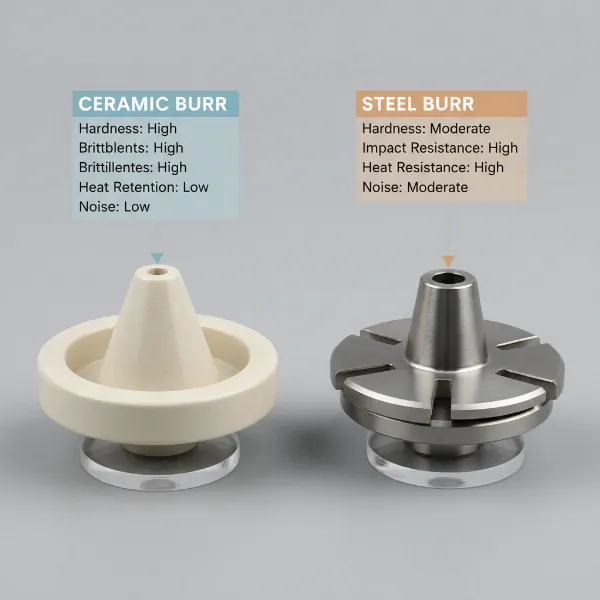 Side-by-side comparison image of ceramic and steel coffee grinder burrs, highlighting their differences.
Choosing the Right Burr Material for Your Coffee Grinder
Selecting between ceramic and steel burrs ultimately depends on your individual preferences, brewing habits, and priorities. Consider these factors:
- Your Brewing Method: If you’re an espresso aficionado who frequently grinds very fine, the heat-resistant properties and consistent fine grind of ceramic burrs might be more appealing for flavor preservation. For coarser grinds like French press or pour-over, steel burrs offer excellent consistency and speed.
- Usage Frequency: For those who grind large quantities of coffee daily, the sheer impact resistance of steel burrs can be advantageous, especially in commercial settings. For occasional users or those who prioritize longevity and flavor over speed, ceramic might be the choice.
- Budget: While ceramic grinders often have a higher initial cost, their extended lifespan and consistent performance might offer better long-term value for some. Steel grinders present a more budget-friendly entry point with reliable performance.
- Tolerance for Noise & Maintenance: If a quieter grinding experience is paramount, ceramic burrs generally have an edge. For steel burrs, be prepared for slightly more noise and diligent drying to prevent rust.
Top Picks: Grinders with Quality Burrs
While I won’t name specific models, here’s what to look for based on burr material:
Manual Grinders with Ceramic Burrs – Ideal for Portability and Flavor
Many high-quality manual grinders feature ceramic conical burrs. These are excellent for those who travel, prefer a quiet morning ritual, or want to meticulously control their grind for exceptional flavor preservation without the heat of an electric motor. Expect a slower grind and some manual effort, but the quality in the cup is often outstanding.
Electric Grinders with Steel Burrs – Speed and Consistency for Daily Brewing
For daily convenience and versatility, electric grinders with steel burrs are a popular choice. Look for models with high-quality, precision-machined steel burrs (flat or conical) that offer a wide range of grind settings. While they might be louder and generate a bit more heat, reputable brands mitigate this with efficient designs, making them perfect for various brewing methods from drip to pour-over.
Premium Grinders with Coated Steel Burrs – The Best of Both Worlds
Some advanced grinders feature steel burrs with specialized coatings (e.g., titanium, ceramic composite). These coatings are designed to enhance the durability and heat management of steel, offering an exceptional balance of sharpness, longevity, and flavor preservation, often at a higher price point. This option is for the serious enthusiast seeking top-tier performance.
Conclusion
Choosing between ceramic and steel burrs is a pivotal decision for any coffee enthusiast. While ceramic burrs excel in maintaining sharpness, resisting corrosion, and generating minimal heat for superior flavor preservation, they are more brittle and often come with a higher price tag. Steel burrs, on the other hand, offer exceptional impact resistance, initial sharpness, and a more economical entry point, though they may generate more heat and require more frequent maintenance to prevent dulling or corrosion.
Ultimately, neither material is definitively “better” than the other; instead, the ideal choice aligns with your specific needs, brewing preferences, and willingness to invest. Do you prioritize ultimate flavor integrity and longevity, or are robustness, speed, and initial cost-effectiveness more important? Consider your daily ritual, your preferred brewing methods, and your budget to make an informed decision that will elevate your coffee experience. What’s your brewing style, and which burr material do you think best complements it?
Frequently Asked Questions
Do ceramic burrs affect coffee flavor more than steel burrs?
Ceramic burrs generate less heat during grinding, which is crucial for preserving the delicate coffee oils and volatile aromatics. This often results in a cleaner, purer flavor profile. While steel burrs can impart slightly more heat, potentially affecting these compounds, the difference is often subtle and more noticeable to experienced tasters or during extended grinding sessions.
How long do coffee grinder burrs typically last?
For an average home user who grinds approximately 1-2 pounds of coffee monthly, ceramic burrs are remarkably durable and can last 15 years or even longer. Standard stainless steel burrs typically have a lifespan of 8-12 years. High-end steel burrs with specialized coatings can potentially last upwards of 20 years with proper care and maintenance.
Can I use steel burrs for espresso grinding?
Absolutely. High-quality steel burrs, particularly flat burrs, are widely used and capable of producing excellent, consistent fine grinds necessary for espresso. Many professional-grade espresso grinders utilize steel burrs due to their precision and efficiency, although managing heat generation during high-volume or prolonged grinding is a consideration.
Are ceramic burrs more difficult to clean?
Both ceramic and steel burrs require regular cleaning to maintain optimal performance and prevent oil buildup. Ceramic burrs are naturally rust-proof, making their cleaning straightforward without concern for corrosion. Steel burrs, while generally easy to clean, should be thoroughly dried after washing to prevent any potential rust development, especially if exposed to moisture or acidic residues.
What causes coffee grinder burrs to wear out or dull over time?
Burr wear and dulling primarily occur due to the abrasive friction generated when crushing coffee beans, particularly harder light roasts. Over time, this friction erodes the sharp edges of the burrs. The presence of foreign objects like small stones in coffee beans can also cause significant damage, such as chipping (especially with ceramic) or blunting.