There are few things more disappointing than looking forward to that first sip of coffee, only to be met with an overwhelmingly bitter, harsh taste. It’s a common frustration for many home brewers, transforming a potentially delightful experience into a regretful one. Often, the culprit behind this unwelcome bitterness is hidden in plain sight: your coffee grind size. Understanding how grind size impacts extraction is key to unlocking a consistently delicious cup, free from unwanted bitterness.
What is Bitter Coffee? (And How It Differs from Sour)
At its core, bitter coffee is a sign of over-extraction. This occurs when too many soluble compounds are dissolved from the coffee grounds into the water, leading to an imbalance in flavor. While a subtle bitterness can be a desirable characteristic, especially in darker roasts, an overpowering bitterness typically manifests as a dry, acrid, or even burnt taste that lingers unpleasantly on the back of your palate.
It’s important not to confuse bitterness with sourness, which indicates under-extraction. Sour coffee often tastes sharp, acidic, or tart, hitting the sides of your tongue and quickly dissipating. If your coffee is sour, it means not enough of the flavorful compounds have been extracted. The balance between these two extremes is the sweet spot of a perfectly brewed cup.
The Science of Extraction and Grind Size
The size of your coffee grounds plays a profoundly critical role in the extraction process. When hot water comes into contact with coffee grounds, it dissolves various compounds, including acids, sugars, and oils, which contribute to the coffee’s flavor. The rate at which these compounds dissolve is heavily influenced by the surface area of the coffee grounds.
Imagine a large rock versus a pile of sand. If you pour water over both, the water will penetrate the sand much faster and dissolve more from it in a shorter amount of time due to the increased surface area. The same principle applies to coffee.
- Finer Grind: A finer grind means the coffee particles have a significantly larger total surface area exposed to water. This allows for much faster extraction. If the grind is too fine for your brewing method or contact time, the water will quickly dissolve all the desirable flavors and then move on to the less pleasant, bitter compounds, resulting in over-extraction.
- Coarser Grind: Conversely, a coarser grind has less surface area, slowing down the extraction process. This allows water to interact with the coffee grounds for a longer period, extracting a full spectrum of flavors without over-extracting the bitter notes. If your coffee tastes bitter, often the most immediate solution related to your grind is to adjust it to a coarser setting.
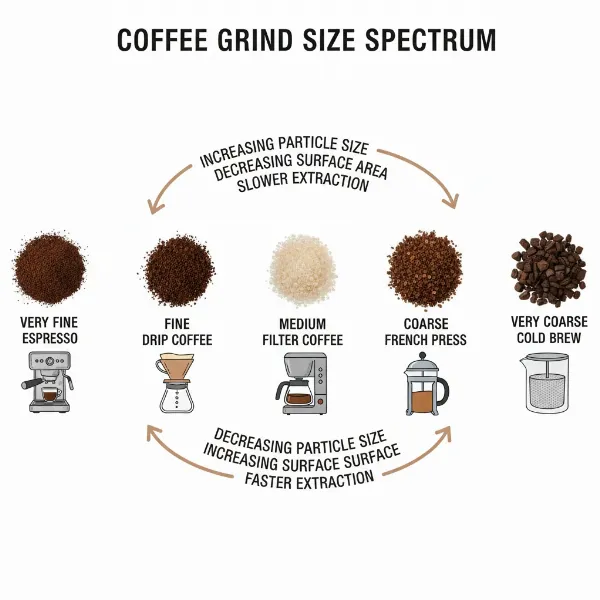 Various coffee grind sizes, from very fine to extra coarse, demonstrating their role in coffee extraction.
Beyond Grind: Other Factors Contributing to Bitter Coffee
While grind size is a primary suspect, several other factors can contribute to an overly bitter cup. Understanding these variables allows for comprehensive troubleshooting and greater control over your brewing.
Brew Time
|
Our Picks for the Best Coffee grinder in 2026
As an Amazon Associate I earn from qualifying purchases.
|
||
| Num | Product | Action |
|---|---|---|
| 1 | OXO Brew Conical Burr Coffee Grinder - Silver, Stainless Steel Burrs, One-Touch Automatic Smart Grind |

|
| 2 | Cuisinart Coffee Grinder, Electric One-Touch Automatic Burr Coffee Grinder with 18-Position Grind Selector, Cup Size Selector for 4 – 18 Cups, DBM-8P1, Black Stainless |
|
| 3 | SHARDOR Professional Conical Burr Coffee Grinder, Coffee Bean Grinder with 48 Grind Settings for Espresso, Drip & French Press, Upgraded Anti-Static Technology, Precision Timer, Stainless Steel |
|
| 4 | Hamilton Beach Custom Grind Electric Coffee Grinder for 4-14 Cups, One-Press Hand-Free Operation with Auto Shutoff, Removable Grinding Bowl For Easy Pour and Clean, Stainless Steel (80406) |
|
| 5 | Hamilton Beach Fresh Grind Electric Coffee Grinder for Beans, Spices and More, Stainless Steel Blades, Removable Chamber, Makes up to 12 Cups, Black |
|
| 6 | Wancle Electric Coffee Grinder, Spice Grinder, One Touch Coffee Mill for Beans, Spices and More, with Clean Brush Black |
|
| 7 | Cuisinart Coffee Grinder, One Touch Control Coffee Bean Grinder with Stainless Steel Bowl and Blades, 2.5 oz/70g Capacity Enough for 12 Cups, On/Off Switch with Safety Interlock, DCG-20BKN, Black |
|
| 8 | BLACK+DECKER One Touch Coffee Grinder, 2/3 Cup Coffee Bean Capacity, Spice Grinder, One Touch Push-Button Control -150 Watts -Stainless Steel Blades |
|
| 9 | Amazon Basics Electric Coffee Grinder, Coffee Bean and Spice Grinder, With Heavy-Duty Stainless Steel Grind Blades |
|
| 10 | Automatic Coffee Machine, 20-Bar Pressure Espresso Maker with Built-in Grinder, 15-Precision Settings, One-Touch Latte & Cappuccino System, Smart Self-Cleaning |
|
The duration your coffee grounds are in contact with water directly impacts extraction. If the brew time is too long, the water continues to pull compounds from the grounds, eventually leading to over-extraction and bitterness. Each brewing method has an optimal brew time range; exceeding it can turn a good cup bitter.
Water Temperature
The temperature of your brewing water is another critical factor. Water that is too hot (typically above 205°F or 96°C) can aggressively extract bitter compounds from the coffee grounds. Aiming for a water temperature between 195°F and 205°F (90-96°C) is generally recommended for balanced extraction.
Coffee-to-Water Ratio
Using too much coffee for the amount of water can also lead to over-extraction. When there’s an excess of coffee grounds, the water becomes saturated with soluble compounds more quickly, forcing it to extract less desirable, bitter components. Maintaining a consistent and appropriate coffee-to-water ratio is essential for flavor balance.
Bean Quality and Roast
The quality and type of coffee beans play a fundamental role. Lower-grade beans, such as Robusta varieties, are naturally higher in caffeine and chlorogenic acids, which contribute to a more pronounced bitterness. Darker roasts, while favored by some for their bold flavor, also tend to develop more bitter compounds during the roasting process, increasing the likelihood of a bitter final cup if not brewed carefully. Stale beans, having lost their desirable aromatic compounds, can also contribute to a flat and bitter taste.
Water Quality
The quality of the water you use can significantly influence your coffee’s taste. Water with high mineral content or chemical additives like chlorine can negatively interact with coffee compounds, leading to off-flavors, including bitterness. Filtered water free from impurities is often recommended for optimal brewing.
Equipment Cleanliness
Overlooked but crucial, dirty brewing equipment can harbor residual coffee oils and old grounds. These residues can become rancid over time, imparting a stale, bitter taste to fresh coffee, regardless of how perfectly you’ve managed other variables. Regular cleaning of your grinder, brewer, and all contact surfaces is vital.
Table: Common Brewing Methods and Recommended Grind Sizes
Matching your grind size to your brewing method is a foundational step in preventing bitterness and ensuring optimal extraction.
| Brewing Method | Recommended Grind Size | Common Characteristics |
|---|---|---|
| Espresso | Very Fine (Powdery) | High pressure, short contact time; requires fine grind for resistance and efficient extraction. |
| Moka Pot | Fine (Table Salt) | Pressure brewing; a slightly coarser grind than espresso to prevent clogging and over-extraction. |
| Pour Over/Drip | Medium (Table Salt) | Gravity-fed, moderate contact time; balanced grind for steady flow and even extraction. |
| Aeropress | Medium-Fine to Medium | Versatile, shorter brew times; allows for flexibility depending on desired strength and immersion. |
| French Press | Coarse (Sea Salt) | Full immersion, long contact time; coarse grind prevents over-extraction and excessive sediment. |
| Cold Brew | Extra Coarse (Breadcrumbs) | Very long immersion (12-24 hours) in cold water; needs very coarse grind to avoid over-extraction. |
Troubleshooting Guide: Fixing Your Bitter Brew
If your coffee consistently tastes bitter, here’s a systematic approach to identify and rectify the problem:
- Adjust Grind Size First: This is often the quickest fix. If your coffee is bitter, try making your grind noticeably coarser. This will slow down the extraction rate, reducing the likelihood of over-extraction.
- Optimize Brew Time: Check the recommended brew time for your specific brewing method. If you’re exceeding it, shorten your contact time by 15-30 seconds and taste the difference. For espresso, adjust your grind to achieve a shot within the 25-30 second window.
- Control Water Temperature: Ensure your brewing water is between 195°F and 205°F (90-96°C). Using a kettle with temperature control can be invaluable. If you don’t have one, bring water to a boil and then let it rest for 30-60 seconds before pouring.
- Refine Coffee-to-Water Ratio: Use a kitchen scale to accurately measure your coffee grounds and water. A common starting point is a 1:15 or 1:16 coffee-to-water ratio (e.g., 1 gram of coffee to 15-16 grams of water), but you might adjust this slightly based on taste.
- Choose Quality, Fresh Beans: Invest in freshly roasted, specialty-grade coffee beans and grind them just before brewing. Store beans in an airtight container away from light, heat, and moisture.
- Maintain Clean Equipment: Regularly clean your grinder, brewing device, and any coffee-contact surfaces. A quick rinse after each use and a deeper clean periodically can make a significant difference.
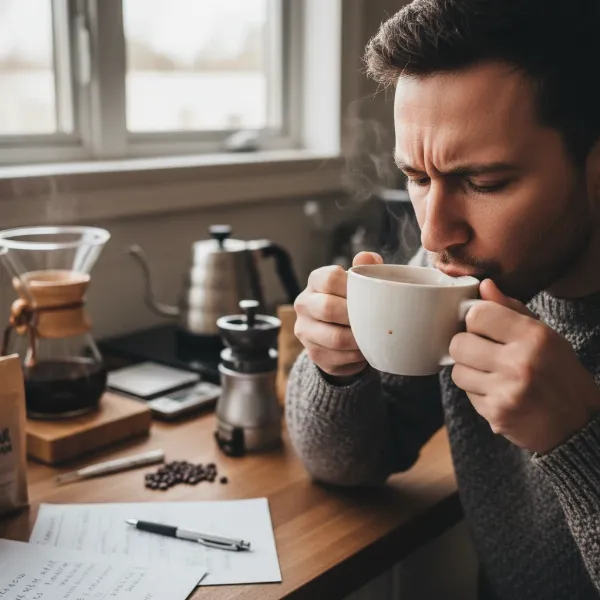 Person thoughtfully tasting coffee, indicating the process of troubleshooting a bitter brew.
“A common misconception is that a finer grind always means a stronger coffee. While it increases extraction, it can also quickly push you into the realm of bitterness. Finding the right balance is an art, but it always starts with an understanding of how your grind interacts with your chosen brewing method.”
Conclusion
The pursuit of the perfect cup of coffee is a journey of discovery, and encountering bitterness is a common roadblock. By understanding the intricate relationship between grind size and extraction, alongside other crucial brewing variables, you gain the power to transform your coffee experience. Remember that bitterness often signals over-extraction, and adjusting your grind to be coarser is frequently the first, most effective step towards a smoother, more balanced brew. Experimentation is key; a slight tweak to your grind, temperature, or brew time can unveil a world of nuanced flavors you never knew existed in your coffee.
Are you ready to experiment with your grind and discover your perfectly balanced cup?
Frequently Asked Questions
Can stale coffee beans make coffee taste bitter?
Yes, stale coffee beans can contribute to a bitter taste. As coffee ages, its volatile aromatic compounds degrade, leaving behind more of the bitter-tasting soluble solids. For the freshest and most balanced flavor, it’s best to use beans within a few weeks of their roast date and grind them just before brewing.
What is the ideal water temperature to prevent bitter coffee?
The ideal water temperature for brewing coffee to prevent bitterness is generally between 195°F and 205°F (90°C to 96°C). Water hotter than this range can aggressively over-extract bitter compounds, while water that is too cool may lead to under-extraction and a sour taste.
Is dark roast coffee always bitter?
Not necessarily, but dark roast coffees do tend to have a more pronounced natural bitterness due to the longer roasting process developing more bitter compounds. However, a well-brewed dark roast should still offer a pleasant, robust flavor profile without being overwhelmingly harsh or acrid. If it’s too bitter, consider adjusting your grind or other brewing parameters.