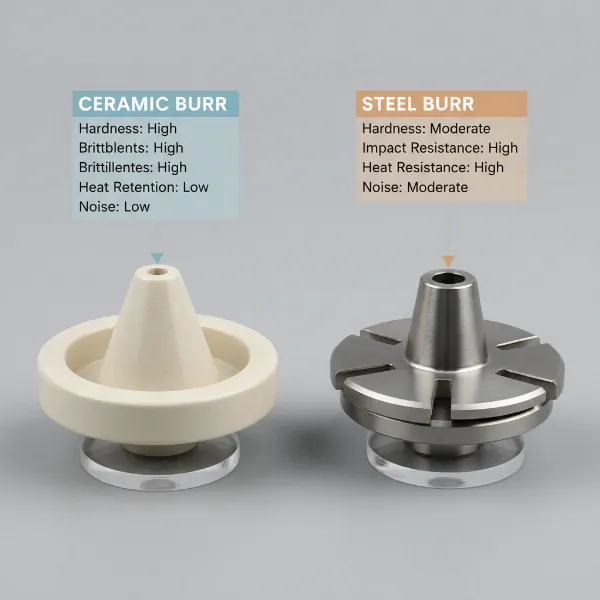
Are you tired of inconsistent espresso shots, sometimes too sour, sometimes too bitter, or simply lacking that rich, balanced flavor you crave? The secret often lies in your coffee grinder. Achieving the “perfect espresso” isn’t just about owning a good machine; it’s fundamentally about calibrating your grinder to deliver the ideal particle size for extraction. This comprehensive guide will walk you through the essential steps to fine-tune your grinder, troubleshoot common issues, and unlock the full potential of your coffee beans, ensuring every shot is a masterpiece.
Understanding the Importance of Grind Calibration
The grind size of your coffee beans directly impacts how water interacts with the coffee particles during extraction. When water passes through the coffee puck, it dissolves various compounds that contribute to flavor, aroma, and body.
- Too Coarse: If the grind is too coarse, water flows through too quickly, resulting in “under-extraction.” This means not enough flavor compounds are dissolved, leading to a thin, watery, and often sour espresso.
- Too Fine: Conversely, if the grind is too fine, water struggles to pass through, leading to “over-extraction.” This dissolves too many bitter and undesirable compounds, resulting in a harsh, astringent, and often overly strong espresso.
The goal of calibration is to find that “sweet spot” where the grind size allows for an optimal extraction, balancing acidity, sweetness, and bitterness to create a rich, full-bodied, and aromatic espresso.
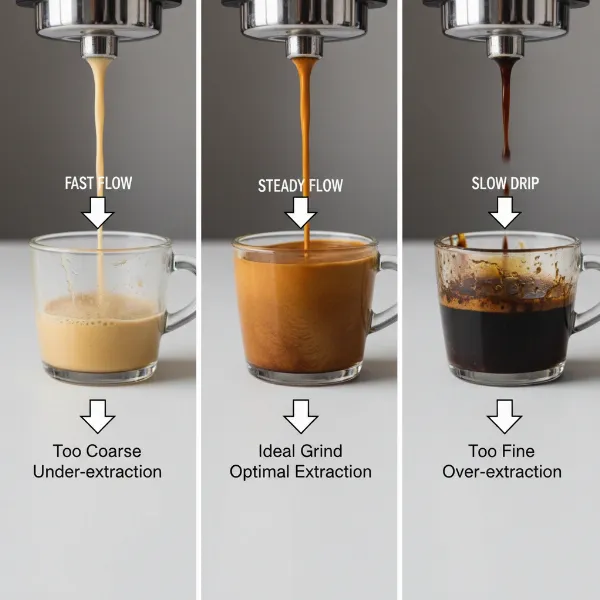 Visual comparison of espresso extraction results from coarse, ideal, and fine coffee grinds.
Essential Tools for Calibration
Before you begin, ensure you have the following:
- Fresh Coffee Beans: The quality and freshness of your beans significantly affect extraction.
- Espresso Machine: Your espresso machine should be clean and warmed up.
- Precision Scale: To measure coffee dose (in grams) and espresso yield (in grams/ml).
- Timer: Many coffee scales have built-in timers, or you can use a standalone one.
- Portafilter and Tamper: For consistent dosing and tamping.
- Cleaning Brush: For your grinder.
Step-by-Step Grinder Calibration for Espresso
Calibrating your grinder is a methodical process of trial and error. Patience and small, incremental adjustments are key.
Step 1: Clean and Prepare Your Grinder
Start with a clean slate. Old, stale coffee grounds and oils can interfere with new adjustments and affect flavor.
- Unplug your grinder for safety.
- Remove any old beans from the hopper.
- Use a brush or vacuum to clean the burrs and grind chamber thoroughly.
- Run a small amount of new beans through to purge any remaining old grounds.
|
Our Picks for the Best Coffee grinder in 2026
As an Amazon Associate I earn from qualifying purchases.
|
||
| Num | Product | Action |
|---|---|---|
| 1 | SHARDOR Professional Conical Burr Coffee Grinder, Coffee Bean Grinder with 48 Grind Settings for Espresso, Drip & French Press, Upgraded Anti-Static Technology, Precision Timer, Stainless Steel |

|
| 2 | Automatic Coffee Machine, 20-Bar Pressure Espresso Maker with Built-in Grinder, 15-Precision Settings, One-Touch Latte & Cappuccino System, Smart Self-Cleaning |
|
| 3 | BLACK+DECKER One Touch Coffee Grinder, 2/3 Cup Coffee Bean Capacity, Spice Grinder, One Touch Push-Button Control -150 Watts -Stainless Steel Blades |
|
| 4 | Hamilton Beach Fresh Grind Electric Coffee Grinder for Beans, Spices and More, Stainless Steel Blades, Removable Chamber, Makes up to 12 Cups, Black |
|
| 5 | OXO Brew Conical Burr Coffee Grinder - Silver, Stainless Steel Burrs, One-Touch Automatic Smart Grind |
|
| 6 | Amazon Basics Electric Coffee Grinder, Coffee Bean and Spice Grinder, With Heavy-Duty Stainless Steel Grind Blades |
|
| 7 | Wancle Electric Coffee Grinder, Spice Grinder, One Touch Coffee Mill for Beans, Spices and More, with Clean Brush Black |
|
| 8 | Cuisinart Coffee Grinder, One Touch Control Coffee Bean Grinder with Stainless Steel Bowl and Blades, 2.5 oz/70g Capacity Enough for 12 Cups, On/Off Switch with Safety Interlock, DCG-20BKN, Black |
|
| 9 | Cuisinart Coffee Grinder, Electric One-Touch Automatic Burr Coffee Grinder with 18-Position Grind Selector, Cup Size Selector for 4 – 18 Cups, DBM-8P1, Black Stainless |
|
| 10 | Hamilton Beach Custom Grind Electric Coffee Grinder for 4-14 Cups, One-Press Hand-Free Operation with Auto Shutoff, Removable Grinding Bowl For Easy Pour and Clean, Stainless Steel (80406) |
|
Step 2: Set an Initial Grind Baseline
Start with a middle-ground setting if your grinder has numbered settings, or a neutral position if it’s stepless. This provides a starting point to determine if you need to go finer or coarser.
- For stepped grinders: Choose a mid-range setting (e.g., if settings range 1-40, start at 20).
- For stepless grinders: Position the adjustment mechanism towards the middle.
Step 3: Dose, Tamp, and Pull Your First Test Shot
Consistency in your preparation is vital for accurate calibration.
- Dose: Measure approximately 18-20 grams of fresh coffee beans for a double shot using your precision scale.
- Grind: Grind the beans into your portafilter.
- Tamp: Tamp the coffee evenly and securely with consistent pressure. An uneven tamp can lead to channeling and inconsistent extraction, regardless of grind size.
- Pull Shot: Lock the portafilter into your espresso machine. Start your timer simultaneously as you begin the extraction.
- Observe: Watch the espresso flow and note the time it takes to reach your target yield (typically around 36-40 grams for a double shot).
Step 4: Evaluate Extraction Time and Taste
The ideal extraction time for a double shot of espresso is generally between 25 and 30 seconds. This is your primary indicator for grind adjustment.
- Shot Pulls Too Quickly (Under 25 seconds):
- Indication: The grind is too coarse. Water passed through the coffee bed too easily.
- Visual Cues: Flow is fast, watery, and pale. Crema might be thin or absent.
- Taste: Likely sour, weak, or under-extracted.
- Action: Adjust your grinder to a finer setting.
- Shot Pulls Too Slowly (Over 30 seconds):
- Indication: The grind is too fine. Water struggled to pass through the tightly packed coffee bed.
- Visual Cues: Flow is a slow drip or barely a trickle. Crema might be dark, blotchy, or have large bubbles.
- Taste: Likely bitter, harsh, or over-extracted.
- Action: Adjust your grinder to a coarser setting.
Step 5: Make Small, Incremental Adjustments
Based on your observations, adjust your grinder by small increments.
- If too fast/sour: Turn the adjustment dial towards a finer setting (usually a lower number or tighter burr gap).
- If too slow/bitter: Turn the adjustment dial towards a coarser setting (usually a higher number or wider burr gap).
“When calibrating, never make drastic changes. Think of it like tuning a delicate instrument – small, precise adjustments are always better than large, sweeping ones. You’re aiming for harmony, not a complete overhaul.” – John Smith, Head Roaster at Artisan Coffee Roasters
Pro Tip: If you have a stepless grinder, it’s often recommended to adjust the grind setting while the grinder is running. This helps to prevent burrs from binding with trapped coffee particles and ensures a smoother, more consistent adjustment. For stepped grinders, adjustment can usually be done when the grinder is off, but always follow your manufacturer’s instructions.
Step 6: Test Again and Repeat
After each adjustment, grind another fresh dose of coffee and pull another test shot.
- Repeat steps 3-5 until your espresso consistently extracts between 25-30 seconds, and the taste is balanced, sweet, and complex.
- Pay attention to the color and consistency of the crema, aiming for a rich, golden-brown tiger-stripe appearance.
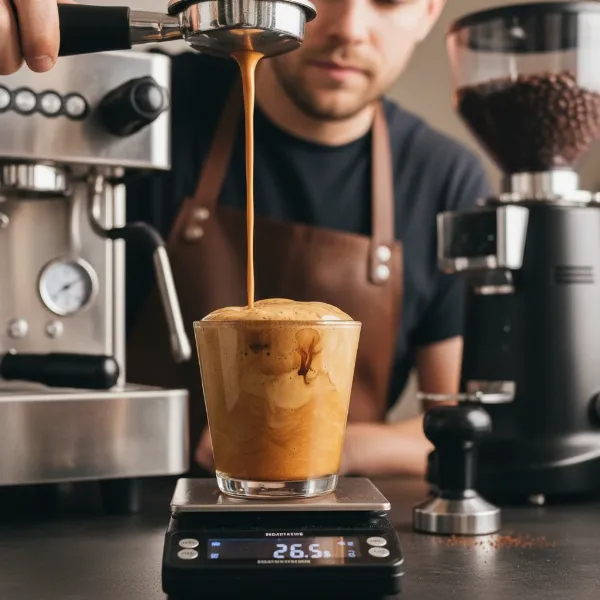 Barista evaluating an espresso shot's flow and crema for grinder calibration.
Step 7: Lock In Your Ideal Setting
Once you’ve achieved the perfect grind size and taste profile, make a note of your grinder’s setting.
- For stepped grinders: Note the specific number.
- For stepless grinders: You might use a small piece of tape or a marker to indicate the position of the adjustment collar for future reference.
Maintaining Consistency: Beyond Calibration
Even after successful calibration, maintaining perfect espresso requires ongoing attention.
- Regular Cleaning: Coffee oils can build up and affect grind consistency and taste. Clean your grinder burrs frequently.
- Freshness of Beans: As coffee beans age, they lose moisture and density, requiring finer grind adjustments over time. Always use freshly roasted beans.
- Environmental Factors: Humidity and temperature can subtly affect coffee density and moisture, potentially requiring minor grind adjustments throughout the day.
- Change One Variable at a Time: When troubleshooting, isolate variables. If you change beans, expect to recalibrate the grind. If your shot time is off, adjust grind first before changing dose or tamp.
Common Grinder Types for Espresso
The type of grinder you own impacts the consistency of your grind and, consequently, your espresso.
Manual Grinders
- Pros: Portable, quiet, full control over grind, often produces excellent grind quality for the price.
- Cons: Time-consuming, requires effort, lower capacity.
- Best For: Travelers, those who value ritual, small batches, or a tight budget but demand quality.
Electric Blade Grinders
- Pros: Very inexpensive, readily available.
- Cons: Inconsistent grind (chops beans rather than grinds), creates heat that can degrade flavor, unsuitable for espresso.
- Best For: Spice grinding, not recommended for quality coffee, especially espresso.
Electric Burr Grinders (Conical or Flat)
- Pros: Produces consistent grind particles crucial for espresso, less heat generation than blade grinders, preserves flavor.
- Cons: Higher price point, can be noisy, larger footprint.
- Best For: Serious home baristas, coffee enthusiasts, anyone seeking high-quality, consistent espresso. Burr grinders are essential for espresso.
| Feature | Manual Grinder | Electric Blade Grinder | Electric Burr Grinder |
|---|---|---|---|
| Grind Quality | Good – Excellent | Poor (inconsistent) | Excellent (consistent) |
| Price | Low – Moderate | Very Low | Moderate – High |
| Noise Level | Very Quiet | Loud | Moderate – Loud |
| Portability | High | Low | Low |
| Espresso Suitability | Good (with quality burrs) | Not Recommended | Essential |
Conclusion
Calibrating your grinder is an indispensable skill for anyone passionate about brewing exceptional espresso. By meticulously adjusting your grind size, you gain control over the extraction process, transforming inconsistent shots into consistently delicious ones. Remember that the journey to perfect espresso is ongoing, influenced by factors like bean freshness and environmental conditions. Embrace the process, make small adjustments, taste critically, and soon you’ll be enjoying perfectly calibrated espresso shots every time. What subtle changes have you noticed that drastically improved your espresso?
Frequently Asked Questions
Why does my espresso taste sour even after I’ve adjusted my grind?
If your espresso tastes consistently sour, it often indicates under-extraction. Even if you’ve made your grind finer, it might still not be fine enough, or other factors like an insufficient dose or low brewing temperature could be contributing. Ensure your shot pulls within the 25-30 second window for a double shot, and try making very slight adjustments to a finer setting again.
How often should I recalibrate my grinder?
You should typically recalibrate your grinder whenever you switch to a new bag of coffee beans, as different roasts and origins will require different grind settings. Additionally, minor adjustments might be needed day-to-day due to changes in humidity, temperature, or the aging of the beans as you work through a bag.
Can I calibrate my grinder without a precision scale?
While possible, calibrating without a precision scale makes achieving consistent results much harder. A scale allows you to accurately measure your dose and yield, eliminating two significant variables and allowing you to focus solely on grind size and extraction time for precise calibration. It’s a highly recommended tool for serious espresso enthusiasts.