Choosing the right coffee grinder is paramount to unlocking the full potential of your beans. For many coffee enthusiasts, Timemore’s manual grinders, particularly the C2 and C3 models, have become go-to options, balancing performance with affordability. But when faced with the Timemore C3, a newer iteration, a crucial question arises: is the upgrade from the beloved C2 truly worth the investment? This comprehensive guide delves into the nuances of each grinder, comparing their features, performance, and value to help you make an informed decision and brew your best cup yet.
Popular Timemore Manual Coffee Grinders
Timemore offers a range of manual grinders, but the C2 and C3 series stand out for their accessibility and consistent performance. Both are designed to deliver a superior grinding experience compared to blade grinders, ensuring a more uniform particle size for better extraction. These hand grinders cater to those who value grind consistency and portability without the noise and counter space demands of electric alternatives. Whether your preference is pour-over, French press, or even espresso, the choice between these models can significantly impact your daily brewing ritual.
Timemore C2 Manual Coffee Grinder
|
Our Picks for the Best Coffee grinder in 2026
As an Amazon Associate I earn from qualifying purchases.
|
||
| Num | Product | Action |
|---|---|---|
| 1 | OXO Brew Conical Burr Coffee Grinder - Silver, Stainless Steel Burrs, One-Touch Automatic Smart Grind |

|
| 2 | BLACK+DECKER One Touch Coffee Grinder, 2/3 Cup Coffee Bean Capacity, Spice Grinder, One Touch Push-Button Control -150 Watts -Stainless Steel Blades |
|
| 3 | Automatic Coffee Machine, 20-Bar Pressure Espresso Maker with Built-in Grinder, 15-Precision Settings, One-Touch Latte & Cappuccino System, Smart Self-Cleaning |
|
| 4 | Wancle Electric Coffee Grinder, Spice Grinder, One Touch Coffee Mill for Beans, Spices and More, with Clean Brush Black |
|
| 5 | Cuisinart Coffee Grinder, One Touch Control Coffee Bean Grinder with Stainless Steel Bowl and Blades, 2.5 oz/70g Capacity Enough for 12 Cups, On/Off Switch with Safety Interlock, DCG-20BKN, Black |
|
| 6 | SHARDOR Professional Conical Burr Coffee Grinder, Coffee Bean Grinder with 48 Grind Settings for Espresso, Drip & French Press, Upgraded Anti-Static Technology, Precision Timer, Stainless Steel |
|
| 7 | Cuisinart Coffee Grinder, Electric One-Touch Automatic Burr Coffee Grinder with 18-Position Grind Selector, Cup Size Selector for 4 – 18 Cups, DBM-8P1, Black Stainless |
|
| 8 | Hamilton Beach Custom Grind Electric Coffee Grinder for 4-14 Cups, One-Press Hand-Free Operation with Auto Shutoff, Removable Grinding Bowl For Easy Pour and Clean, Stainless Steel (80406) |
|
| 9 | Amazon Basics Electric Coffee Grinder, Coffee Bean and Spice Grinder, With Heavy-Duty Stainless Steel Grind Blades |
|
| 10 | Hamilton Beach Fresh Grind Electric Coffee Grinder for Beans, Spices and More, Stainless Steel Blades, Removable Chamber, Makes up to 12 Cups, Black |
|
The Timemore C2 established itself as a formidable entry-level premium option in the manual grinder market, earning accolades from coffee enthusiasts. Known for its robust aluminum body and efficient 38mm stainless steel conical burrs, the C2 offers excellent grind consistency, especially for coarser settings suitable for methods like AeroPress, pour-over, and French press. Its lightweight and portable design, typically retailing for $60-$75, makes it an attractive choice for travelers or those with limited kitchen space. However, some users note that while it can grind fine enough for espresso, achieving consistent espresso results can be challenging due to coarser adjustment steps and the potential for more fines.
Timemore C3 Manual Coffee Grinder
The Timemore C3 series builds upon the C2’s success, introducing several notable improvements and refinements. The most significant upgrade is the inclusion of the “Spike-to-Cut” (S2C 660) burr set, a technology scaled down from Timemore’s high-end Chestnut X grinder. This new burr design pre-cuts beans for a more uniform particle distribution, leading to enhanced grind consistency, particularly for finer grinds and lighter roasts, and a smoother grinding experience. The C3 also boasts enhanced build quality, with many variants (like the C3S) featuring an all-metal aluminum alloy body and dual-bearing stabilization for superior durability and grind shaft stability. While the base C3 might still have some plastic internal components, later C3 series models replace these for a premium feel. The C3 commands a slightly higher price, approximately $20-$30 more than the C2.
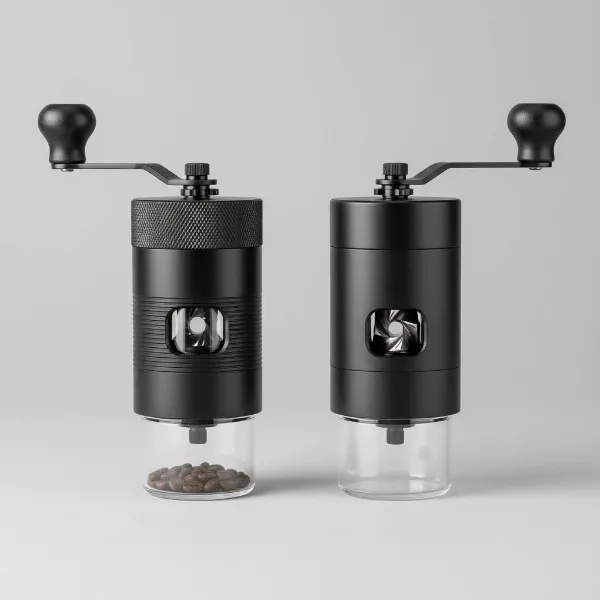 Comparison of Timemore C2 and C3 manual coffee grinders side-by-side, highlighting design differences.
Timemore C2 vs. C3: A Head-to-Head Comparison
To truly understand if the C3 is a worthwhile upgrade, let’s break down the key differences:
| Feature | Timemore C2 | Timemore C3 |
|---|---|---|
| Burr Set | 38mm Stainless Steel Conical Burrs | 38mm S2C 660 Stainless Steel Conical Burrs |
| Grind Consistency | Excellent for medium-coarse, good for fine | Enhanced, superior uniformity, fewer fines (especially fine) |
| Grinding Speed | Often faster for coarser grinds | Smoother, easier grinding; excels at finer grinds |
| Build Quality | Aluminum body, some internal plastic (older models) | All-metal body (C3S+), dual-bearing stabilization, improved ergonomics |
| Espresso Suitability | Achievable but challenging, less precise adjustments | Improved, especially C3 ESP models with finer clicks (0.0233 mm/click) |
| Capacity | ~20-22g | 20-25g (up to 30g for C3 Max variants) |
| Price Range | $60 – $75 | $79 – $110 (depending on variant) |
Key Factors to Consider When Upgrading
When deciding between the Timemore C2 and C3, consider these critical aspects based on your personal brewing habits and priorities.
Grind Quality and Burr Design
The most significant difference lies in the burr design. The C3’s S2C burrs are engineered to “spike to cut” the beans before grinding, resulting in a more uniform particle distribution and fewer fines, particularly noticeable in pour-over and espresso extractions. While the C2 delivers excellent consistency for drip and immersion brewing, the C3’s advanced burrs offer a tangible improvement in clarity and taste, especially with lighter roasted coffees that demand precision.
Build Materials and Durability
The C2 features a sturdy aluminum body, but some older iterations included plastic components internally, such as the axle stabilizer and handle knob. The C3, particularly the C3S and C3 Pro models, elevates the build quality with an all-metal construction, eliminating internal plastic parts for enhanced durability and a more premium feel. This robust construction, coupled with dual-bearing stabilization, ensures greater longevity and consistent grind alignment over time.
Espresso Performance
For espresso aficionados, the C3 offers a distinct advantage. While both grinders can technically achieve espresso-fine grinds, the C3, and especially its C3 ESP variant, provides more precise adjustment clicks. The C3 ESP boasts 30 clicks per rotation (0.0233 mm per click), allowing for finer tuning of your espresso shots, which is crucial for dialing in that perfect extraction. The C2’s larger click steps make fine-tuning espresso more challenging, often requiring adjustments to dose or tamp pressure.
“The C3’s S2C burrs and finer adjustment capabilities make it a more capable grinder for espresso, offering greater precision than the C2.” – Coffee Chronicler Review, Expert Opinion
Grinding Experience and Speed
The grinding experience with both is generally smooth, but the C3 often feels easier, especially when processing denser, lighter roast beans. While some tests suggest the C2 might be faster for coarser grinds, the C3 excels in grinding finer particles more efficiently. The improved ergonomics and handle design of the C3 contribute to a more comfortable grinding session, reducing fatigue during extended use.
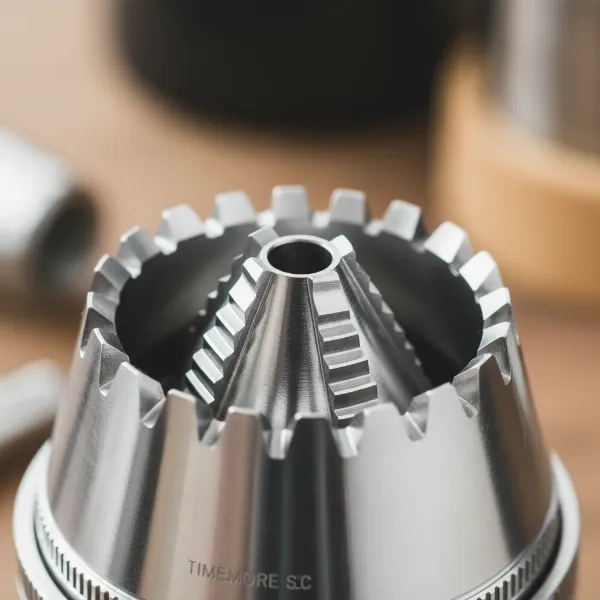 Close-up view of Timemore C3 S2C burr set for coffee grinding showing spike-to-cut mechanism.
Price and Value Proposition
The Timemore C2, priced between $60-$75, remains an exceptional value for an entry-level manual grinder, delivering performance that often surpasses its cost. The C3, with its enhanced features and build quality, typically costs $20-$30 more, ranging from $79 for the base model to over $100 for premium variants like the C3 ESP Pro. If you’re a casual brewer or primarily use immersion methods, the C2 offers incredible value. However, for daily grinders, espresso enthusiasts, or those seeking the absolute best grind consistency for pour-overs, the incremental cost of the C3 is justified by its significant improvements.
Timemore C3: Top Picks
The C3 series offers several iterations, each catering to slightly different needs:
Timemore C3 – The Base Model
This version features the S2C burrs and improved internal stability but retains some plastic components internally. It’s a solid upgrade in grind quality over the C2 at an approachable price point.
Timemore C3S – All-Metal Body
The “S” in C3S denotes an all-metal internal frame and often a silicone base for added stability. This variant offers superior durability and a more premium feel in hand.
Timemore C3 Pro – Foldable Handle
Building on the C3S, the Pro version includes a convenient foldable handle, making it exceptionally portable and travel-friendly without compromising performance.
Timemore C3 ESP – Espresso-Focused Precision
Designed specifically for espresso, the C3 ESP features a more granular adjustment dial with 30 clicks per rotation, offering the fine-tuning necessary for consistent espresso shots. This model is ideal for those who prioritize espresso brewing.
Conclusion
The Timemore C2 has long been a benchmark for affordable, high-performing manual Coffee Grinders, and it continues to be an excellent choice for many. Its value for money and reliable performance for filter brewing methods are undeniable. However, the Timemore C3, with its advanced S2C burrs, improved build quality, enhanced grind consistency, and superior espresso capabilities (especially in its ESP variants), represents a meaningful evolution.
If you already own a C2 and are content with your current brews, the upgrade might not be an absolute necessity, particularly if price is your primary concern. The C2 still delivers a fantastic cup of coffee for its cost. However, if you’re seeking to elevate your coffee experience, meticulously dial in espresso shots, or simply desire the latest refinements in manual grinding technology and build quality, the Timemore C3 is undoubtedly worth the upgrade. It’s an investment in superior consistency, durability, and a more refined grinding journey that will truly make a difference in your cup. Which Timemore grinder will become your trusted brewing companion?
Frequently Asked Questions
What’s the main difference in grind quality between the C2 and C3?
The C3 features upgraded S2C burrs designed for better cutting performance and more uniform particle distribution, resulting in fewer fines and a cleaner cup, especially noticeable in lighter roasts and pour-over methods.
Can both the C2 and C3 grind fine enough for espresso?
Yes, both can achieve espresso-appropriate grind sizes. However, the C3 offers better consistency and more precise adjustment mechanisms (especially the C3 ESP model) for dialing in espresso, making it a more suitable choice for espresso enthusiasts.
Is the Timemore C3 worth the extra cost compared to the C2?
For daily coffee drinkers, espresso enthusiasts, or those prioritizing the highest grind consistency and durability, the C3’s enhanced features and all-metal construction justify the higher price. For occasional use or budget-conscious buyers primarily doing drip coffee, the C2 still offers excellent value.
How much coffee can each grinder hold?
The standard Timemore C2 and C3 typically hold around 20-22 grams of coffee beans. However, some C3 variants, like the C3 Max, can accommodate up to 30 grams.