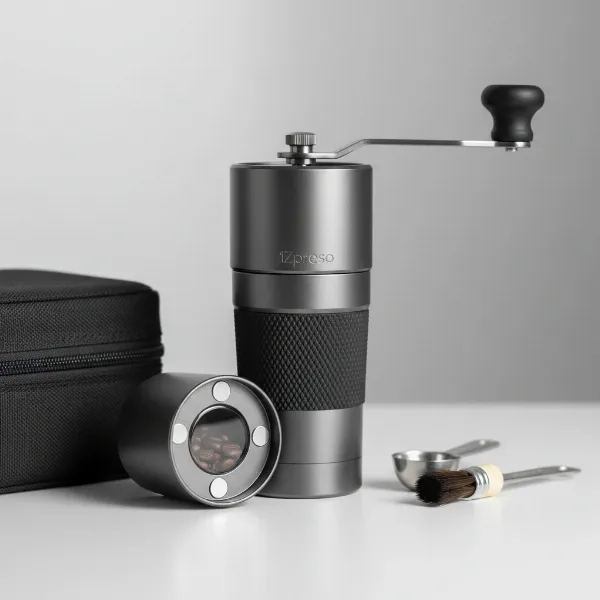
Is there truly a noticeable difference in taste between coffee ground by hand and coffee ground by an electric machine? For many coffee enthusiasts, the debate between manual and electric grinders is not just about convenience; it often boils down to the ultimate flavor in the cup. As someone who has spent over a decade meticulously testing and evaluating coffee grinders, from traditional hand-crank models to cutting-edge electric devices, I can tell you the answer isn’t always black and white, but the nuances are what make all the difference to your daily brew.
The pursuit of the perfect cup begins before the water even touches the beans. Freshly ground coffee is paramount, as the aromatic oils and delicate flavor compounds begin to degrade rapidly once exposed to air. But beyond just “fresh,” the quality of that grind is critical. It influences how water extracts flavors during brewing, dictating whether your coffee is rich and balanced or bitter and weak. Understanding how different grinders impact this process is key to elevating your coffee experience.
Popular Coffee Grinder Types
The world of coffee grinders can be broadly categorized into three main types, each with distinct characteristics that affect both the grinding process and the final taste.
Manual Grinders
Manual coffee grinders, often referred to as hand grinders, rely on your effort to turn a crank that powers a set of burrs. They embody a more traditional and tactile approach to coffee preparation.
- Advantages: Manual burr grinders are celebrated for their ability to produce a highly consistent grind, often rivaling electric models at a fraction of the cost. Their slower operation generates minimal heat, which is crucial for preserving the delicate volatile compounds in coffee beans, resulting in a cleaner, more nuanced flavor profile. They are also incredibly portable, quiet, and durable, making them ideal for travel or early morning rituals when you don’t want to disturb others.
- Disadvantages: The primary drawbacks are the physical effort required and the time it takes, especially for larger quantities or very fine grinds like espresso. This can make them less practical for busy mornings or households that consume a lot of coffee.
- Best Suited For: Individuals who appreciate the ritual of coffee making, travelers, those with smaller budgets seeking high-quality grinds, and anyone prioritizing quiet operation.
|
Our Picks for the Best Coffee grinder in 2026
As an Amazon Associate I earn from qualifying purchases.
|
||
| Num | Product | Action |
|---|---|---|
| 1 | SHARDOR Professional Conical Burr Coffee Grinder, Coffee Bean Grinder with 48 Grind Settings for Espresso, Drip & French Press, Upgraded Anti-Static Technology, Precision Timer, Stainless Steel |

|
| 2 | Cuisinart Coffee Grinder, Electric One-Touch Automatic Burr Coffee Grinder with 18-Position Grind Selector, Cup Size Selector for 4 – 18 Cups, DBM-8P1, Black Stainless |
|
| 3 | Automatic Coffee Machine, 20-Bar Pressure Espresso Maker with Built-in Grinder, 15-Precision Settings, One-Touch Latte & Cappuccino System, Smart Self-Cleaning |
|
| 4 | Hamilton Beach Fresh Grind Electric Coffee Grinder for Beans, Spices and More, Stainless Steel Blades, Removable Chamber, Makes up to 12 Cups, Black |
|
| 5 | Cuisinart Coffee Grinder, One Touch Control Coffee Bean Grinder with Stainless Steel Bowl and Blades, 2.5 oz/70g Capacity Enough for 12 Cups, On/Off Switch with Safety Interlock, DCG-20BKN, Black |
|
| 6 | Amazon Basics Electric Coffee Grinder, Coffee Bean and Spice Grinder, With Heavy-Duty Stainless Steel Grind Blades |
|
| 7 | Wancle Electric Coffee Grinder, Spice Grinder, One Touch Coffee Mill for Beans, Spices and More, with Clean Brush Black |
|
| 8 | Hamilton Beach Custom Grind Electric Coffee Grinder for 4-14 Cups, One-Press Hand-Free Operation with Auto Shutoff, Removable Grinding Bowl For Easy Pour and Clean, Stainless Steel (80406) |
|
| 9 | BLACK+DECKER One Touch Coffee Grinder, 2/3 Cup Coffee Bean Capacity, Spice Grinder, One Touch Push-Button Control -150 Watts -Stainless Steel Blades |
|
| 10 | OXO Brew Conical Burr Coffee Grinder - Silver, Stainless Steel Burrs, One-Touch Automatic Smart Grind |
|
Electric Blade Grinders
Often the most inexpensive and widely available option, electric blade grinders operate more like blenders. They use rapidly spinning blades to chop and shatter coffee beans into particles.
- Advantages: They are cheap and fast.
- Disadvantages: This method creates an incredibly inconsistent grind, ranging from fine powder to large chunks. Such unevenness leads to unpredictable extraction—some particles over-extracting and becoming bitter, while others under-extract and taste sour. The high-speed blades also generate significant heat, which can scorch the beans and diminish their delicate aromas and flavors before brewing even begins.
- Best Suited For: Generally not recommended for anyone serious about coffee quality. They are better suited for grinding spices.
Electric Burr Grinders (Disc or Conical)
Electric burr grinders employ a motor to power two abrasive surfaces (burrs) that grind coffee beans to a consistent size. They come in two main configurations: conical burrs and flat burrs.
- Advantages: Speed and convenience are the hallmarks of electric burr grinders. With the push of a button, you can quickly achieve a consistent grind, making them perfect for daily use and larger batches. Higher-end models offer a wide range of grind settings and often include features like timers or even dose-by-weight functions for ultimate precision.
- Disadvantages: Quality electric burr grinders tend to be significantly more expensive than their manual counterparts. They are also generally louder due to the motor and less portable as they require a power source. While better than blade grinders, some lower-end electric burr models can still generate more heat or have less precise burrs than high-quality manual grinders, potentially affecting flavor.
- Best Suited For: Busy households, those who prioritize speed and convenience, espresso aficionados needing precise and repeatable grinds, and individuals who brew multiple cups daily.
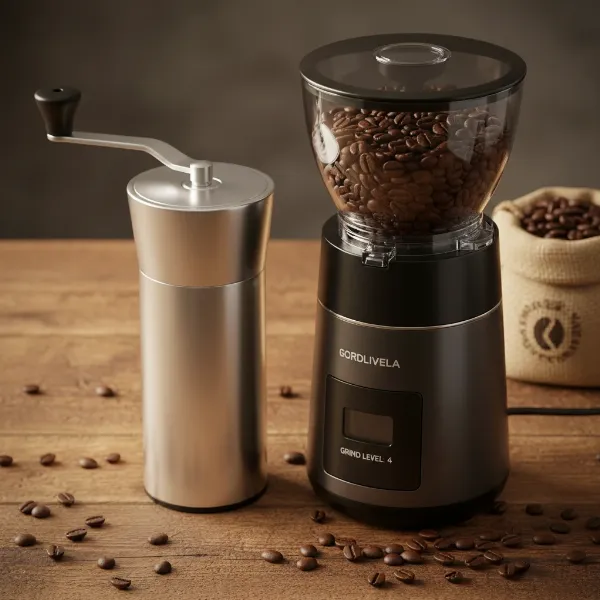 A side-by-side comparison of a sleek manual coffee grinder and a modern electric burr grinder, showcasing their designs.
Comparison of Coffee Grinder Types
Understanding the core differences helps in choosing the right tool for your brewing journey.
| Feature | Manual Grinder | Electric Blade Grinder | Electric Burr Grinder |
|---|---|---|---|
| Grind Consistency | Very Good – Excellent | Poor | Good – Excellent (price dependent) |
| Price | Low – Medium | Very Low | Medium – High |
| Noise | Quiet | Loud | Moderate – Loud |
| Durability | High | Low | Medium – High |
| Portability | High | Low | Low |
| Heat Generation | Very Low | High | Low – Moderate (speed dependent) |
| Taste Potential | Excellent | Poor | Good – Excellent |
Factors to Consider When Buying a Coffee Grinder
Choosing the right Coffee Grinder is one of the most impactful decisions you can make for your coffee experience. Here’s what truly matters for taste:
Grind Consistency
This is arguably the most critical factor. Consistent particle size ensures that all coffee grounds extract at roughly the same rate. If your grind is too inconsistent, you’ll end up with a mix of over-extracted, bitter flavors from the fine particles and under-extracted, sour flavors from the coarse chunks. A uniform grind allows for a balanced extraction, bringing out the full sweetness, acidity, and body of your coffee.
Heat Generation
Friction from grinding inevitably produces heat. Excessive heat, especially at higher speeds, can literally cook the delicate volatile oils within the coffee beans, causing them to evaporate or become stale before brewing. This leads to a duller, less aromatic, and potentially bitter cup. Manual grinders, by their nature, operate at lower RPMs and generate significantly less heat, helping to preserve those precious flavor compounds. High-quality electric burr grinders are designed to minimize heat transfer, often using slower motors or larger burrs.
Burr Material and Type
The quality and design of the burrs are fundamental.
- Material: Burrs are typically made from steel or ceramic. Steel burrs are known for their sharpness and precision, offering clean cuts. Ceramic burrs are highly durable and excel in heat resistance, which helps preserve flavor over time.
- Type: Conical burrs are common in manual grinders and many electric models, often producing a grind with a slightly wider particle distribution (including some “fines”) that can contribute to a fuller body and enhanced sweetness. Flat burrs typically yield a more uniform particle size, leading to cleaner, brighter flavors with greater clarity. The choice often comes down to personal preference for mouthfeel and clarity.
Grind Adjustment Capability
Different brewing methods require different grind sizes. An espresso machine needs a very fine, consistent grind, while a French press demands a much coarser one. A quality grinder should offer precise and easily repeatable adjustments to dial in the perfect grind for your chosen brewing method. This adjustability is crucial for experimenting and achieving optimal extraction for every style of coffee.
Motor Speed (for Electric Grinders)
For electric grinders, motor speed can affect both heat generation and grind consistency. Lower RPM (revolutions per minute) generally means less heat and a more consistent particle size distribution, resulting in a cleaner cup. Many high-end electric grinders offer slower grinding speeds or gear reduction to achieve this.
Manual vs. Electric Grinders: Which Tastes Better? The Verdict
When it comes to pure taste, the winner isn’t a simple manual or electric designation; it’s about the quality of the burr grinder and how it manages consistency and heat.
A well-made manual burr grinder can often outperform a less expensive electric burr grinder in terms of grind consistency and minimal heat generation. This means that if you’re on a budget but prioritize flavor, a good manual grinder is often the superior choice, delivering exceptional taste at a more accessible price point. The slower process truly allows the delicate flavors and aromas to shine through, uncompromised by friction-induced heat.
However, high-end electric burr grinders are engineered to deliver supreme consistency with advanced burr designs and efficient motors that minimize heat. These premium electric models can absolutely match or even surpass the grind quality and taste potential of the best manual grinders, offering unparalleled convenience without sacrificing flavor. They are the ideal solution for those who demand top-tier taste and efficiency.
Blade grinders, regardless of price, consistently deliver an inferior taste experience due to their inherent inability to produce a uniform grind and their tendency to overheat the beans.
Ultimately, the choice comes down to a balance of your priorities. Do you cherish the meditative ritual and uncompromised flavor of a manual grind, or do you value the speed and effortless precision of an electric model? Both can lead to an exquisite cup, provided you invest in quality burrs.
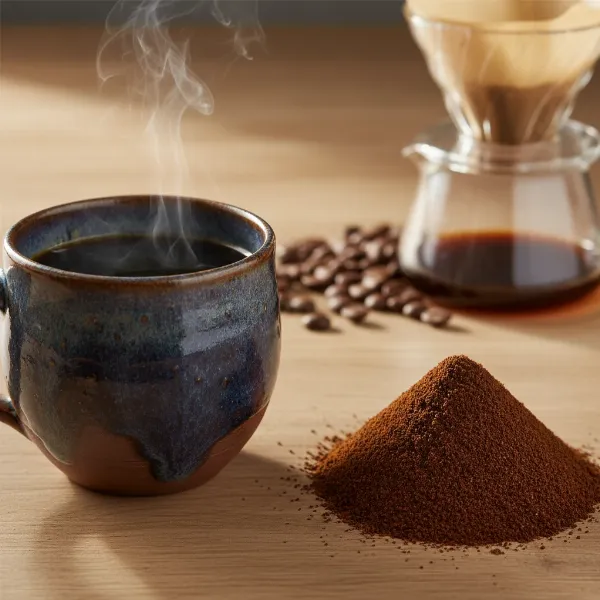 A perfectly brewed cup of coffee next to consistent, evenly ground coffee particles, emphasizing superior taste.
“The true secret to a phenomenal cup of coffee lies not just in the beans or the brewer, but predominantly in the consistent quality of the grind. It’s the foundation of all flavor.”
Top Picks for Exceptional Coffee Grinding
- For the Discerning Traveler or Budget-Conscious Connoisseur: A high-quality manual conical burr grinder offers portability, excellent grind consistency, and minimal heat for a superb flavor profile without a hefty price tag. Look for models with stable burr sets and fine adjustment steps.
- For the Busy Home Barista: A mid-to-high end electric burr grinder with conical or flat burrs will provide the speed and convenience needed for daily use, delivering consistent, flavorful grounds with minimal effort. Prioritize models known for grind consistency and lower heat output.
- For the Aspiring Enthusiast: An entry-level electric burr grinder (not a blade grinder!) is a significant step up from pre-ground coffee, offering consistent results and ease of use to kickstart your journey into specialty coffee.
Conclusion
The debate between manual and electric grinders is less about an inherent superiority of one over the other, and more about finding the right balance for your coffee journey. While high-quality burr grinders, whether manual or electric, are crucial for unlocking your coffee’s full flavor potential, the key takeaway is that grind consistency and minimal heat generation are the true determinants of taste. Manual grinders excel in these areas at a lower cost, offering a hands-on experience that many purists adore. Electric burr grinders, particularly premium models, provide unmatched convenience and speed while still delivering exceptional flavor.
So, as you stand before your beans each morning, consider your ritual, your lifestyle, and your taste preferences. Which grinder will you choose to embark on your daily quest for the perfect cup?
Frequently Asked Questions
Do manual grinders make better-tasting coffee than electric ones?
A high-quality manual burr grinder can often produce better-tasting coffee than many entry-level electric burr grinders, primarily due to lower heat generation and excellent grind consistency at a more affordable price. However, high-end electric burr grinders can certainly match or exceed this quality with added convenience.
Why is grind consistency so important for coffee flavor?
Grind consistency is vital because it ensures an even extraction of flavors. Inconsistent grounds lead to some particles over-extracting (bitter) and others under-extracting (sour/weak), resulting in an unbalanced and less enjoyable cup. Uniform grounds allow for optimal extraction, bringing out the coffee’s true profile.
How does heat affect the taste of ground coffee?
Heat generated during grinding can cause the delicate aromatic compounds and volatile oils in coffee beans to degrade or evaporate. This results in a duller, less complex, and sometimes bitter flavor profile, compromising the freshness and richness of your brew.
Can electric blade grinders make good coffee?
Electric blade grinders are generally not recommended for quality coffee. They chop beans unevenly and generate significant heat, leading to inconsistent extraction and a compromised flavor. For truly good coffee, investing in any type of burr grinder is a fundamental step.
What is the main benefit of an electric burr grinder over a manual one?
The main benefit of an electric burr grinder is convenience and speed. It allows for quick, effortless grinding, especially useful for multiple servings or when time is a factor. High-end models also offer advanced features and consistent performance without manual effort.