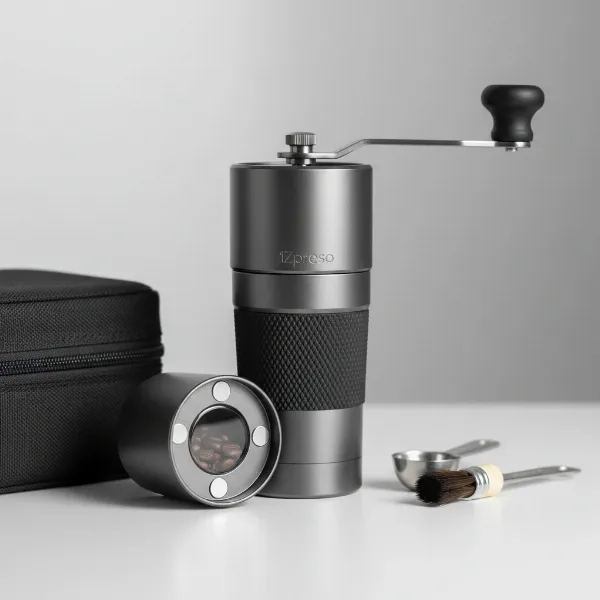
Unlocking the full potential of your coffee beans begins with an exceptional grind. As an experienced coffee grinder technician with over a decade in the field, I’ve seen firsthand how crucial the grinding process is to a superior cup. When you invest in a new coffee grinder, especially one with high-quality burrs, there’s a vital, often overlooked step that can dramatically enhance your brewing results: seasoning the burrs. This essential process prepares your grinder for optimal performance, ensuring unparalleled consistency from your very first brew.
What Does “Seasoning Burrs” Really Mean?
|
Our Picks for the Best Coffee grinder in 2026
As an Amazon Associate I earn from qualifying purchases.
|
||
| Num | Product | Action |
|---|---|---|
| 1 | Automatic Coffee Machine, 20-Bar Pressure Espresso Maker with Built-in Grinder, 15-Precision Settings, One-Touch Latte & Cappuccino System, Smart Self-Cleaning |

|
| 2 | Hamilton Beach Fresh Grind Electric Coffee Grinder for Beans, Spices and More, Stainless Steel Blades, Removable Chamber, Makes up to 12 Cups, Black |
|
| 3 | Cuisinart Coffee Grinder, One Touch Control Coffee Bean Grinder with Stainless Steel Bowl and Blades, 2.5 oz/70g Capacity Enough for 12 Cups, On/Off Switch with Safety Interlock, DCG-20BKN, Black |
|
| 4 | SHARDOR Professional Conical Burr Coffee Grinder, Coffee Bean Grinder with 48 Grind Settings for Espresso, Drip & French Press, Upgraded Anti-Static Technology, Precision Timer, Stainless Steel |
|
| 5 | Amazon Basics Electric Coffee Grinder, Coffee Bean and Spice Grinder, With Heavy-Duty Stainless Steel Grind Blades |
|
| 6 | Wancle Electric Coffee Grinder, Spice Grinder, One Touch Coffee Mill for Beans, Spices and More, with Clean Brush Black |
|
| 7 | Hamilton Beach Custom Grind Electric Coffee Grinder for 4-14 Cups, One-Press Hand-Free Operation with Auto Shutoff, Removable Grinding Bowl For Easy Pour and Clean, Stainless Steel (80406) |
|
| 8 | OXO Brew Conical Burr Coffee Grinder - Silver, Stainless Steel Burrs, One-Touch Automatic Smart Grind |
|
| 9 | Cuisinart Coffee Grinder, Electric One-Touch Automatic Burr Coffee Grinder with 18-Position Grind Selector, Cup Size Selector for 4 – 18 Cups, DBM-8P1, Black Stainless |
|
| 10 | BLACK+DECKER One Touch Coffee Grinder, 2/3 Cup Coffee Bean Capacity, Spice Grinder, One Touch Push-Button Control -150 Watts -Stainless Steel Blades |
|
When we talk about “seasoning” coffee grinder burrs, we’re not referring to adding spices or flavors. Instead, it’s a critical mechanical break-in process designed to optimize the burrs’ grinding surfaces. Brand-new burrs, whether flat or conical, steel or ceramic, come directly from the manufacturing line with microscopic imperfections. These can include tiny burrs, sharp edges, and rough spots left over from the machining or casting process. Initially, these imperfections can lead to a less uniform grind, producing an excess of “fines”—tiny, unwanted coffee particles that can over-extract quickly and introduce bitterness or astringency into your cup. Seasoning involves running a specific amount of abrasive material, typically coffee beans, through the grinder to gently wear down these sharp edges and smooth out the burr surfaces. This process polishes the burrs, creating a more consistent and predictable grinding action.
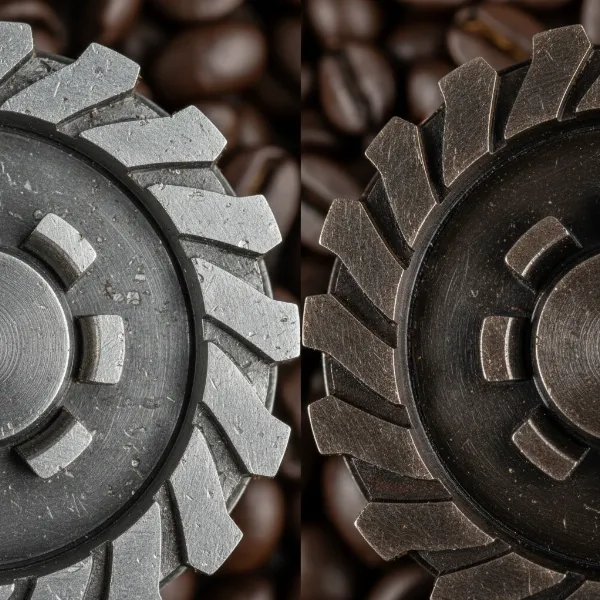 Close-up of coffee grinder burrs, showing microscopic imperfections on new burrs and smoothed surfaces on seasoned burrs
Why Seasoning is Crucial for Consistent Results
The primary benefit of seasoning your new burrs is achieving superior grind consistency. A uniform particle size is the cornerstone of excellent coffee extraction, regardless of your brewing method. Inconsistent grinds mean that some particles extract too quickly (the fines), while others extract too slowly (the coarser particles), leading to an unbalanced and often disappointing flavor profile.
For espresso enthusiasts, seasoning is particularly vital. Espresso demands an extremely precise and consistent grind to prevent channeling, a phenomenon where water finds paths of least resistance through the coffee bed, leading to uneven extraction and a poor shot. Seasoned burrs create a more uniform coffee bed, promoting even water flow and a more balanced, delicious espresso shot. For pour-over, French press, or automatic drip, improved consistency translates to cleaner flavors, better body, and a more enjoyable drinking experience. Seasoning essentially “breaks in” the burrs, allowing them to perform as designed, reducing frustration and potential buyer’s remorse that can arise from initial inconsistent results.
Step-by-Step Guide: How to Season Your New Burrs
Properly seasoning your grinder’s burrs is a straightforward process that will pay dividends in every cup of coffee you brew. Here’s how to do it:
1. Choose Your Ammunition: Inexpensive, Dark Roast Coffee Beans
The best material for seasoning burrs is typically inexpensive, dark roast coffee beans. Darker roasts tend to be more brittle and contain more oils, which can help coat the burrs during the grinding process, aiding in the smoothing action. Avoid using your premium, freshly roasted beans for this step, as they will be “sacrificed” in the process. While some sources suggest using uncooked rice, it’s generally not recommended for most coffee grinders. Rice can be very hard and, depending on the grinder’s design, may produce a fine, starchy dust that can clog the burrs or even damage the motor. Stick to coffee beans for a safer and more effective seasoning.
2. Determine the Quantity
The amount of coffee needed for seasoning varies depending on the grinder’s size, burr material, and design.
- For Home Grinders: A general recommendation is to grind about 2 kilograms (approximately 4.5 pounds) of inexpensive dark roast coffee.
- For Commercial Grinders: Larger commercial units with more robust burrs may require 5 kilograms (about 11 pounds) or more to achieve optimal seasoning.
- Machined Burrs: These typically benefit from grinding 5-10 kg to eliminate microscopic burrs from the cutting process.
- Coated Burrs: While often smoother, coated burrs still need 5-10 kg, though the process might be slightly quicker due to their hardness.
- High-End or Specialized Burrs (e.g., SSP Burrs): Some professional-grade burrs, known for their hardness, might require a more extensive break-in, sometimes up to 10-15+ kilograms.
It’s always a good idea to check your grinder’s manual or the manufacturer’s recommendations for specific quantities if available.
3. Set Your Grind
Start the seasoning process with a medium-coarse grind setting. This helps prevent the grinder from overheating, especially if you’re grinding a significant volume of coffee. As you progress through the seasoning, you can gradually move to finer settings. This incremental approach ensures the burrs are uniformly worked across their surfaces. Avoid going to the absolute finest setting initially, as this can cause the burrs to jam or overheat, particularly with new, unseasoned surfaces.
4. Grind in Batches
To prevent your grinder from overheating, especially during extended seasoning periods, grind the coffee in batches. For instance, process 100-200 grams at a time, allowing the motor to rest for a few minutes between batches. This not only protects your grinder’s motor but also ensures consistent wear on the burrs without excessive heat buildup, which can affect the seasoning process. Monitor your grinder for any signs of strain or unusual noises.
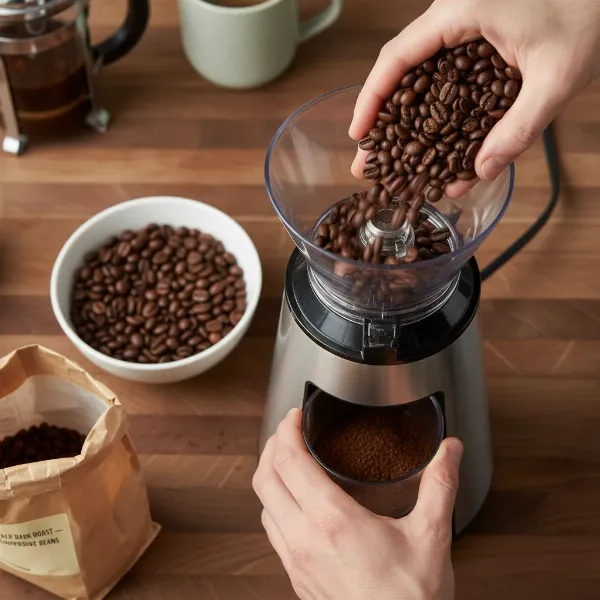 Hands pouring dark roast coffee beans into a coffee grinder for seasoning, demonstrating the batch grinding process
5. Clean Up
Once you’ve ground the recommended amount of coffee, it’s crucial to clean your grinder thoroughly. Use a grinder brush, vacuum, or compressed air to remove any residual seasoning coffee particles and oils. This ensures that your first batch of quality beans isn’t contaminated by the inexpensive, stale coffee used for seasoning.
Understanding Different Burr Types and Their Seasoning Needs
While the fundamental principle of seasoning remains the same, understanding your burr type can offer additional insights.
- Flat Burrs vs. Conical Burrs: Both flat and conical burr grinders benefit from seasoning. Flat burrs, with their two parallel grinding surfaces, aim for extremely uniform particle size, which new burr seasoning helps to achieve faster. Conical burrs, featuring an inner cone and an outer ring, also gain significant consistency improvements.
- Machined vs. Cast Burrs: Machined burrs are precisely cut from solid metal, resulting in sharp edges that still have microscopic imperfections needing smoothing. Cast burrs are molded and then sharpened; their initial surface might be rougher, also benefiting greatly from seasoning to achieve a smoother, more even grind.
- Coated vs. Non-Coated Burrs: Burrs with specialized coatings (e.g., titanium, red speed) are typically harder and smoother from the start. While they still require seasoning, the process might be slightly shorter or require less coffee to reach optimal performance compared to uncoated burrs.
Burr Seasoning Quick Reference
| Burr Type / Grinder Class | Recommended Coffee Quantity | Key Consideration |
|---|---|---|
| Home Grinders (General) | ~2 kg | Use inexpensive, dark roast beans. Grind in batches. |
| Commercial Grinders (General) | ~5 kg | More robust burrs, may need more. |
| Machined Burrs | 5-10 kg | Essential to reduce microscopic burrs from cutting. |
| Coated Burrs | 5-10 kg (often shorter) | Smoother and harder surface, but still benefits. |
| High-End (e.g., SSP) | 10+ kg | May require more extensive break-in due to material hardness. |
Factors to Consider Beyond Seasoning
While seasoning is a powerful initial step, maintaining grind consistency and extending your grinder’s lifespan requires ongoing attention to several factors:
- Grinder Type (Burr vs. Blade): Always opt for a burr grinder over a blade grinder. Blade grinders “chop” coffee erratically, leading to wildly inconsistent particle sizes, which no amount of “seasoning” can fix. Burr grinders, by design, are built for precision.
- Burr Material: High-quality burrs are typically made from hardened steel or ceramic. Steel burrs are excellent for sharpness and durability, while ceramic burrs are known for their longevity and resistance to heat buildup. Both benefit from seasoning.
- Grind Adjustment: A good grinder offers precise, stepless, or micro-step grind adjustments. This allows you to fine-tune your grind after seasoning to perfectly match your brewing method and bean.
- Regular Cleaning & Maintenance: Even seasoned burrs need regular care. Coffee oils and fines build up over time, hindering performance. Periodic cleaning, as outlined in your grinder’s manual, will keep your burrs operating at their peak.
Conclusion
Seasoning your new Coffee Grinder burrs is a small effort that yields monumental results in your coffee journey. By carefully breaking in these critical components, you’re not just preparing a machine; you’re setting the stage for consistently extracted, beautifully flavored coffee every single time. It’s an investment in quality that transforms your brewing, turning every cup into an experience to savor. Take the time to season your burrs, and discover the true potential of your coffee. What consistent results are you hoping to achieve with your perfectly seasoned grinder?
Frequently Asked Questions
Can I use rice to season my coffee grinder burrs?
While some sources suggest rice, it is generally not recommended. Rice is harder than coffee beans and can potentially damage the burrs, introduce starchy residue that clogs the grinder, or put undue strain on the motor. Inexpensive dark roast coffee beans are the preferred and safer option for seasoning.
How often do I need to season my grinder burrs?
Seasoning is primarily a one-time process for new burrs or when replacing them. The initial seasoning establishes a smooth, consistent grinding surface. After this, regular use naturally maintains the burrs’ performance, although consistent cleaning is always necessary.
What happens if I don’t season my new burrs?
If you skip seasoning, your new burrs will eventually “break in” naturally through regular use. However, during this initial period, you’ll likely experience more inconsistent grinds, a higher proportion of fines, and potentially less flavorful or balanced coffee. Seasoning simply accelerates this break-in process to deliver optimal results sooner.
Will seasoning impact the lifespan of my burrs?
Proper seasoning, by gently smoothing the burr surfaces, actually contributes to their longevity by ensuring even wear from the start. Some manufacturers even pre-season burrs, though this can slightly reduce their overall lifespan by 10-20% compared to a user-initiated seasoning that is part of the grinder’s initial setup.