Hey there, Alex here from Coffee Grinder Choice. Let’s talk about a scenario that’s all too familiar. You’ve bought specialty coffee beans, the ones with tasting notes of jasmine, bergamot, and wild berries. You’re excited. But when you brew your cup, it tastes… flat. Or maybe bitter. What went wrong? More often than not, the culprit isn’t your beans or your brewer; it’s your grinder. Specifically, knowing How To Calibrate A Burr Grinder is the secret handshake to unlocking consistently delicious coffee. It sounds technical, I know, but trust me, it’s easier than you think, and it’s the single most impactful thing you can do for your morning ritual.
Why Does Grinder Calibration Even Matter?
Think of your grinder like a musical instrument. You can have the most expensive guitar in the world, but if it’s out of tune, it’s going to sound terrible. Calibration is the process of “tuning” your grinder. It’s about finding its true zero point—the exact spot where the two burrs just barely touch.
Without this baseline, your settings are just arbitrary numbers. Your “15” might be someone else’s “20.” When you calibrate, you’re establishing a universal starting point. This means:
- Consistency: Every time you dial in a coffee, you’ll know exactly what the setting means. No more guesswork.
- Precision: You can make tiny, meaningful adjustments to your grind size to perfectly suit your brew method.
- Maximizing Flavor: Proper calibration ensures a uniform grind size, leading to an even extraction and a cup of coffee that bursts with all the intended flavors.
|
Our Picks for the Best Coffee Grinder in 2026
As an Amazon Associate, we earn from qualifying purchases.
|
||
| Num | Product | Action |
|---|---|---|
| 1 | Cuisinart Coffee Grinder, Electric One-Touch Automatic Burr Coffee Grinder with 18-Position Grind Selector, Cup Size Selector for 4 – 18 Cups, DBM-8P1, Black Stainless |

|
| 2 | V6 Pro Portable Coffee Grinder Electric, 60 Grind Settings USB-C Rechargeable, 4400mAh for Espresso to Cold Brew, Wireless Rechargeable Coffee Grinders for Travel, Camping, Office |
|
| 3 | Hamilton Beach Custom Grind Electric Coffee Grinder for 4-14 Cups, One-Press Hand-Free Operation with Auto Shutoff, Removable Grinding Bowl For Easy Pour and Clean, Stainless Steel (80406) |
|
| 4 | SHARDOR Electric Burr Coffee Grinder 2.0, Adjustable Burr Mill with 16 Precise Grind Setting for 2-14 Cup, Black |
|
| 5 | Mini Manual Coffee Grinder with 40 Adjustable Settings, Portable Hand Coffee Bean Mill with 30g Capacity, Conical Burr Coffee Grinder with Crank for Travel, Camping, Office, Espresso, Pour Over, etc |
|
| 6 | Burr Coffee Grinder, Adjustable Coffee Bean Grinder Electric with 14 Grinding Settings,2-12 Cups for Espresso, Drip Coffee and French Press |
|
| 7 | BLACK+DECKER One Touch Coffee Grinder, 2/3 Cup Coffee Bean Capacity, Spice Grinder, One Touch Push-Button Control -150 Watts -Stainless Steel Blades |
|
| 8 | 4 IN 1 Single Serve Coffee Maker with Milk Frother and Coffee Grinder, Coffee Maker for K Cup and Ground Coffee, with 30 oz Removable Water Reservoir, 6 to 14 oz. Brew Sizes, Coffee Machine for Home |
|
| 9 | Portable Electric Coffee Grinder, Upgraded External Adjustable 40 Levels Fine to Coarse Settings, Stainless Steel Conical Burr Rechargeable and Faster Grinding for Office,Home,Camping,Travel,Black |
|
| 10 | TIMEMORE C5 Pro Manual Coffee Grinder Capacity 30g with CNC Stainless Steel Conical Burr - Internal Adjustable Setting,Double Bearing Positioning (C5 Pro Matte Black) |
|
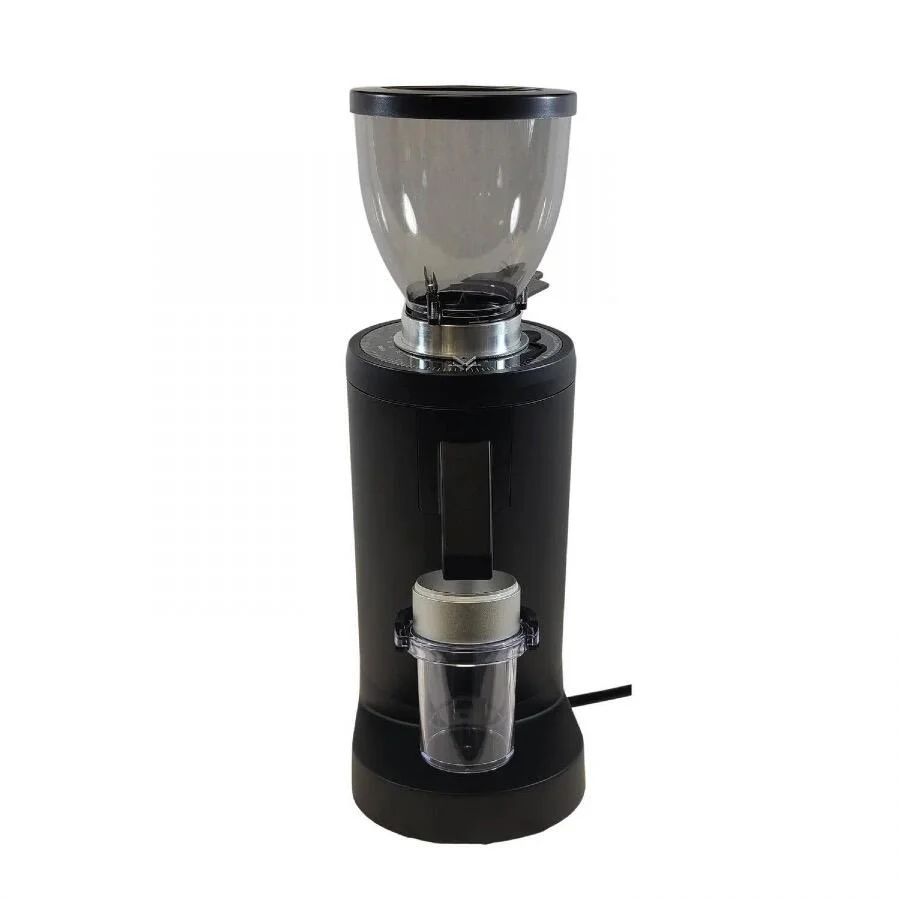
First, What Exactly is a “True Zero” Point?
Before we get our hands dirty, let’s clear this up. The “zero” on your grinder’s dial is often just a factory setting, a suggestion. The true zero point is the physical point where the burrs are so close they would start to grind against each other. Finding this point is the core of calibration. We don’t want to grind at this point (that would damage the burrs), but we need to know where it is so every other setting has a precise reference.
“Calibration isn’t a one-and-done task; it’s a conversation with your equipment. It tells you the exact range you have to play with, giving you complete control over the final cup. It’s the difference between being a coffee maker and a coffee crafter.” – Isabella Rossi, Q Grader and Equipment Technician
How to Calibrate a Burr Grinder: A Step-by-Step Guide
Alright, roll up your sleeves. It’s time to get this done. This process works for most electric burr grinders, but always glance at your user manual for any model-specific quirks.
- Safety First! Unplug Your Grinder.
Seriously. We’re going to be working near the burrs. Do not skip this step. - Empty and Clean Everything.
Remove all beans from the hopper. Run the grinder for a few seconds (after plugging it back in briefly, then unplugging again) to purge any remaining grounds. Use a grinder brush and a vacuum to thoroughly clean the hopper, the burrs, and the chute. Starting with a clean slate is non-negotiable for an accurate calibration. You can’t find a true zero point if old coffee grounds are in the way. - Find the Burr Touch Point.
This is the moment of truth. With the grinder still unplugged and empty, slowly and gently begin to adjust the grind setting finer and finer.- Listen: As you get very close to the zero point, turn the main burr carrier by hand (if possible and safe on your model). You’ll start to hear a very faint “chirp” or a soft metallic whisper. That’s the sound of the tips of the burrs just barely kissing.
- Feel: You will also feel a slight resistance as the burrs begin to touch. Be gentle here. You’re not trying to force them together.
- Identify Your True Zero.
The exact point where you first hear that chirp or feel that resistance? That is your true zero point. Take note of what number or marker on the dial this corresponds to. On some grinders, you might need to adjust an internal calibration screw or ring to make this point the new “0” on your external dial. On others, you’ll simply remember it. For example, you might discover that your true zero is at setting “3” on the dial. - Back It Off Immediately.
Once you’ve found the touch point, immediately adjust the setting a couple of notches coarser. You never want to run the grinder with the burrs touching, as this will cause significant wear and damage over time.
Congratulations! You’ve just calibrated your grinder. Now your settings have real meaning.
So, Now What? Calibrating for Your Brew Method
Knowing your zero point is one thing; using it is another. The goal is to dial in the perfect grind for your preferred brewing style. Here are some general starting points, which you’ll adjust based on taste.
For Espresso
Espresso is the most demanding. Start about 5-8 clicks/notches coarser than your true zero point. You’re looking for a very fine, almost powdery grind that clumps together when pinched. From here, you’ll “dial in” by pulling shots and adjusting one click at a time until your shot time and volume are perfect (a common target is a 1:2 ratio in 25-30 seconds).
For Pour-Over (V60, Chemex)
Start significantly coarser, maybe around 15-20 clicks from your true zero. The ideal grind should look and feel like medium-coarse sand. If your brew is too slow and tastes bitter, go a few clicks coarser. If it’s too fast and tastes sour or weak, go a few clicks finer.
For French Press or Cold Brew
This requires the coarsest setting. Start around 25-30+ clicks from your true zero. You’re looking for grounds that resemble coarse sea salt. This prevents excess sediment from passing through the metal filter and avoids over-extraction during the long steep time.
When Should You Recalibrate Your Grinder?
This isn’t something you need to do every day. Think of it as periodic maintenance. Here’s a quick checklist for when it’s time to recalibrate:
- When you get a new grinder: The factory setting is rarely perfect.
- After a deep cleaning: When you remove the burrs for cleaning, you’ll need to re-establish the zero point upon reassembly.
- If your coffee starts tasting off: If your trusted “setting 12” for pour-over suddenly produces a bitter cup, it might be a sign that things have shifted.
- After replacing the burrs: New burrs will have a different geometry and will absolutely require a fresh calibration.
Frequently Asked Questions (FAQ)
Q: Can you calibrate a blade grinder?
A: Unfortunately, no. Blade grinders don’t have burrs or precise settings. They “chop” beans randomly, and the only control you have is the duration of the blitz. Calibrating is a process specific to burr grinders, which is a key reason they produce a superior, more consistent grind.
Q: How often should I calibrate my burr grinder?
A: For most home users, calibrating after every deep clean (every 1-3 months, depending on use) is sufficient. You should also do it anytime you feel your grind consistency or coffee quality has declined.
Q: What if I can’t hear the “chirp” sound?
A: Some grinders are very quiet, or ambient noise might make it hard to hear. In this case, rely on the sense of touch. As you adjust finer, you’ll feel a sudden increase in resistance when the burrs make contact. Stop immediately when you feel it.
Q: My grinder’s manual says not to let the burrs touch. Am I going to break it?
A: This is excellent advice for when the motor is running. The calibration process is done with the power off, and you are only bringing the burrs together gently and momentarily to find the contact point. As long as you back off immediately and never turn the motor on at your true zero setting, you are not damaging your grinder.
Q: Will calibrating my grinder void the warranty?
A: Generally, no. Basic calibration as described here is considered standard user maintenance for most high-quality grinders. However, if you are required to open up the main housing or modify internal components beyond simple adjustments, it’s wise to check your warranty terms first.
Your Journey to Better Coffee Starts Here
Mastering how to calibrate a burr grinder might seem like a small, technical step, but it’s a giant leap for your coffee quality. It’s the moment you take full control of the most important variable in coffee brewing. You’re no longer just pushing a button; you’re telling your equipment precisely what you need it to do.
Now you have the knowledge. Give it a try, and taste the difference for yourself. What grinder are you using? Share your calibration experience or any questions in the comments below—let’s brew this journey together.