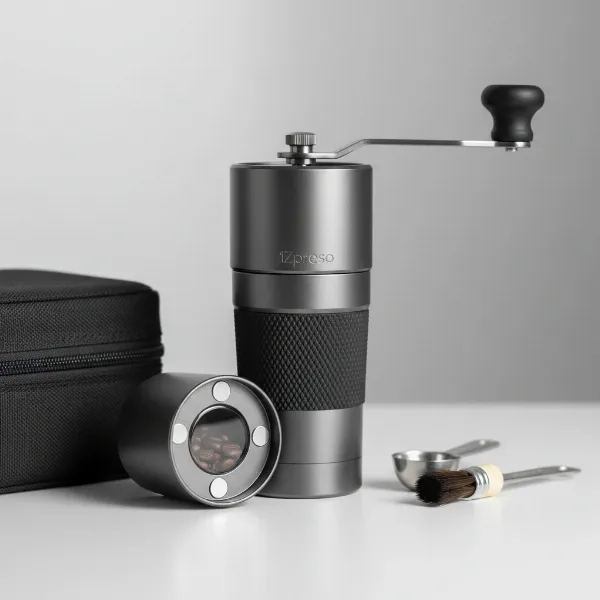
For many coffee enthusiasts, the daily ritual of grinding fresh beans is sacred, a crucial step toward brewing that perfect cup. Yet, in our increasingly connected world, even this age-old practice is evolving. The future of coffee grinding is here, integrating smart technology and app control to offer unparalleled precision, convenience, and a truly personalized brewing experience. Imagine a grinder that learns your preferences, adjusts automatically, and communicates seamlessly with your other brewing equipment. This isn’t science fiction; it’s the reality smart grinders with apps are creating.
Popular Types of Smart Coffee Grinders
The landscape of smart coffee grinders is primarily dominated by electric burr grinders, which are designed for precision and consistency. Unlike blade grinders, burr grinders crush coffee beans between two abrasive surfaces, providing a far more uniform grind critical for optimal extraction. When infused with smart technology, these grinders elevate the coffee experience even further.
App-Controlled Electric Burr Grinders
These grinders represent the cutting edge of home coffee preparation. What sets them apart is their connectivity, typically via Bluetooth or Wi-Fi, allowing users to control grinding parameters directly from a smartphone or tablet app.
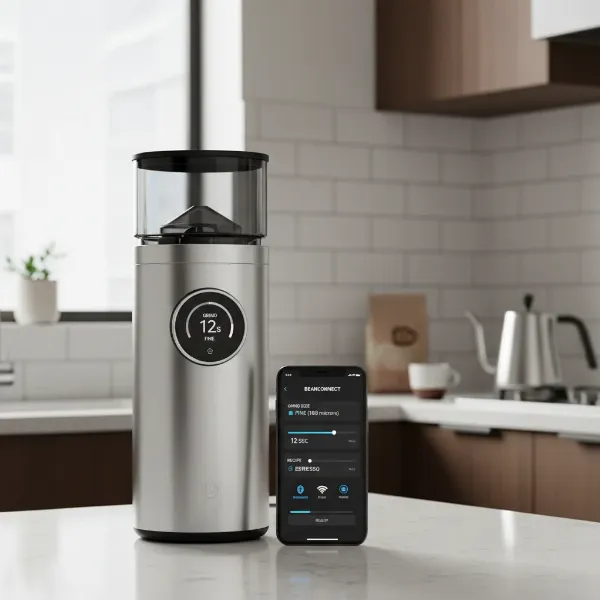 Smartphone app interface controlling a modern smart coffee grinder for precise adjustments.
- Advantages:
- Unrivaled Precision: Apps offer granular control over grind size, often in micro-increments, ensuring the perfect consistency for any brewing method, from espresso to French press.
- Recipe Management: Save favorite grind settings for different beans or brew methods, making replication effortless.
- Smart Integration: Some models connect with smart scales or smart brewers, automating the entire process from bean to cup.
- Real-time Feedback: Apps can provide information on grind time, weight, and even maintenance reminders.
- Disadvantages:
- Higher Price Point: The advanced technology and connectivity come with a premium cost.
- Reliance on Technology: If the app or connectivity fails, manual operation might be limited.
- Best Suited For: Tech-savvy coffee lovers, home baristas seeking ultimate consistency and control, and those who appreciate convenience and integration into a smart home ecosystem.
|
Our Picks for the Best Coffee grinder in 2026
As an Amazon Associate I earn from qualifying purchases.
|
||
| Num | Product | Action |
|---|---|---|
| 1 | BLACK+DECKER One Touch Coffee Grinder, 2/3 Cup Coffee Bean Capacity, Spice Grinder, One Touch Push-Button Control -150 Watts -Stainless Steel Blades |

|
| 2 | Hamilton Beach Fresh Grind Electric Coffee Grinder for Beans, Spices and More, Stainless Steel Blades, Removable Chamber, Makes up to 12 Cups, Black |
|
| 3 | OXO Brew Conical Burr Coffee Grinder - Silver, Stainless Steel Burrs, One-Touch Automatic Smart Grind |
|
| 4 | Wancle Electric Coffee Grinder, Spice Grinder, One Touch Coffee Mill for Beans, Spices and More, with Clean Brush Black |
|
| 5 | Cuisinart Coffee Grinder, One Touch Control Coffee Bean Grinder with Stainless Steel Bowl and Blades, 2.5 oz/70g Capacity Enough for 12 Cups, On/Off Switch with Safety Interlock, DCG-20BKN, Black |
|
| 6 | Cuisinart Coffee Grinder, Electric One-Touch Automatic Burr Coffee Grinder with 18-Position Grind Selector, Cup Size Selector for 4 – 18 Cups, DBM-8P1, Black Stainless |
|
| 7 | Amazon Basics Electric Coffee Grinder, Coffee Bean and Spice Grinder, With Heavy-Duty Stainless Steel Grind Blades |
|
| 8 | Automatic Coffee Machine, 20-Bar Pressure Espresso Maker with Built-in Grinder, 15-Precision Settings, One-Touch Latte & Cappuccino System, Smart Self-Cleaning |
|
| 9 | Hamilton Beach Custom Grind Electric Coffee Grinder for 4-14 Cups, One-Press Hand-Free Operation with Auto Shutoff, Removable Grinding Bowl For Easy Pour and Clean, Stainless Steel (80406) |
|
| 10 | SHARDOR Professional Conical Burr Coffee Grinder, Coffee Bean Grinder with 48 Grind Settings for Espresso, Drip & French Press, Upgraded Anti-Static Technology, Precision Timer, Stainless Steel |
|
Comparing Smart Grinders to Traditional Grinders
The advent of smart coffee grinders introduces a new dimension to coffee preparation, making a stark contrast with their traditional counterparts. Understanding these differences can help you decide which type best suits your brewing philosophy.
| Feature | Smart Grinder (App-Controlled) | Traditional Electric Burr Grinder | Traditional Manual Grinder |
|---|---|---|---|
| Grind Precision | Excellent (micro-adjustments via app) | Very Good (manual dial adjustments) | Good (dependent on user consistency) |
| Control & Customization | High (app-based profiles, recipes) | Moderate (manual settings, timers) | High (user input, tactile feedback) |
| Convenience | Very High (remote start, automation) | High (electric, push-button) | Low (physical effort, time) |
| Connectivity | Bluetooth/Wi-Fi, smart home integration | None | None |
| Cost | High | Medium – High | Low – Medium |
| Noise Level | Moderate (similar to electric burr) | Moderate | Low (quiet operation) |
| Maintenance | App reminders, potentially complex | Standard cleaning | Simple cleaning |
Key Factors to Consider When Buying a Smart Coffee Grinder
Choosing the right smart coffee grinder involves more than just looking for app control. Several critical factors will influence your grinding experience and the quality of your brew.
Burr Type and Material
The heart of any burr grinder lies in its burrs, which dictate grind consistency and durability.
- Conical vs. Flat Burrs: Conical burrs are often preferred for their quieter operation, less heat retention, and ability to produce a wide range of grind sizes suitable for various brewing methods. Flat burrs, while sometimes louder and generating more heat, can offer exceptional consistency, especially for espresso.
- Material:
- Ceramic Burrs: Durable and stay sharp longer than steel, but can be brittle. They produce less static.
- Stainless Steel Burrs: Very sharp and efficient, offering precise grinding. Often preferred for their cutting ability and resistance to wear.
App Functionality and User Experience
The app is central to a smart grinder’s appeal. Evaluate its features carefully.
- Grind Settings: Look for an app that offers fine-tuned control over grind size, allowing for precise adjustments beyond what a manual dial might offer.
- Recipe Storage: Can you save custom grind profiles for different beans or brew methods? This is invaluable for consistency.
- Integration: Does the app integrate with other smart home devices or coffee brewing equipment (e.g., smart scales, espresso machines)?
- Ease of Use: Is the interface intuitive and user-friendly? A complex app can detract from the convenience.
Connectivity and Compatibility
Ensure the grinder’s connectivity (Bluetooth, Wi-Fi) is reliable and compatible with your existing devices.
- Bluetooth: Generally simpler to set up for direct device control.
- Wi-Fi: Allows for remote control and integration into broader smart home ecosystems. Consider compatibility with platforms like Alexa or Google Home if smart home integration is important to you.
Build Quality and Durability
A coffee grinder is an investment, so assess the overall build quality. Look for sturdy materials, robust burrs, and a design that promises longevity. Brands with a reputation for quality components often translate to a more durable product.
Capacity and Speed
Consider how much coffee you typically grind at once.
- Hopper Capacity: A larger hopper means less frequent refilling, suitable for households with high coffee consumption.
- Grounds Bin Capacity: Ensure it can hold enough grounds for your needs.
- Grind Speed: While not the sole factor, a reasonably fast grinder can enhance convenience without sacrificing grind quality.
Noise Level
Grinders, by nature, can be noisy. While smart features don’t directly affect noise, some models are engineered with quieter motors or dampening mechanisms. Check reviews for user feedback on noise levels if this is a concern for your morning routine.
Price and Brand Reputation
Smart grinders typically command a higher price. Research reputable brands known for quality coffee equipment and reliable smart technology. Reading expert reviews and user testimonials can provide valuable insights into real-world performance and customer satisfaction.
“The true magic of a smart grinder isn’t just the app; it’s the unprecedented ability to recreate your perfect grind consistently, day after day, regardless of bean or brew method. That’s a game-changer for serious coffee lovers.” – Dr. Elena Petrova, Coffee Technology Innovator
Top Picks – Exploring Leading Smart Grinders
The market for smart coffee grinders is still emerging, but several innovative models stand out for their advanced features, performance, and user experience.
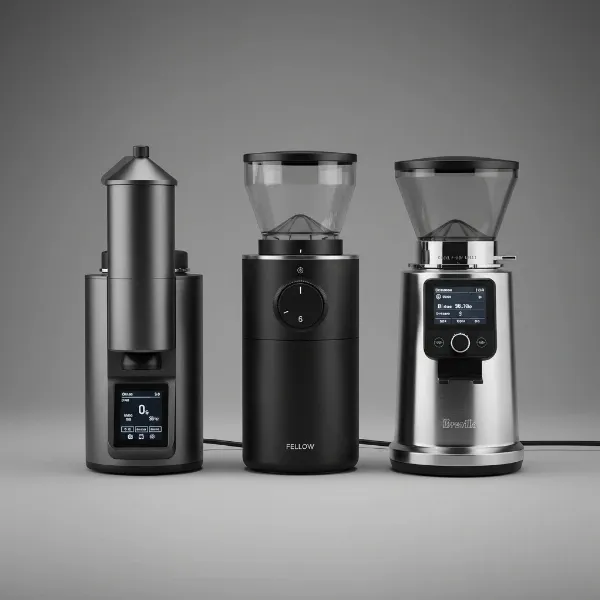 Collection of various smart coffee grinders showcasing diverse designs and features.
Baratza Sette 270Wi – Precision Grinding with Integrated Scale
The Baratza Sette 270Wi is a favorite among espresso enthusiasts and home baristas for its innovative design and precise, weight-based grinding.
- Pros:
- Integrated Acaia Scale: Grinds directly into your portafilter or brewing device by weight, ensuring exact doses every time.
- App Connectivity (Bluetooth): Allows for easy firmware updates and potentially future expanded functionality.
- Exceptional Grind Speed: Fast and efficient, making quick work of beans.
- Wide Grind Range: Capable of producing very fine espresso grinds to coarse French press grinds.
- Minimal Retention: The design ensures very little ground coffee is left in the grinder.
- Cons:
- High Price Point: An investment, reflecting its advanced features.
- Noise Level: Can be louder than some other grinders.
Fellow Ode Brew Grinder Gen 2 – Designed for Filter Coffee Excellence (with smart features via app for some versions)
While not all versions are fully app-controlled, the Fellow Ode Gen 2, especially when paired with smart scales, can offer a highly integrated brewing experience. Some models are exploring future app connectivity for even more precise control.
- Pros:
- Large Flat Burrs (64mm): Optimized for filter coffee, producing exceptionally uniform grinds.
- Precise Grind Adjustment: Offers 31 steps of adjustment, with sub-settings for fine-tuning.
- Sleek Design: Aesthetically pleasing, a true countertop statement piece.
- Quiet Operation: Notably quieter than many other electric grinders.
- Cons:
- Not Ideal for Espresso: Grind range is optimized for pour-over, drip, and French press.
- Limited Smart Features (depending on model): Full app control might be limited to specific or future iterations.
Breville Smart Grinder Pro – Accessible Smart Grinding
While not always featuring a dedicated app, the Breville Smart Grinder Pro offers “smart” features through its highly intuitive digital interface, allowing for precise grind time and dose adjustments. Some newer models are integrating more direct app control for enhanced flexibility.
- Pros:
- Programmable Settings: Allows users to program preferred grind times and doses for different brewing methods.
- Wide Grind Range (60 settings): Suitable for espresso to French press.
- Affordable: Offers advanced features at a more accessible price point than some premium smart grinders.
- LCD Display: Provides clear information on settings and grind time.
- Cons:
- Less Advanced App Integration: Its “smart” features are more about pre-programming on the machine itself rather than full app control (though this is evolving).
- Retention: Can retain a small amount of ground coffee.
Conclusion
The evolution of smart coffee grinders with app control marks an exciting chapter in home coffee brewing. These innovative machines transcend basic grinding by offering unparalleled precision, personalization, and convenience, allowing you to craft your ideal cup with unprecedented consistency. From saving custom grind recipes to integrating with your smart home ecosystem, the advantages are clear for those who prioritize control and a seamless brewing experience. As technology continues to advance, we can expect even more sophisticated features, making the perfect grind not just a possibility, but a certainty. Are you ready to embrace the future of grinding and unlock a new level of coffee perfection?
Frequently Asked Questions
What are the main benefits of a smart coffee grinder with an app?
Smart coffee grinders with apps offer enhanced precision through micro-adjustments, the ability to save custom grind recipes, and integration with other smart brewing equipment. This allows for unmatched consistency, convenience, and a highly personalized coffee experience, often allowing remote control and real-time feedback.
Are smart coffee grinders worth the investment for a casual coffee drinker?
For a casual coffee drinker, the investment in a smart grinder might be substantial. However, if consistency, convenience, and the desire to experiment with various brewing methods are priorities, the precision and ease of use offered by an app-controlled grinder can elevate the coffee experience significantly.
Can smart coffee grinders integrate with other smart home devices?
Many smart Coffee Grinders, especially those with Wi-Fi connectivity, are designed to integrate with broader smart home ecosystems like Amazon Alexa or Google Home. This allows for voice control, scheduling, and seamless automation of your coffee routine, making your morning ritual effortless.
How do I maintain an app-controlled coffee grinder?
Maintenance for smart grinders is similar to traditional burr grinders, involving regular cleaning of burrs and the grinding chamber to prevent oil buildup and ensure consistent performance. Some smart grinders may offer app notifications for cleaning schedules or troubleshooting guides, adding to user convenience.
Is an internet connection always required to use a smart grinder?
While initial setup and firmware updates often require an internet connection, many smart grinders can operate via Bluetooth or even with their last saved settings if an internet connection is temporarily unavailable. Check the specific model’s specifications to understand its offline capabilities.