Are you truly experiencing the full potential of your coffee beans, or are you settling for a cup that’s merely “good enough”? For many coffee lovers, the secret to unlocking exceptional flavor lies not just in the beans themselves, but in how they are ground. If you’re still relying on a blade grinder, you might be missing out on a world of rich, nuanced tastes. It’s time to understand why upgrading to a burr grinder isn’t just an improvement—it’s a must for anyone serious about their brew.
Understanding Your Grinder: Blade vs. Burr
|
Our Picks for the Best Coffee grinder in 2026
As an Amazon Associate I earn from qualifying purchases.
|
||
| Num | Product | Action |
|---|---|---|
| 1 | Amazon Basics Electric Coffee Grinder, Coffee Bean and Spice Grinder, With Heavy-Duty Stainless Steel Grind Blades |

|
| 2 | Hamilton Beach Fresh Grind Electric Coffee Grinder for Beans, Spices and More, Stainless Steel Blades, Removable Chamber, Makes up to 12 Cups, Black |
|
| 3 | Hamilton Beach Custom Grind Electric Coffee Grinder for 4-14 Cups, One-Press Hand-Free Operation with Auto Shutoff, Removable Grinding Bowl For Easy Pour and Clean, Stainless Steel (80406) |
|
| 4 | Cuisinart Coffee Grinder, One Touch Control Coffee Bean Grinder with Stainless Steel Bowl and Blades, 2.5 oz/70g Capacity Enough for 12 Cups, On/Off Switch with Safety Interlock, DCG-20BKN, Black |
|
| 5 | BLACK+DECKER One Touch Coffee Grinder, 2/3 Cup Coffee Bean Capacity, Spice Grinder, One Touch Push-Button Control -150 Watts -Stainless Steel Blades |
|
| 6 | Cuisinart Coffee Grinder, Electric One-Touch Automatic Burr Coffee Grinder with 18-Position Grind Selector, Cup Size Selector for 4 – 18 Cups, DBM-8P1, Black Stainless |
|
| 7 | SHARDOR Professional Conical Burr Coffee Grinder, Coffee Bean Grinder with 48 Grind Settings for Espresso, Drip & French Press, Upgraded Anti-Static Technology, Precision Timer, Stainless Steel |
|
| 8 | OXO Brew Conical Burr Coffee Grinder - Silver, Stainless Steel Burrs, One-Touch Automatic Smart Grind |
|
| 9 | Wancle Electric Coffee Grinder, Spice Grinder, One Touch Coffee Mill for Beans, Spices and More, with Clean Brush Black |
|
| 10 | Automatic Coffee Machine, 20-Bar Pressure Espresso Maker with Built-in Grinder, 15-Precision Settings, One-Touch Latte & Cappuccino System, Smart Self-Cleaning |
|
The fundamental difference between blade and burr coffee grinders lies in their mechanism. This distinction profoundly impacts the quality of your coffee.
Blade Grinders
Often resembling small blenders, blade grinders operate by rapidly spinning a propeller-like blade that chops coffee beans. This method is quick and typically more affordable, making blade grinders a common entry point for home coffee enthusiasts. However, this chopping action results in an inconsistent grind, producing a mix of fine powder and larger chunks, often referred to as “boulders” and “fines”. Furthermore, the high-speed friction generated by the blades can introduce heat, which degrades the delicate oils and volatile aroma compounds in your coffee beans, leading to a less vibrant flavor profile.
Burr Grinders
In contrast, burr grinders feature two abrasive surfaces, or “burrs,” that crush coffee beans between them. The distance between these burrs can be precisely adjusted, allowing you to achieve a remarkably uniform grind size. This crushing motion generates minimal heat, preserving the beans’ essential oils and ensuring the integrity of their flavor and aroma. Burr grinders are typically a greater initial investment but are considered superior for achieving a balanced and flavorful cup.
The Critical Impact of Grind Consistency on Flavor
Imagine trying to perfectly cook a meal where some ingredients are finely diced while others are left in large chunks. The outcome would be uneven cooking, with some parts overdone and others undercooked. The same principle applies to coffee extraction.
When coffee grounds are steeped in hot water, water extracts flavor compounds at different rates depending on particle size. With a blade grinder’s inconsistent output, the fine particles will over-extract, yielding bitter notes, while the larger pieces will under-extract, resulting in sour or watery flavors. This “muddy” taste prevents the coffee’s true characteristics from shining through.
A burr grinder, by producing uniform particles, ensures that water extracts flavors evenly from all the coffee grounds. This consistent extraction allows you to fully experience the unique nuances—be it fruity brightness, rich chocolate, or subtle spice—that your specialty coffee beans are meant to deliver. If you’re serious about flavor, a burr grinder is the single biggest upgrade you can make to your home setup.
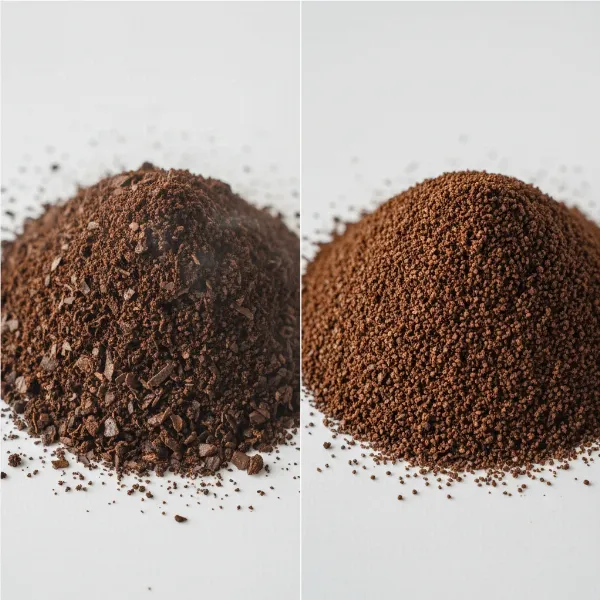 Visual comparison of inconsistent coffee grounds from a blade grinder versus uniform grounds from a burr grinder.
Precision for Every Brew: Customizable Grind Settings
Different brewing methods demand different grind sizes to achieve optimal extraction. Espresso requires an extremely fine grind, pour-over benefits from a medium-fine consistency, and a French press needs a coarse grind. Blade grinders offer little to no control over this crucial factor; the only variable is how long you run the blades, which still results in an inconsistent mix.
Burr grinders, however, provide precise, adjustable settings that allow you to dial in the perfect grind size for any brewing method. This level of control is fundamental for unlocking the full potential of your coffee, ensuring your water extracts flavors exactly as intended. Whether you prefer the robust intensity of espresso or the delicate clarity of a pour-over, a burr grinder empowers you to fine-tune your brew to perfection.
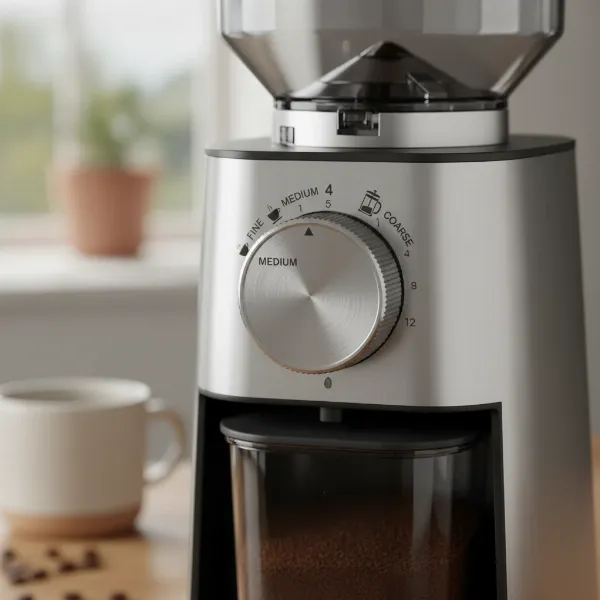 An electric burr coffee grinder with visible grind settings labeled for various brewing methods, showing precision control.
“A burr grinder’s slower grinding speed helps preserve these oils, allowing for a cleaner, more aromatic cup of coffee.” – Moccamaster USA, Coffee Grinder Experts
Beyond Flavor: Durability, Quiet Operation, and Value
While taste is paramount, burr grinders offer additional benefits that enhance the overall coffee experience and provide long-term value.
| Feature | Blade Grinder | Burr Grinder |
|---|---|---|
| Grind Consistency | Poor (chopping) | Excellent (crushing) |
| Heat Generation | High | Low |
| Flavor Preservation | Compromised | Maintained |
| Grind Control | Limited | Precise & Adjustable |
| Durability | Lower | Higher |
| Noise Level | Louder | Generally Quieter |
| Upfront Cost | Low | Higher |
| Long-term Value | Lower | Higher |
Burr grinders are built to last, often featuring robust ceramic or stainless steel burrs that can withstand years of use with proper maintenance. While their initial cost is higher than blade grinders, their durability and superior performance make them a cost-effective investment in the long run. Many models also operate more quietly than their blade counterparts, a welcome feature for early risers who wish to brew without disturbing the household.
Choosing Your Burr Grinder: Conical vs. Flat
Once you’ve decided to upgrade to a burr grinder, you’ll encounter two primary types: conical and flat.
- Conical Burr Grinders: These feature a cone-shaped inner burr that rotates within a stationary outer burr. Conical burr grinders are generally more affordable, quieter, and cleaner in operation compared to flat burrs. They are an excellent choice for most home brewing methods, providing consistent results that are far superior to any blade grinder.
- Flat Burr Grinders: Composed of two parallel, serrated discs, flat burr grinders are renowned for producing an exceptionally uniform particle size. This consistency makes them a favorite among espresso enthusiasts who demand the utmost precision. While often more expensive and potentially a bit louder, high-end flat burrs deliver outstanding flavor clarity.
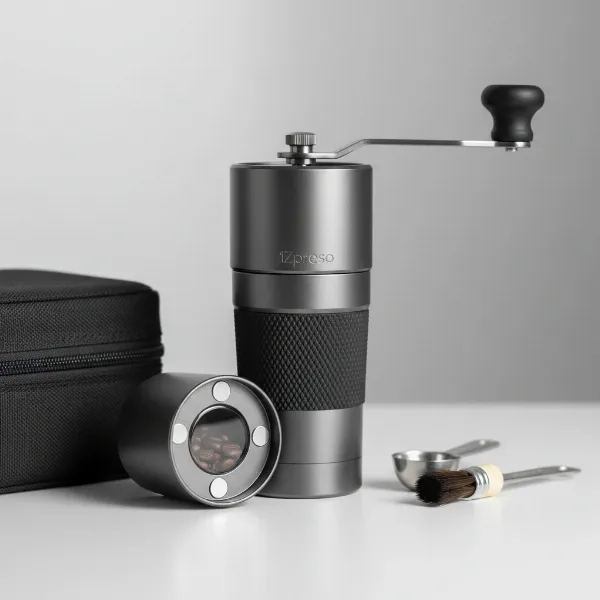
For those on a tighter budget or seeking portability, manual burr grinders offer an excellent, often more affordable, entry into the world of consistent grinding, requiring only a bit of elbow grease.
Maintaining Your Investment: Care for Your Burr Grinder
To ensure your burr grinder continues to deliver exceptional performance and flavor, regular maintenance is key. Coffee oils and fine particles can build up over time, which can dull the burrs and negatively impact flavor. A quick weekly brush-out and occasional deeper cleaning with specialized grinder cleaning tablets can significantly extend its lifespan and maintain grind quality. Treat your grinder with care, and it will reward you with delicious coffee for years to come.
Conclusion
The journey to an exquisite cup of coffee begins with a consistent, quality grind. While blade grinders offer an inexpensive entry point, they fundamentally compromise the flavor and aroma of your beans through inconsistent chopping and heat generation. Upgrading to a burr grinder, whether conical or flat, is not merely a luxury but an essential step for anyone aspiring to truly taste and appreciate their coffee. With precise control, flavor preservation, and lasting durability, a burr grinder transforms your daily ritual into an elevated experience. Make the switch, and you’ll taste the undeniable difference in every rich, balanced cup. Isn’t it time your coffee tasted as good as it deserves?
Frequently Asked Questions
Why is grind consistency so important for good coffee flavor?
Grind consistency is crucial because it ensures an even extraction of flavor compounds from your coffee. When all coffee particles are roughly the same size, water interacts with them uniformly, preventing over-extraction (bitterness) from fine particles and under-extraction (sourness/wateriness) from coarse particles, leading to a balanced and clear flavor profile.
Do blade grinders really ruin coffee?
While blade grinders don’t “ruin” coffee entirely, they significantly hinder its potential. Their chopping action creates an uneven grind, leading to a mixed extraction that can result in a bitter, sour, or muddy taste. Additionally, the heat generated by blade grinders can degrade the delicate aromas and flavors of your coffee beans.
How much should I expect to spend on a good burr grinder?
The price of burr grinders can vary widely. Entry-level electric burr grinders typically range from $100 to $200, offering a significant upgrade in grind consistency and control. Higher-end models, especially those with advanced features or flat burrs optimized for espresso, can cost $300 or more. Manual burr grinders are a more affordable option, often available for $50-$100.