For coffee aficionados, the Chemex isn’t just a brewing device; it’s a ritual, a symphony of design and function creating an exceptionally clean and flavorful cup. But even the finest beans and meticulous pouring technique won’t unlock the Chemex’s full potential without one critical component: the right coffee grinder. Achieving that perfect, uniform coarse grind is the bedrock of an exquisite Chemex experience, transforming ordinary beans into a vibrant, aromatic brew. This guide will delve into why grind consistency is paramount for Chemex and help you navigate the world of coffee grinders to find your ideal companion.
The Art of the Chemex Grind: Why Coarse Matters
The Chemex brewer stands out with its thick, bonded paper filters and elegant, non-immersion pour-over method. This design allows for a longer contact time between water and coffee grounds compared to many other pour-over techniques, making the grind size exceptionally influential. For a Chemex, a medium-coarse to coarse grind is essential, resembling the texture of beach sand or even sea salt.
Why this specific coarseness? A grind that’s too fine will lead to over-extraction, resulting in a bitter, astringent cup with a prolonged draw-down time. Conversely, an overly coarse and inconsistent grind will result in under-extraction, producing a weak, watery, and underdeveloped flavor profile as the water passes too quickly through uneven particles. Consistency is king here; uniform coarse particles ensure that water flows evenly through the coffee bed, extracting flavors uniformly and preventing both over and under-extraction in different parts of the same brew. Without this uniformity, you’re left with a cup that lacks balance and clarity.
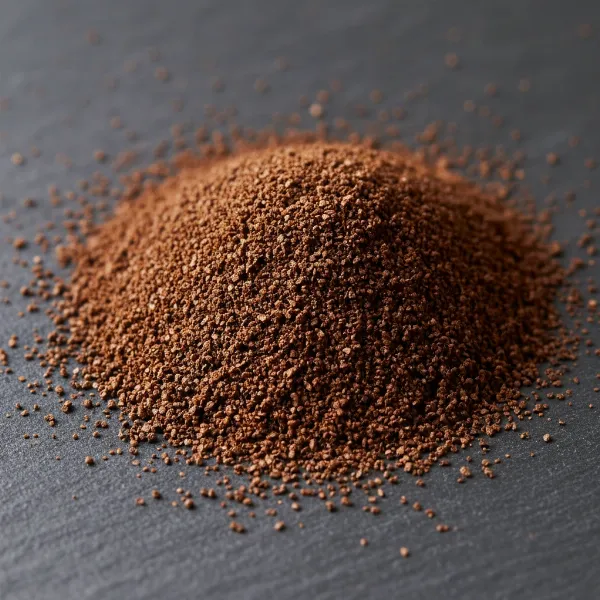 perfect medium coarse coffee grind for chemex pour over method
Exploring Coffee Grinder Types for Chemex
When selecting a grinder for your Chemex, the fundamental choice boils down to burr grinders, with a clear distinction between manual and electric options. Blade grinders, while inexpensive, are universally unsuitable for quality coffee brewing due to their inability to produce a consistent grind.
Manual Burr Grinders
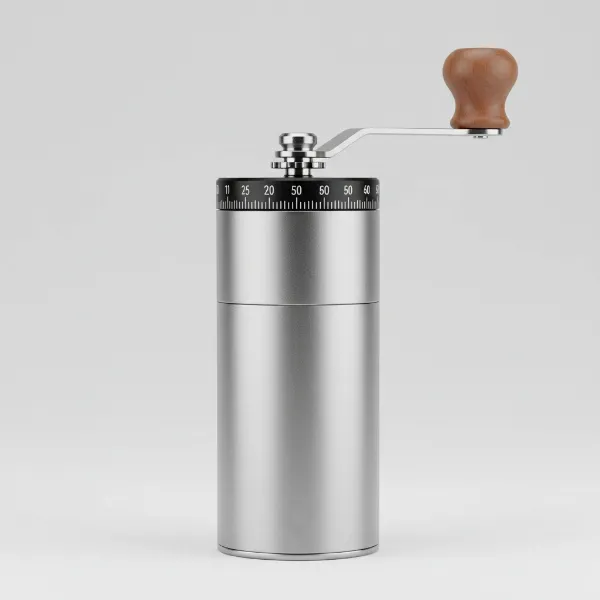
Manual burr grinders offer a hands-on, often meditative approach to coffee preparation. They typically feature ceramic or steel burrs that crush beans between two abrasive surfaces, providing excellent grind consistency.
- Advantages: Manual grinders offer superb grind quality for a relatively lower price than their electric counterparts. They generate minimal heat during grinding, which helps preserve the delicate aromatics and flavors of the coffee beans. Their portability makes them ideal for travel or small kitchens, and they operate quietly without requiring electricity.
- Disadvantages: The main drawback is the effort and time required, especially for larger batches or daily brewing. Some budget manual grinders can suffer from burr wobble, which impacts consistency at coarser settings unless modified.
|
Our Picks for the Best Coffee grinder in 2026
As an Amazon Associate I earn from qualifying purchases.
|
||
| Num | Product | Action |
|---|---|---|
| 1 | OXO Brew Conical Burr Coffee Grinder - Silver, Stainless Steel Burrs, One-Touch Automatic Smart Grind |

|
| 2 | Automatic Coffee Machine, 20-Bar Pressure Espresso Maker with Built-in Grinder, 15-Precision Settings, One-Touch Latte & Cappuccino System, Smart Self-Cleaning |
|
| 3 | Hamilton Beach Fresh Grind Electric Coffee Grinder for Beans, Spices and More, Stainless Steel Blades, Removable Chamber, Makes up to 12 Cups, Black |
|
| 4 | SHARDOR Professional Conical Burr Coffee Grinder, Coffee Bean Grinder with 48 Grind Settings for Espresso, Drip & French Press, Upgraded Anti-Static Technology, Precision Timer, Stainless Steel |
|
| 5 | Cuisinart Coffee Grinder, Electric One-Touch Automatic Burr Coffee Grinder with 18-Position Grind Selector, Cup Size Selector for 4 – 18 Cups, DBM-8P1, Black Stainless |
|
| 6 | Hamilton Beach Custom Grind Electric Coffee Grinder for 4-14 Cups, One-Press Hand-Free Operation with Auto Shutoff, Removable Grinding Bowl For Easy Pour and Clean, Stainless Steel (80406) |
|
| 7 | BLACK+DECKER One Touch Coffee Grinder, 2/3 Cup Coffee Bean Capacity, Spice Grinder, One Touch Push-Button Control -150 Watts -Stainless Steel Blades |
|
| 8 | Wancle Electric Coffee Grinder, Spice Grinder, One Touch Coffee Mill for Beans, Spices and More, with Clean Brush Black |
|
| 9 | Cuisinart Coffee Grinder, One Touch Control Coffee Bean Grinder with Stainless Steel Bowl and Blades, 2.5 oz/70g Capacity Enough for 12 Cups, On/Off Switch with Safety Interlock, DCG-20BKN, Black |
|
| 10 | Amazon Basics Electric Coffee Grinder, Coffee Bean and Spice Grinder, With Heavy-Duty Stainless Steel Grind Blades |
|
Electric Burr Grinders
Electric burr grinders provide convenience and speed, making daily brewing effortless. They are a popular choice for home baristas seeking consistent results with minimal fuss.
- Advantages: Speed and convenience are paramount. With the push of a button, you get freshly ground coffee, often with greater capacity for multiple servings. High-quality electric burr grinders offer exceptional grind consistency across various settings, essential for Chemex.
- Disadvantages: They are generally more expensive than manual grinders and tend to be louder. While good electric burr grinders minimize heat transfer, the motor can still generate some heat, potentially affecting very sensitive coffee beans. Their size and reliance on a power outlet also limit portability.
Why Blade Grinders Fall Short
Blade grinders operate more like blenders, chopping coffee beans with a spinning blade rather than grinding them. This method results in a highly inconsistent mix of coarse chunks and fine powder, often referred to as “boulders and dust.” This unevenness makes it impossible to achieve a balanced extraction for Chemex, leading to a muddled and unpredictable cup. For any serious coffee brewing, especially for pour-over methods, blade grinders should be avoided.
Comparison: Manual vs. Electric Burr Grinders for Chemex
Understanding the nuances between manual and electric burr grinders is key to making an informed decision for your Chemex brewing.
| Feature | Manual Burr Grinder | Electric Burr Grinder |
|---|---|---|
| Grind Consistency | Excellent (high-end models) | Excellent |
| Speed & Convenience | Slower, requires effort | Fast, one-touch |
| Portability | High | Low |
| Heat Generation | Minimal | Moderate (can impact flavor slightly) |
| Price | Low-High | Medium-High |
| Noise Level | Low | Moderate-High |
| Capacity | Small (typically 20-40g) | Medium-Large (typically 100-250g+) |
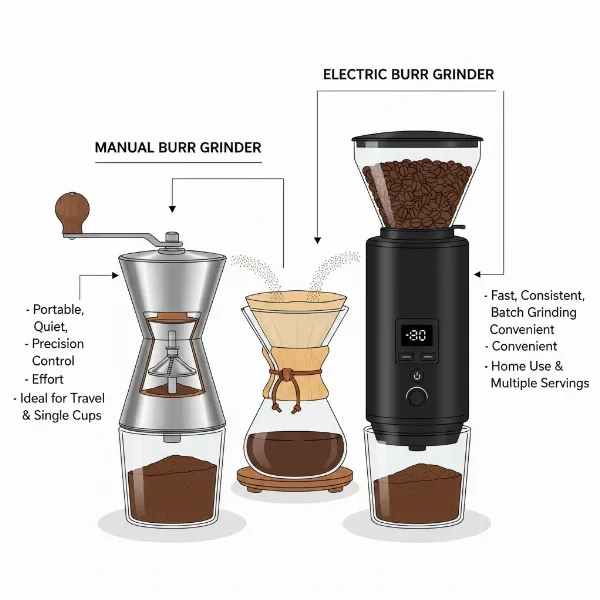 comparison of manual and electric burr coffee grinders for chemex
“The grind is arguably the single most important variable in brewing delicious coffee. Even the most expensive beans will taste mediocre if ground poorly.” – James Hoffmann, World Barista Champion & Coffee Expert
Essential Factors When Choosing a Chemex Coffee Grinder
Beyond the fundamental choice between manual and electric burr grinders, several key features will dictate your satisfaction with a Chemex-specific grinder.
Grind Setting Range & Precision
A grinder for Chemex must offer a wide range of adjustable grind settings, particularly with ample options in the medium-coarse spectrum. The ability to make small, incremental adjustments is crucial for “dialing in” your perfect grind, as even slight changes can significantly impact extraction and taste. Look for grinders with clear, repeatable settings that make it easy to return to your preferred coarse grind.
Burr Material & Type (Conical vs. Flat)
Most quality burr grinders feature either stainless steel or ceramic burrs. Both materials are excellent, offering durability and sharpness. Ceramic burrs are often touted for their longevity and ability to stay sharp, while steel burrs can be incredibly precise.
- Conical burrs consist of two cone-shaped burrs, one fitting inside the other. They are known for efficiency, often running quieter and producing less static. They excel at producing consistent grinds for pour-over methods like Chemex.
- Flat burrs feature two parallel, ring-shaped burrs. They are celebrated for their uniformity and ability to create a very precise particle distribution, which can highlight specific flavor notes in coffee. While traditionally associated with espresso, many modern flat burr grinders are designed for exceptional pour-over performance.
For Chemex, both conical and flat burr grinders can produce excellent results, as long as they offer the necessary consistency at coarser settings.
Build Quality & Durability
A coffee grinder is an investment. Prioritize models constructed from robust materials like stainless steel, ceramic, or high-quality plastics. Inferior components can wear down quickly, especially with daily use, compromising grind consistency over time. A well-built grinder ensures longevity and reliable performance.
Ease of Use & Cleaning
Consider how straightforward the grinder is to operate and maintain. An intuitive interface, easy-to-fill hoppers, and simple grind adjustment mechanisms enhance the user experience. Regular cleaning is vital for maintaining grind quality and preventing stale coffee oil buildup, so grinders with easily accessible burrs and removable parts for cleaning are a significant advantage.
Capacity
Match the grinder’s capacity to your brewing habits. If you brew a single cup of Chemex daily, a manual grinder or an electric grinder with a smaller hopper might suffice. For larger households or those who brew multiple times a day, an electric grinder with a generous bean hopper and ground bin will offer greater convenience.
Top Picks: Recommended Grinders for Your Chemex
Drawing from extensive experience and widespread praise within the coffee community, here are some top-tier grinders that consistently deliver for Chemex brewing:
Electric Burr Grinder Highlights
- Baratza Encore Conical Burr Grinder: Often hailed as the ultimate entry-level electric burr grinder, the Encore is a workhorse known for its consistent grind quality, especially in the medium-coarse range perfect for Chemex. With 40 grind settings, it offers ample versatility for dialing in your brew. It’s user-friendly and an excellent value for its performance.
- Capresso Infinity Conical Burr Grinder: This grinder stands out for its robust build and consistent performance. Featuring commercial-grade conical burrs, it offers 16 precise grind settings, including plenty of options for Chemex. Its low-speed grinding minimizes heat, preserving coffee aroma and flavor.
- Fellow Ode Brew Grinder: Designed specifically for brew methods like Chemex, the Fellow Ode is a visually striking grinder that focuses on precision. Equipped with large 64mm flat burrs (or upgradeable burrs for even higher performance) and 31 stepped grind settings, it excels at producing uniform coarse grounds, enhancing clarity and flavor in your pour-over.
Manual Burr Grinder Highlights
- Comandante C40 MK4 Nitro Blade Grinder: A premium manual grinder, the Comandante is a favorite among coffee enthusiasts for its exceptional engineering and superior grind consistency. Its patented Nitro Blade burrs are incredibly sharp and durable, producing a remarkably uniform grind across the entire spectrum, making it outstanding for Chemex.
- Lido 3 Manual Coffee Grinder: Known for its robust construction and large capacity, the Lido 3 is a powerhouse among manual grinders. It features large conical steel burrs that deliver consistent, precise grinds suitable for Chemex, and its sturdy design ensures it will last for years.
- JavaPresse Manual Coffee Grinder: For those seeking a budget-friendly and portable option, the JavaPresse offers impressive value. With stainless steel conical burrs and 18 click settings, it can produce a respectable coarse grind for Chemex, making it a great choice for travelers or those just starting their manual grinding journey.
Conclusion
The journey to an exceptional Chemex brew begins long before the hot water meets the grounds; it starts with the right grinder. Understanding the critical role of a consistent medium-coarse grind and investing in a quality burr grinder — whether manual or electric — is paramount. By considering factors like grind adjustability, burr material, and overall build quality, you can select a grinder that perfectly complements your brewing style and preferences. Embrace the art of grinding fresh, and you’ll unlock a depth of flavor and aroma in your Chemex that stale pre-ground coffee simply cannot deliver. Which grinder will you choose to elevate your morning ritual?
Frequently Asked Questions
What grind size is best for Chemex?
The ideal grind size for Chemex brewing is medium-coarse to coarse, often compared to beach sand or sea salt. This specific texture allows for optimal water flow through the thick Chemex filter, preventing over-extraction and ensuring a clean, balanced cup.
Can I use a blade grinder for Chemex?
No, blade grinders are not recommended for Chemex or any quality coffee brewing. They chop beans inconsistently, creating a mix of fine dust and large chunks. This unevenness leads to unpredictable extraction and a bitter, muddy cup that compromises the Chemex’s clarity.
How often should I clean my coffee grinder?
Regular cleaning is crucial for maintaining grind quality and extending your grinder’s lifespan. For daily users, a quick brush-out every week and a deeper cleaning (disassembling burrs if possible) every 2-4 weeks is recommended to remove coffee oils and fines buildup.
Is a manual grinder worth it for Chemex?
Absolutely. Manual grinders offer excellent grind quality and consistency, often at a lower price point than equivalent electric models. They also generate less heat, preserving delicate flavors, and provide a satisfying, hands-on brewing experience. They are particularly great for single servings and portability.
What’s the difference between conical and flat burrs for Chemex?
Both conical and flat burrs can produce excellent results for Chemex. Conical burrs are efficient and consistent for pour-over, often quieter and with less static. Flat burrs are known for their extreme uniformity and precision, which can highlight specific flavor notes. The choice often comes down to personal preference and budget.