There’s an undeniable allure to antique objects, pieces that carry echoes of stories from generations past. For coffee enthusiasts and interior design aficionados alike, an antique manual coffee grinder isn’t just a relic; it’s a statement. These charming pieces beautifully blend functionality with timeless aesthetics, transforming a simple kitchen counter or bookshelf into a focal point rich with character and history. If you’re looking to infuse your living space with vintage charm and a touch of artisanal heritage, selecting the right antique hand grinder can be an inspired choice. This guide will help you navigate the world of these beautiful collectibles, ensuring you find the perfect blend of historical elegance and decorative appeal for your home.
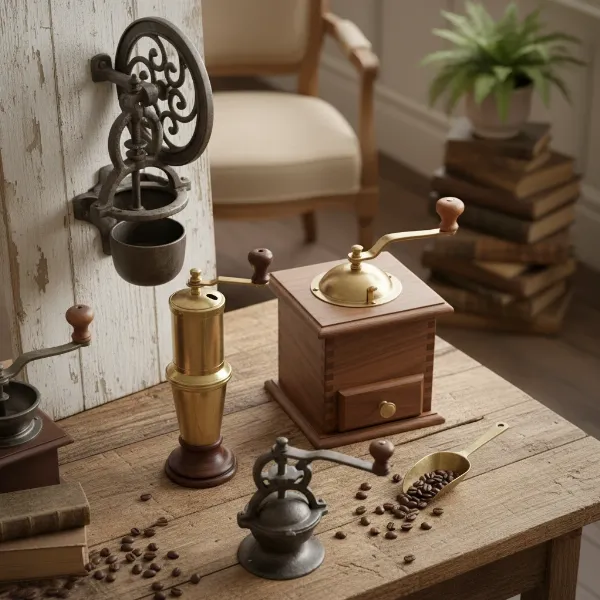 Assortment of antique manual coffee grinders displayed, showcasing various styles and materials.
Popular Types of Antique Manual Coffee Grinders for Decor
Antique manual coffee grinders come in a delightful array of styles, each offering a distinct aesthetic that can complement various interior design themes. Understanding these types is the first step in finding a piece that speaks to your decorative vision.
Cast Iron Wall-Mounted Grinders
These grinders typically feature a sturdy cast iron body, often with a wooden catch-cup, and are designed to be affixed directly to a kitchen wall. Their robust construction and industrial aesthetic make them visually striking.
- Pros: Offer a bold, industrial or farmhouse look; save countertop space; often feature intricate cast iron detailing that adds character.
- Cons: Require permanent installation; can be heavy; some models might have rust or wear that needs attention for optimal display.
- Best for: Homes with industrial, rustic, farmhouse, or even eclectic decor schemes, where they can serve as a strong visual anchor.
|
Our Picks for the Best Coffee grinder in 2026
As an Amazon Associate I earn from qualifying purchases.
|
||
| Num | Product | Action |
|---|---|---|
| 1 | BLACK+DECKER One Touch Coffee Grinder, 2/3 Cup Coffee Bean Capacity, Spice Grinder, One Touch Push-Button Control -150 Watts -Stainless Steel Blades |

|
| 2 | Wancle Electric Coffee Grinder, Spice Grinder, One Touch Coffee Mill for Beans, Spices and More, with Clean Brush Black |
|
| 3 | Cuisinart Coffee Grinder, Electric One-Touch Automatic Burr Coffee Grinder with 18-Position Grind Selector, Cup Size Selector for 4 – 18 Cups, DBM-8P1, Black Stainless |
|
| 4 | Hamilton Beach Custom Grind Electric Coffee Grinder for 4-14 Cups, One-Press Hand-Free Operation with Auto Shutoff, Removable Grinding Bowl For Easy Pour and Clean, Stainless Steel (80406) |
|
| 5 | Hamilton Beach Fresh Grind Electric Coffee Grinder for Beans, Spices and More, Stainless Steel Blades, Removable Chamber, Makes up to 12 Cups, Black |
|
| 6 | Cuisinart Coffee Grinder, One Touch Control Coffee Bean Grinder with Stainless Steel Bowl and Blades, 2.5 oz/70g Capacity Enough for 12 Cups, On/Off Switch with Safety Interlock, DCG-20BKN, Black |
|
| 7 | SHARDOR Professional Conical Burr Coffee Grinder, Coffee Bean Grinder with 48 Grind Settings for Espresso, Drip & French Press, Upgraded Anti-Static Technology, Precision Timer, Stainless Steel |
|
| 8 | Automatic Coffee Machine, 20-Bar Pressure Espresso Maker with Built-in Grinder, 15-Precision Settings, One-Touch Latte & Cappuccino System, Smart Self-Cleaning |
|
| 9 | Amazon Basics Electric Coffee Grinder, Coffee Bean and Spice Grinder, With Heavy-Duty Stainless Steel Grind Blades |
|
| 10 | OXO Brew Conical Burr Coffee Grinder - Silver, Stainless Steel Burrs, One-Touch Automatic Smart Grind |
|
Wooden Box Grinders
Perhaps the most iconic form, wooden box grinders are characterized by a wooden housing (often dovetailed or carved) with a cast iron grinding mechanism and a drawer for collecting ground coffee. They come in countless variations from simple utilitarian designs to intricately carved masterpieces.
- Pros: Exude warmth and classic charm; available in various wood types and finishes; versatile enough for many decor styles; often more portable than wall-mounted units.
- Cons: Can be susceptible to wood damage (scratches, cracks, dryness) over time; may take up more counter space depending on size.
- Best for: Traditional, vintage, cottage, or shabby chic interiors where their natural materials and classic lines blend seamlessly.
Peppermill-Style / Tall Hand Grinders
Often mistaken for pepper mills due to their slender, upright profile, these grinders typically feature metal bodies (brass, copper, or plated steel) and a small handle on top. They are designed for portability and often have a more refined, elegant appearance.
- Pros: Elegant and often more ornate, perfect for a refined or eclectic display; compact footprint on countertops or shelves; many boast beautiful metal patinas.
- Cons: Smaller capacity, which is less relevant for decor but worth noting; some mechanisms can be delicate if actual use is intended.
- Best for: Eclectic, classic, or more formal decor settings where a touch of metallic elegance or unique shape is desired.
Comparison Table: Antique Manual Grinder Styles for Decor
Choosing the right style depends heavily on your aesthetic preferences and the existing decor of your space. This table offers a quick comparison to help you differentiate between the main types.
| Feature | Cast Iron Wall-Mounted | Wooden Box Grinders | Peppermill-Style / Tall Hand Grinders |
|---|---|---|---|
| Aesthetic | Industrial, Rustic | Traditional, Vintage | Elegant, Classic, Ornate |
| Space Impact | Wall-mounted | Countertop presence | Slender, upright |
| Common Materials | Cast Iron, Wood | Wood, Cast Iron, Brass | Brass, Copper, Steel |
| Decor Styles | Farmhouse, Industrial | Cottage, Traditional | Eclectic, Formal |
| Primary Appeal | Bold statement piece | Warm, homely charm | Refined, sophisticated accent |
Factors to Consider When Selecting an Antique Manual Coffee Grinder for Decor
When embarking on the hunt for your perfect decorative antique coffee grinder, several elements should guide your decision. Beyond mere appearance, these factors ensure your chosen piece truly enhances your home.
Aesthetic Appeal and Era
The primary consideration is how the grinder fits your existing decor. Are you aiming for the rugged charm of a Victorian cast iron piece, the clean lines of a Mid-Century wooden grinder, or the intricate detailing of an Art Deco model? Researching the styles associated with different eras can help you narrow down your search and ensure a cohesive look. A piece from the late 19th or early 20th century often presents rich history and craftsmanship.
Condition and Patina
The condition of an antique grinder can vary significantly. Some collectors prefer pieces in pristine, near-original condition, while others cherish the signs of age, known as patina. Patina—the subtle sheen or discoloration that develops on surfaces over time—tells a story and adds authentic character. Decide if you prefer a well-preserved piece that looks almost new, or one with charming wear, minor dents, or a beautiful, aged finish that speaks of its long life. Often, a grinder with a rich, undisturbed patina is more valued for its decorative authenticity.
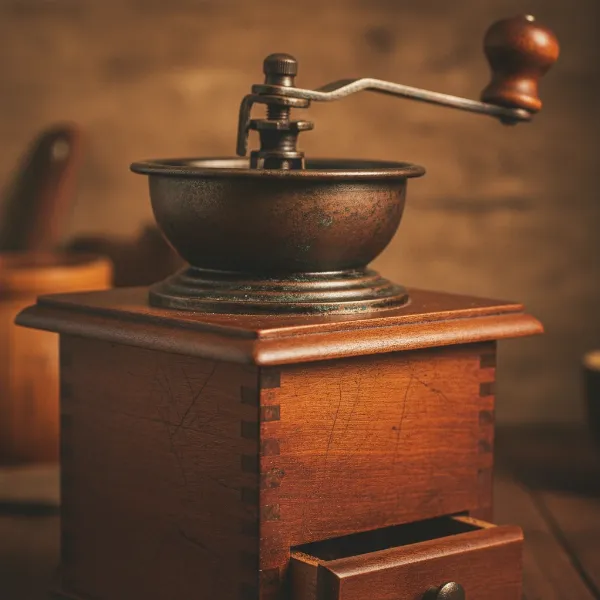 Close-up of an antique wooden box coffee grinder, showcasing its rich patina and detailed craftsmanship.
Material and Craftsmanship
Antique grinders were crafted from a variety of durable materials. Look for those made with high-quality cast iron, polished brass, rich copper, or solid hardwoods like oak, walnut, or beech. The quality of craftsmanship is often evident in the joinery of wooden boxes, the precision of cast iron parts, and the detailing on metal components. A well-made antique grinder not only looks superior but also hints at the enduring quality of its era.
Size and Placement
Before purchasing, consider where you intend to display the grinder. A large, wall-mounted cast iron piece might dominate a small kitchen, whereas a compact wooden box grinder could be lost on an expansive countertop. Measure your intended display area and choose a grinder whose dimensions and visual weight complement the space. Think about whether it will be a standalone centerpiece or part of a larger vignette.
Authenticity and History
While not strictly necessary for decor, understanding the authenticity and potential history of an antique grinder adds immense value and conversation starting points. Look for manufacturer marks, patent dates, or unique design elements that can help identify its origin and age. Brands like Peugeot Frères, Zassenhaus, or Arcade often have well-documented histories and are recognized for their quality and distinctive designs. A genuine antique piece, rather than a modern reproduction, carries an intrinsic charm that is hard to replicate.
Top Picks – Recommended Antique Manual Coffee Grinders for Decor
While “best” is subjective and often depends on availability in the antique market, certain brands and styles are consistently sought after for their decorative appeal and historical significance.
Peugeot Frères – Classic French Elegance
French-made Peugeot grinders, particularly those from the late 19th and early 20th centuries, are highly prized. Often featuring beautifully crafted wooden boxes with distinctive metal mechanisms and finials, they embody a timeless European charm.
- Pros: Renowned for elegant designs, diverse range of styles from simple to ornate, strong historical lineage.
- Cons: Can be on the pricier side, especially for rare models in excellent condition.
Zassenhaus – German Precision & Style
German manufacturer Zassenhaus produced robust and aesthetically pleasing hand grinders. Their models are often characterized by sturdy wooden construction, high-quality burrs (even if only for display), and a clean, functional aesthetic that appeals to those who appreciate German engineering and timeless design.
- Pros: Known for durable construction and attractive, often minimalist designs; reliable quality adds to their appeal.
- Cons: Some models can be heavier than their wooden appearance suggests.
Arcade / Enterprise – American Industrial Charm
For a touch of American history and an industrial vibe, look for brands like Arcade or Enterprise. These companies were prominent in the late 19th and early 20th centuries, producing sturdy cast iron grinders, including iconic wall-mounted versions.
- Pros: Iconic American designs, particularly their robust cast iron pieces; perfect for industrial, farmhouse, or Americana-themed decor.
- Cons: Often show more significant wear due to their utility and age; can be very heavy.
Conclusion
Incorporating an antique manual coffee grinder into your home decor is more than just adding an object; it’s about inviting history, craftsmanship, and a unique story into your living space. Whether you’re drawn to the rustic appeal of a cast iron wall-mounted piece, the classic warmth of a wooden box grinder, or the elegant lines of a brass peppermill-style model, each piece offers a distinct charm. By considering its aesthetic, condition, materials, and historical context, you can select a decorative element that not only enhances your home’s ambiance but also serves as a fascinating conversation starter. Start your journey into collecting these beautiful relics and discover how these vintage treasures can perfectly grind a dose of character into your everyday surroundings. Which style will tell your home’s story?
Frequently Asked Questions
What should I look for to ensure an antique coffee grinder is genuine?
Look for manufacturer marks, patent dates, unique design elements, and signs of genuine age such as appropriate patina and wear consistent with its supposed era. Be wary of pieces that look too “perfect” or have inconsistent construction.
How do I clean an antique coffee grinder for display without damaging it?
For decorative purposes, a gentle cleaning is often sufficient. Use a soft brush to remove loose dust and debris. For metal parts, a mild soap and water solution followed by thorough drying can work, but avoid harsh chemicals or aggressive scrubbing that might remove valuable patina. For wood, a damp cloth and then a wood conditioner can revitalize it.
Are antique manual coffee grinders safe to use for actual coffee grinding?
While many antique grinders are mechanically sound, using them for grinding can be risky for the grinder’s preservation and your coffee’s quality. Old burrs might be dull or rusty, and lead paint could be present on some very old models. For decor, functionality is secondary, so it’s often best to display them as is.
Where are the best places to find antique manual coffee grinders?
You can often find them at antique shops, flea markets, estate sales, and online marketplaces specializing in antiques. Local auctions or specialized vintage kitchenware dealers are also good sources for genuine pieces.
What’s the difference between a coffee grinder and a coffee mill?
Historically, “coffee mill” was the more common term, especially for manual devices. “Coffee Grinder” is a more modern and general term that encompasses both manual and electric devices. For antique items, “coffee mill” is often used interchangeably or to emphasize its vintage nature.