Every coffee enthusiast knows the pursuit of the perfect espresso shot is a journey filled with nuanced decisions, from bean selection to tamping technique. Among the most debated steps in the espresso preparation process is how coffee grounds make their way from the grinder to the portafilter. Should you grind directly into the portafilter, or does the seemingly extra step of a dosing cup truly elevate your workflow and the final cup? This guide delves into the distinct advantages and disadvantages of each method, helping you refine your routine for consistency, cleanliness, and ultimately, a better espresso experience.
The Traditional Path: Grinding Directly into the Portafilter
For decades, many baristas and home users have opted for the straightforward approach: grinding coffee directly into the portafilter. This method involves positioning the portafilter under the grinder chute, allowing the freshly ground coffee to fall straight into the basket. It’s a workflow often lauded for its apparent simplicity and speed.
Advantages of Direct Grinding
|
Our Picks for the Best Coffee grinder in 2026
As an Amazon Associate I earn from qualifying purchases.
|
||
| Num | Product | Action |
|---|---|---|
| 1 | Cuisinart Coffee Grinder, Electric One-Touch Automatic Burr Coffee Grinder with 18-Position Grind Selector, Cup Size Selector for 4 – 18 Cups, DBM-8P1, Black Stainless |

|
| 2 | Hamilton Beach Fresh Grind Electric Coffee Grinder for Beans, Spices and More, Stainless Steel Blades, Removable Chamber, Makes up to 12 Cups, Black |
|
| 3 | BLACK+DECKER One Touch Coffee Grinder, 2/3 Cup Coffee Bean Capacity, Spice Grinder, One Touch Push-Button Control -150 Watts -Stainless Steel Blades |
|
| 4 | SHARDOR Professional Conical Burr Coffee Grinder, Coffee Bean Grinder with 48 Grind Settings for Espresso, Drip & French Press, Upgraded Anti-Static Technology, Precision Timer, Stainless Steel |
|
| 5 | Hamilton Beach Custom Grind Electric Coffee Grinder for 4-14 Cups, One-Press Hand-Free Operation with Auto Shutoff, Removable Grinding Bowl For Easy Pour and Clean, Stainless Steel (80406) |
|
| 6 | OXO Brew Conical Burr Coffee Grinder - Silver, Stainless Steel Burrs, One-Touch Automatic Smart Grind |
|
| 7 | Cuisinart Coffee Grinder, One Touch Control Coffee Bean Grinder with Stainless Steel Bowl and Blades, 2.5 oz/70g Capacity Enough for 12 Cups, On/Off Switch with Safety Interlock, DCG-20BKN, Black |
|
| 8 | Wancle Electric Coffee Grinder, Spice Grinder, One Touch Coffee Mill for Beans, Spices and More, with Clean Brush Black |
|
| 9 | Amazon Basics Electric Coffee Grinder, Coffee Bean and Spice Grinder, With Heavy-Duty Stainless Steel Grind Blades |
|
| 10 | Automatic Coffee Machine, 20-Bar Pressure Espresso Maker with Built-in Grinder, 15-Precision Settings, One-Touch Latte & Cappuccino System, Smart Self-Cleaning |
|
The primary benefit of grinding directly into the portafilter is its efficiency. By eliminating an intermediate step, this method can shave precious seconds off your preparation time, which is invaluable in a bustling commercial café setting or during a busy morning at home when every moment counts. It’s a “set it and forget it” approach for grinders with integrated portafilter forks, requiring minimal manual intervention once the grind time is set.
Disadvantages of Direct Grinding
Despite its perceived speed, direct grinding comes with notable drawbacks. One of the most common complaints is the mess. Coffee grounds, especially those with static charge, often spill over the edges of the portafilter basket, coating your countertop and requiring frequent clean-up. This not only creates a less tidy workspace but also leads to wasted coffee, which can accumulate significantly over time. Furthermore, direct grinding can result in uneven distribution of grounds within the basket. The coffee tends to pile up in a cone shape, making it harder to achieve a consistent, level bed before tamping. This unevenness can contribute to channeling and inconsistent extractions. Weighing grounds accurately can also be challenging, as the portafilter itself can be cumbersome to balance on smaller scales.
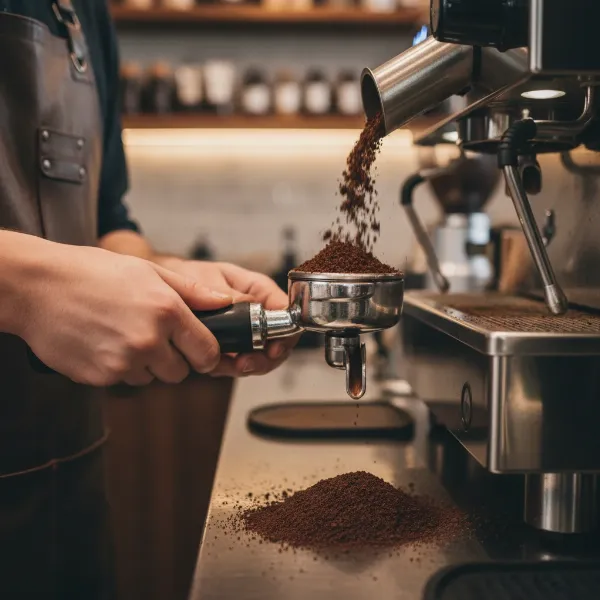 A barista grinds coffee directly into a portafilter, showing grounds spilling around the edges.
The Modern Approach: Embracing the Dosing Cup
In recent years, the humble dosing cup has risen in popularity, particularly among home baristas and cafes focused on single-dosing and meticulous preparation. This small vessel acts as an intermediary, collecting grounds from the grinder before they are transferred into the portafilter. While it adds a step, proponents argue that its benefits far outweigh the minor inconvenience.
Advantages of Using a Dosing Cup
The dosing cup shines brightly in terms of cleanliness. By containing the grounds as they exit the grinder, it dramatically reduces spillage and static-charged mess on your workstation, saving cleanup time. This clean transfer also helps prevent coffee waste. For those who meticulously weigh their coffee, a dosing cup allows for far more precise measurements. You can weigh whole beans into the cup, grind them, and then re-weigh the grounds to ensure accuracy, or simply weigh the grounds in the cup before transferring.
Beyond cleanliness and precision, dosing cups contribute significantly to shot consistency. Shaking the grounds vigorously within the cup can break up clumps, reduce static, and help normalize density, leading to a more even distribution when transferred into the portafilter basket. This improved distribution is crucial for preventing channeling and achieving a balanced extraction. Additionally, for users of bottomless (naked) portafilters, which often don’t sit securely on grinder forks, a dosing cup provides a stable and secure way to transfer grounds. Some commercial settings even find dosing cups enhance efficiency by allowing baristas to grind the next shot while the current one is extracting.
Disadvantages of Using a Dosing Cup
The most frequently cited criticism of the dosing cup is that it adds an extra step to the espresso preparation routine. This can be perceived as slower, especially in high-volume commercial environments where every second matters. While many find it reduces static, some users have reported that the process of grinding into and then transferring from a dosing cup can sometimes create more static and clumping for their specific grinder and workflow, potentially affecting distribution even with subsequent WDT (Weiss Distribution Technique).
Workflow Differences: A Side-by-Side Comparison
To help you decide which method aligns best with your espresso philosophy, here’s a direct comparison:
| Feature | Direct Grinding into Portafilter | Using a Dosing Cup |
|---|---|---|
| Cleanliness | Prone to mess and spillage | Significantly reduces mess and waste |
| Speed | Potentially faster for uninterrupted grinding | Adds a transfer step, but can optimize overall workflow (e.g., grind ahead) |
| Consistency | Risk of uneven distribution and clumping | Helps break up clumps, normalizes density for even distribution |
| Ease of Weighing | Challenging with small scales, portafilter balance issues | Allows for precise weighing of beans or grounds, easier on scales |
| Distribution | Grounds often pile unevenly | Facilitates better distribution through shaking before transfer |
| Equipment Compatibility | Best with grinders designed for portafilter forks | Excellent for single-dosing grinders and bottomless portafilters |
| Best Use Case | High-volume commercial settings, quick, less meticulous home shots | Home baristas, single-dosing enthusiasts, cafes prioritizing precision/cleanliness |
Factors to Consider When Choosing Your Workflow
The optimal method isn’t universal; it largely depends on your specific setup, priorities, and preferences.
Grinder Type
If you own a single-dosing grinder (like a Niche Zero or DF64), a dosing cup is almost a necessity. These grinders are designed for precise input and output, and a dosing cup facilitates this process beautifully. For hopper-based grinders, direct grinding is more common, but a dosing cup can still be used to improve cleanliness and distribution.
Espresso Machine and Portafilter Type
Bottomless portafilters, particularly those with unconventional shapes or poor balance, greatly benefit from a dosing cup. Since they often don’t sit securely on grinder forks, using a dosing cup prevents frustration and potential spills during grinding.
Personal Priority
Are you chasing ultimate consistency and a pristine workspace, or is raw speed your main concern? If consistency and cleanliness are paramount, the dosing cup is likely your ally. If you prioritize speed above all else and don’t mind a bit of cleanup, direct grinding might suit you.
Skill Level and Experience
While a dosing cup can aid distribution, proper WDT is still crucial for both methods. For beginners, a dosing cup can offer a more forgiving path to even distribution, helping to build good habits before delving into more complex techniques.
Volume
In a high-volume commercial setting where every second impacts throughput, direct grinding (if effectively managed) might seem faster due to fewer discrete steps. However, as one expert notes, the time saved on cleaning and reduced coffee wastage with a dosing cup can lead to greater overall efficiency and profitability for cafes. For home users, the “time lost” in transfer is often regained by not having to wipe down the counter after every shot.
Top Tips for an Optimized Espresso Workflow
Regardless of whether you choose a dosing cup or direct grinding, several practices can significantly enhance your espresso workflow and the quality of your shots:
- Consistent Weighing: Always weigh your whole beans before grinding (input) and, if possible, your ground coffee (output) to ensure consistent dosing.
- Utilize a WDT Tool: A WDT tool helps break up any remaining clumps and evenly distribute the grounds in the portafilter basket, a critical step for preventing channeling.
- Master Your Grind Setting: Adjust your grinder regularly to achieve the ideal grind size for your beans and desired shot time.
- Perfect Your Tamping Technique: Ensure a level and consistent tamp every time to create an even puck density.
“Many baristas are surprised to find that while a dosing cup introduces an extra step, it often streamlines the overall workflow by reducing mess and enabling faster, more consistent preparation.” – Admin, Coffeegrinderchoice.com Expert
Conclusion
The choice between a dosing cup and grinding directly into your portafilter boils down to a balance of priorities: cleanliness, speed, and consistency. While direct grinding offers a seemingly quicker route, it often sacrifices tidiness and shot quality due to uneven distribution and mess. The dosing cup, conversely, champions a cleaner workspace and superior consistency through better distribution and precise weighing, making it an invaluable tool for dedicated home baristas and cafes striving for excellence.
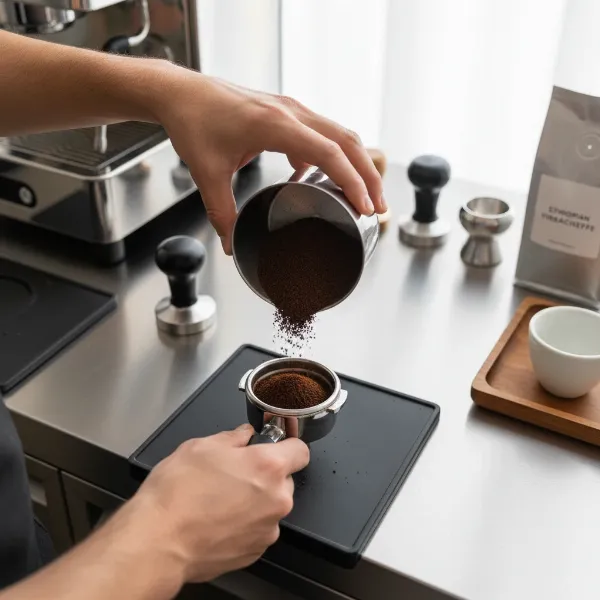 A barista carefully transfers precisely weighed coffee grounds from a dosing cup into a portafilter basket.
Ultimately, the best workflow is the one that fits seamlessly into your routine, produces consistent, delicious espresso, and makes you enjoy the process. Experiment with both methods, observe the differences, and discover what truly elevates your daily brew. What small change have you made that transformed your espresso workflow?
Frequently Asked Questions
Does a dosing cup improve espresso taste?
While a dosing cup doesn’t directly flavor your espresso, it significantly contributes to a more consistent extraction by helping to break up clumps and evenly distribute coffee grounds. This improved consistency can lead to a more balanced and better-tasting shot, free from the bitterness or sourness caused by channeling.
Is a dosing cup necessary for home baristas?
A dosing cup is not strictly “necessary,” but it is highly recommended for home baristas looking to minimize mess, achieve greater consistency in their shots, and optimize their single-dosing workflow. It can be a game-changer for cleanliness and shot quality, especially with certain grinder types or bottomless portafilters.
Can a dosing cup cause more static?
In most cases, a dosing cup helps reduce static by containing the grounds and allowing for agitation that can dissipate static charges. However, depending on the grinder, coffee bean type, ambient humidity, and the material of the dosing cup, some users might occasionally experience increased static or clumping. Experimentation is key.