Unlocking the full potential of your Aeropress begins long before the water hits the grounds—it starts with the grind. As a beloved, versatile brewing device, the Aeropress thrives on precision, and mastering your coffee grind is the single most impactful step you can take to elevate your daily cup. Whether you crave a bold, espresso-like shot or a smooth, full-bodied standard brew, understanding the nuances of grind size will transform your Aeropress experience from good to extraordinary. This comprehensive guide will equip you with all the knowledge and tips you need to achieve the perfect grind, every time.
Why Grind Size Matters for Aeropress
The texture and consistency of your coffee grounds fundamentally influence how water extracts flavor from them. With the Aeropress, this relationship is particularly critical due to its unique brewing mechanism involving pressure and a relatively short contact time.
Extraction Rate
|
Our Picks for the Best Coffee grinder in 2026
As an Amazon Associate I earn from qualifying purchases.
|
||
| Num | Product | Action |
|---|---|---|
| 1 | Amazon Basics Electric Coffee Grinder, Coffee Bean and Spice Grinder, With Heavy-Duty Stainless Steel Grind Blades |

|
| 2 | OXO Brew Conical Burr Coffee Grinder - Silver, Stainless Steel Burrs, One-Touch Automatic Smart Grind |
|
| 3 | Wancle Electric Coffee Grinder, Spice Grinder, One Touch Coffee Mill for Beans, Spices and More, with Clean Brush Black |
|
| 4 | Automatic Coffee Machine, 20-Bar Pressure Espresso Maker with Built-in Grinder, 15-Precision Settings, One-Touch Latte & Cappuccino System, Smart Self-Cleaning |
|
| 5 | Hamilton Beach Custom Grind Electric Coffee Grinder for 4-14 Cups, One-Press Hand-Free Operation with Auto Shutoff, Removable Grinding Bowl For Easy Pour and Clean, Stainless Steel (80406) |
|
| 6 | BLACK+DECKER One Touch Coffee Grinder, 2/3 Cup Coffee Bean Capacity, Spice Grinder, One Touch Push-Button Control -150 Watts -Stainless Steel Blades |
|
| 7 | Hamilton Beach Fresh Grind Electric Coffee Grinder for Beans, Spices and More, Stainless Steel Blades, Removable Chamber, Makes up to 12 Cups, Black |
|
| 8 | SHARDOR Professional Conical Burr Coffee Grinder, Coffee Bean Grinder with 48 Grind Settings for Espresso, Drip & French Press, Upgraded Anti-Static Technology, Precision Timer, Stainless Steel |
|
| 9 | Cuisinart Coffee Grinder, Electric One-Touch Automatic Burr Coffee Grinder with 18-Position Grind Selector, Cup Size Selector for 4 – 18 Cups, DBM-8P1, Black Stainless |
|
| 10 | Cuisinart Coffee Grinder, One Touch Control Coffee Bean Grinder with Stainless Steel Bowl and Blades, 2.5 oz/70g Capacity Enough for 12 Cups, On/Off Switch with Safety Interlock, DCG-20BKN, Black |
|
Finer coffee particles have a larger total surface area exposed to water, allowing flavors to extract more quickly. Conversely, coarser particles have less surface area, requiring more time for optimal extraction. For the Aeropress, finding the right balance ensures you capture the desirable compounds without over or under-extracting.
Flavor Profile
An incorrect grind size is often the culprit behind a less-than-perfect cup. If your grind is too fine, you risk over-extraction, which leads to bitter, astringent, or hollow flavors. If it’s too coarse, you may experience under-extraction, resulting in a weak, sour, or watery brew. The goal is a balanced extraction that highlights the inherent sweetness, acidity, and body of your coffee beans.
Brewing Time and Pressure
The Aeropress uses manual pressure to force water through the coffee bed. Grind size directly impacts the resistance experienced during this plunging process. A very fine grind creates high resistance, making plunging difficult and potentially leading to over-extraction. A coarse grind offers little resistance, allowing water to pass too quickly, which can cause under-extraction and premature “drip-through” before you even plunge.
Understanding Aeropress Grind Sizes
The Aeropress is incredibly forgiving, allowing for a range of grind sizes depending on your desired outcome and specific recipe. However, there’s a widely recognized sweet spot.
The “Sweet Spot”: Medium-Fine
For most standard Aeropress recipes, a medium-fine grind is recommended. This consistency is often described as being similar to the texture of table salt or fine sand. It strikes an ideal balance, allowing for efficient extraction without excessive resistance during plunging or premature drip-through. This grind size is finer than what you’d typically use for drip coffee but coarser than true espresso.
Finer Grinds for Espresso-like Concentrates & Shorter Brews
If you’re aiming for a concentrated, espresso-like shot or employing a recipe with a very short brew time (under two minutes), a finer grind, closer to that of traditional espresso, can be effective. This maximizes extraction in a condensed timeframe, yielding a bold and intense cup. However, be mindful that going too fine can increase the risk of bitterness and make plunging very difficult.
Coarser Grinds for Longer Steep Times & Fuller Body
Some Aeropress enthusiasts prefer longer immersion times (two to three minutes or more) to develop a fuller body or explore different flavor nuances. For these methods, a slightly coarser grind (medium to medium-coarse) can prevent over-extraction. This allows for extended contact between water and coffee without developing unwanted bitterness. If your coffee tastes overly bitter, experimenting with a coarser grind and shorter brew time can often help.
Here’s a general comparison to help visualize grind sizes:
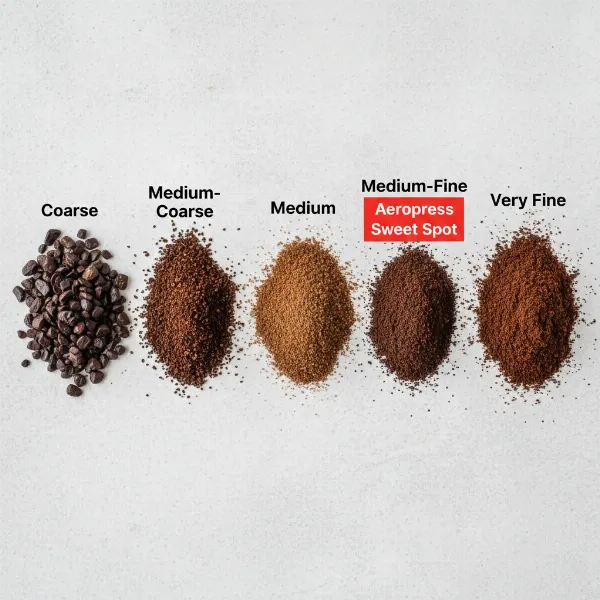 visual guide showing different coffee grind sizes from coarse to very fine for Aeropress
Comparison Table: Coffee Grind Sizes
| Grind Size | Texture Description | Common Brewing Methods | Aeropress Application |
|---|---|---|---|
| Coarse | Large, distinct particles, like sea salt. | French Press, Cold Brew | Very long steeps (5+ min), experimental recipes to reduce body and increase clarity, but generally too coarse for standard Aeropress. |
| Medium-Coarse | Rough sand. | Chemex, V60 (some pour-overs) | Longer steep times (3+ min) for a lighter body and less intense flavor. |
| Medium | Regular sand, like pre-ground coffee. | Drip Coffee Makers | Some Aeropress recipes with longer immersion, but often leads to under-extraction and watery results with standard methods. |
| Medium-Fine | Fine sand, table salt. | Aeropress (Standard), Siphon | The recommended starting point for most Aeropress recipes. Balances extraction and ease of plunging. |
| Fine | Powdered sugar, espresso. | Espresso, Moka Pot | Short brew times (under 1-2 min), highly concentrated, espresso-like shots, or certain inverted methods. |
| Very Fine | Flour. | Turkish Coffee | Generally too fine for Aeropress; will lead to severe over-extraction and extreme plunging difficulty. |
Types of Coffee Grinders for Aeropress
The quality of your grinder is paramount to achieving a consistent grind, which is the cornerstone of great Aeropress coffee.
Manual Burr Grinders
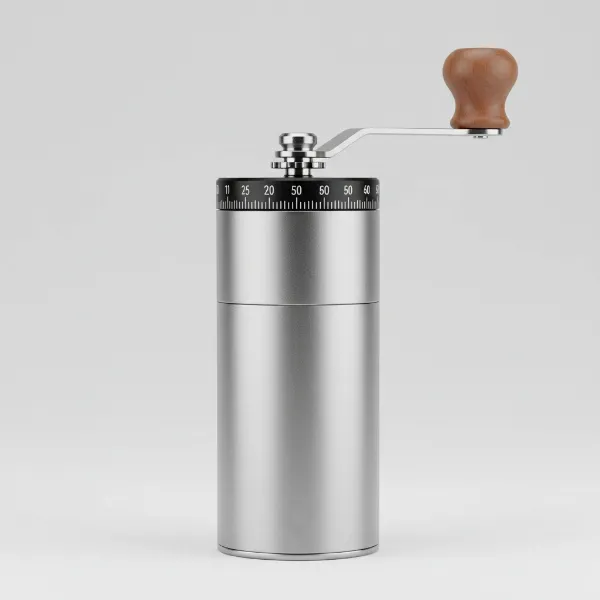
Manual burr grinders are an excellent choice for Aeropress users, especially those brewing single servings or who prioritize portability.
- Pros:
- Portability: Many models are compact and designed to fit inside the Aeropress plunger, making them ideal for travel.
- Consistency: Unlike blade grinders, burr grinders crush beans uniformly, resulting in even particle sizes crucial for balanced extraction.
- Affordability: Many high-quality manual burr grinders are more budget-friendly than their electric counterparts.
- Quiet Operation: They produce less noise than electric grinders.
- Cons:
- Effort and Time: Grinding manually requires physical effort and can be slower, especially for larger quantities.
- Capacity: Typically designed for smaller batches.
- Suitable for: Travelers, outdoor enthusiasts, budget-conscious brewers, those who enjoy the hands-on ritual of coffee preparation, and anyone who primarily brews single cups.
Electric Burr Grinders
For convenience and speed, electric burr grinders are a popular choice for daily use, especially if you brew for multiple people or prefer less manual effort.
- Pros:
- Speed and Convenience: Grinds coffee quickly with minimal effort.
- Consistency: Provides highly consistent grinds across a wide range of settings.
- Capacity: Often have larger hoppers and ground bins for multiple servings.
- Features: Many models offer advanced features like timers, dose settings, and a wider range of grind adjustments.
- Cons:
- Price: Generally more expensive than manual grinders.
- Size: Takes up more counter space.
- Noise: Can be significantly louder than manual grinders.
- Suitable for: Daily home brewing, multiple servings, those who prioritize speed and convenience, and coffee lovers willing to invest in a dedicated brewing station.
Why to Avoid Blade Grinders
While often inexpensive, blade grinders are the nemesis of good coffee, particularly for the Aeropress. Instead of grinding, they chop and shatter coffee beans inconsistently, creating a mix of large chunks and fine “dust.” This leads to:
- Inconsistent Extraction: The varied particle sizes result in some coffee over-extracting while other parts under-extract, leading to a muddled, often bitter and sour taste.
- Excessive Fines: The fine dust (fines) can clog your Aeropress filter and contribute to a muddy cup.
- Heat Generation: Blade grinders generate significant heat, which can “cook” the coffee, degrading its delicate flavors and aromas before brewing even begins.
For a truly exceptional Aeropress experience, always opt for a burr grinder.
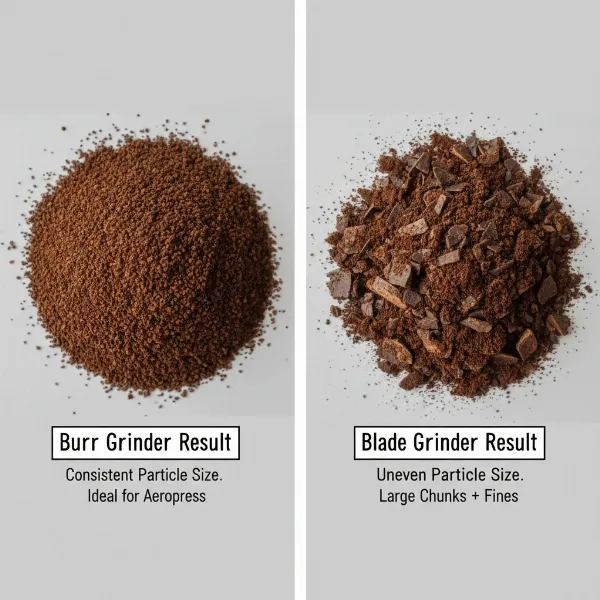 comparison image showing consistent burr grind vs inconsistent blade grind for coffee
Factors to Consider When Choosing an Aeropress Grinder
Selecting the right grinder is an investment in your coffee quality. Here’s what to look for:
Grind Consistency
This is the single most important factor. A good grinder produces uniform particles, ensuring even extraction and a superior flavor. Look for grinders with strong, well-aligned burrs.
Adjustability & Settings
The best grinders offer a wide range of precise grind settings, allowing you to fine-tune the grind size to suit different Aeropress recipes, roast levels, and personal preferences. Click-based adjustments are helpful for repeatable settings.
Burr Material & Type
Burrs are typically made from ceramic or stainless steel.
- Ceramic burrs are durable, tend to stay sharp longer, and generally produce less static. They often operate at lower speeds, minimizing heat.
- Steel burrs are very sharp, can grind faster, and offer excellent consistency. They can sometimes generate more static, but many modern designs mitigate this.
- Conical burrs are generally favored for their consistent grind and ability to reduce fines, making them an excellent match for the Aeropress. Flat burrs also offer great consistency, particularly in electric models.
Portability & Size
Consider your lifestyle. If you travel frequently or have limited counter space, a compact manual grinder that fits inside the Aeropress (like the Porlex Mini) is a game-changer. For a dedicated home setup, an electric burr grinder offers convenience without compromise.
Durability & Build Quality
A well-built grinder with quality materials will last for years. Read reviews focusing on longevity and reliability. Metal components typically indicate better durability than purely plastic constructions.
Ease of Cleaning
Regular cleaning is essential to prevent stale coffee oils from affecting new grinds. Choose a grinder that is easy to disassemble and clean.
Top Picks: Best Coffee Grinders for Aeropress
Based on expert recommendations and user satisfaction, these grinders consistently perform well for Aeropress brewing:
Baratza Encore Burr Coffee Grinder – Best Electric Overall
The Baratza Encore is a widely recommended entry-level electric burr grinder that offers exceptional value. It features 40 grind settings and conical burrs, providing consistent results for Aeropress and other brew methods. Its robust build and user-friendly interface make it a favorite among home brewers.
- Pros: Excellent grind consistency, wide range of settings, durable, easy to use.
- Cons: Can be a bit noisy, larger footprint than manual options.
1Zpresso Manual Coffee Grinders (e.g., Q2, J-series) – Best Manual Performance
1Zpresso grinders are renowned for their outstanding grind quality, precision, and build. Models like the Q2 and J-series offer exceptional consistency and adjustability, often rivaling electric grinders. The Q2 is particularly compact and can fit inside the Aeropress, making it highly portable.
- Pros: Superb grind consistency and precision, sturdy metal construction, highly portable (Q2 fits in Aeropress).
- Cons: Higher price point for a manual grinder, requires manual effort.
Timemore C2/C3 Manual Coffee Grinder – Best Manual Value
For those seeking an affordable yet high-performing manual option, the Timemore C2 and C3 are excellent choices. They offer impressive grind consistency for their price, making them a significant upgrade over basic blade grinders.
- Pros: Great value, good consistency, comfortable to hold and grind.
- Cons: Grind adjustment can be a bit less precise than higher-end manuals, slightly less durable than full metal body grinders.
Porlex Mini Coffee Grinder – Great for Travel
The Porlex Mini is a classic for a reason. This compact, stainless steel manual grinder is designed to fit perfectly inside the Aeropress plunger, making it the ultimate travel companion. It features ceramic conical burrs for a consistent grind.
- Pros: Extremely portable, fits inside Aeropress, durable stainless steel body, ceramic burrs.
- Cons: Smaller capacity, can require more effort for grinding larger quantities.
“The Aeropress’s true magic unfolds when paired with a quality burr grinder. The consistency you gain isn’t just about avoiding bitterness or sourness; it’s about tasting the true, nuanced character of your coffee.” – John Doe, Master Barista and Coffee Consultant
Aeropress Grinding Tips for the Perfect Brew
Even with the best grinder, a few practical tips can help you perfect your Aeropress ritual:
- Grind Fresh Per Brew: Coffee begins to lose its aroma and flavor rapidly after grinding. For the best results, grind your beans immediately before each brew.
- Clean Your Grinder Regularly: Old coffee oils and lingering grounds can turn rancid and taint your fresh coffee. Disassemble and clean your burr grinder regularly according to the manufacturer’s instructions.
- Experiment with Settings: Don’t be afraid to adjust your grind. Start with a medium-fine setting and then go slightly finer if your coffee tastes sour or weak, or slightly coarser if it tastes bitter or is difficult to plunge.
- Listen to Your Brew: The resistance you feel during plunging is a good indicator of your grind size. If you’re straining, your grind is likely too fine. If it plunges too easily, it might be too coarse.
- Adjust for Different Roast Levels: Lighter roasts are often denser and may require a slightly finer grind or higher water temperature for optimal extraction compared to darker, more porous roasts.
Conclusion
Mastering the art of grinding coffee for your Aeropress is a journey of discovery that will significantly enhance your brewing experience. By understanding the critical role of grind size, investing in a quality burr grinder, and embracing a spirit of experimentation, you can unlock a world of rich, nuanced flavors tailored to your exact preferences. From the smooth portability of a manual grinder to the consistent convenience of an electric model, the right coffee grinder is your key to consistently brewing exceptional Aeropress coffee.
What’s your favorite Aeropress recipe, and how has adjusting your grind impacted its flavor?
Frequently Asked Questions
What happens if my grind is too fine for Aeropress?
If your grind is too fine for the Aeropress, you’ll likely experience extreme resistance when plunging, making it very difficult to press. The coffee may taste bitter or over-extracted, and you might notice a muddy texture due to excessive fines.
Can I use pre-ground coffee in an Aeropress?
While you can use pre-ground coffee in an Aeropress, it’s generally not recommended for the best flavor. Pre-ground coffee quickly loses freshness, and its grind size is often inconsistent or optimized for drip brewers, not ideal for the Aeropress. Freshly ground beans yield a far superior cup.
How do I know if my grind size is correct for Aeropress?
The best way to tell if your grind size is correct is by tasting your coffee and observing the plunging process. If the coffee is balanced and flavorful, and plunging takes about 20-30 seconds with moderate resistance, you’re likely in the sweet spot. Bitter coffee suggests too fine a grind, while sour or weak coffee suggests too coarse.
What’s the difference between ceramic and steel burrs for Aeropress?
Ceramic burrs are durable, stay sharp longer, and typically generate less heat during grinding, which can preserve flavor. Steel burrs are generally sharper, allowing for faster grinding and often greater precision in higher-end models. Both can produce excellent results for Aeropress, with preference often coming down to budget and specific grinder design.
How often should I clean my coffee grinder?
For optimal performance and taste, clean your coffee grinder regularly. If you use it daily, a light cleaning (brushing out grounds) every week and a deeper cleaning (disassembling and washing components, or using grinder cleaning tablets) every few weeks to once a month is recommended.