Hey there, coffee friend. Alex here from Coffee Grinder Choice. Let’s talk about the single most impactful upgrade you can make to your home coffee setup. No, it’s not a fancy new espresso machine or a gooseneck kettle with a digital display. It’s the grinder. Specifically, we’re going to dive deep into the question: What Is A Single Dose Coffee Grinder? If you’ve ever felt that your coffee could be just a little bit fresher, a little more vibrant, or if you’re the kind of person who loves to explore different beans, then you’re in the right place. This might just be the game-changer you’ve been looking for.
Why Your Coffee Grinder Is the Unsung Hero of Your Morning
Before we get into the specifics of single dosing, let’s get one thing straight: your grinder is more important than your coffee maker. Bold statement, I know, but it’s true. You can have the most expensive espresso machine on the market, but if you’re feeding it poorly ground coffee, you’re just making fancy, bad-tasting coffee.
Think of it like this: coffee beans are little treasure chests of flavor. The grinder is the key. A bad grinder shatters those beans into a chaotic mix of boulders and dust. A good grinder unlocks them with precision, creating uniform particles that allow water to extract all that delicious flavor evenly. This consistency is the secret to a balanced, repeatable, and mind-blowingly good cup of coffee, every single time. It’s the difference between a muddy, bitter brew and a cup that sings with notes of chocolate, berries, or citrus.
|
Our Picks for the Best Coffee Grinder in 2026
As an Amazon Associate, we earn from qualifying purchases.
|
||
| Num | Product | Action |
|---|---|---|
| 1 | SHARDOR Electric Burr Coffee Grinder 2.0, Adjustable Burr Mill with 16 Precise Grind Setting for 2-14 Cup, Black |

|
| 2 | Hamilton Beach Custom Grind Electric Coffee Grinder for 4-14 Cups, One-Press Hand-Free Operation with Auto Shutoff, Removable Grinding Bowl For Easy Pour and Clean, Stainless Steel (80406) |
|
| 3 | Burr Coffee Grinder, Adjustable Coffee Bean Grinder Electric with 14 Grinding Settings,2-12 Cups for Espresso, Drip Coffee and French Press |
|
| 4 | V6 Pro Portable Coffee Grinder Electric, 60 Grind Settings USB-C Rechargeable, 4400mAh for Espresso to Cold Brew, Wireless Rechargeable Coffee Grinders for Travel, Camping, Office |
|
| 5 | Portable Electric Coffee Grinder, Upgraded External Adjustable 40 Levels Fine to Coarse Settings, Stainless Steel Conical Burr Rechargeable and Faster Grinding for Office,Home,Camping,Travel,Black |
|
| 6 | Mini Manual Coffee Grinder with 40 Adjustable Settings, Portable Hand Coffee Bean Mill with 30g Capacity, Conical Burr Coffee Grinder with Crank for Travel, Camping, Office, Espresso, Pour Over, etc |
|
| 7 | Cuisinart Coffee Grinder, Electric One-Touch Automatic Burr Coffee Grinder with 18-Position Grind Selector, Cup Size Selector for 4 – 18 Cups, DBM-8P1, Black Stainless |
|
| 8 | 4 IN 1 Single Serve Coffee Maker with Milk Frother and Coffee Grinder, Coffee Maker for K Cup and Ground Coffee, with 30 oz Removable Water Reservoir, 6 to 14 oz. Brew Sizes, Coffee Machine for Home |
|
| 9 | BLACK+DECKER One Touch Coffee Grinder, 2/3 Cup Coffee Bean Capacity, Spice Grinder, One Touch Push-Button Control -150 Watts -Stainless Steel Blades |
|
| 10 | TIMEMORE C5 Pro Manual Coffee Grinder Capacity 30g with CNC Stainless Steel Conical Burr - Internal Adjustable Setting,Double Bearing Positioning (C5 Pro Matte Black) |
|
First Things First: Burr Grinders vs. Blade Grinders
When you start your search, you’ll see two main types of grinders: blade and burr. Let’s clear this up right away.
Blade grinders work like a blender. A spinning blade whacks the coffee beans into smaller and smaller pieces. The problem? It’s chaos. You get a random assortment of fine dust and large chunks. The dust over-extracts and makes your coffee bitter, while the chunks under-extract, leaving it sour and weak. It’s a one-way ticket to a disappointing cup.
Burr grinders, on the other hand, are the real deal. They use two abrasive surfaces (the burrs) that funnel the beans through and crush them into a uniform size. You have complete control over how fine or coarse that size is. This is non-negotiable for good coffee.
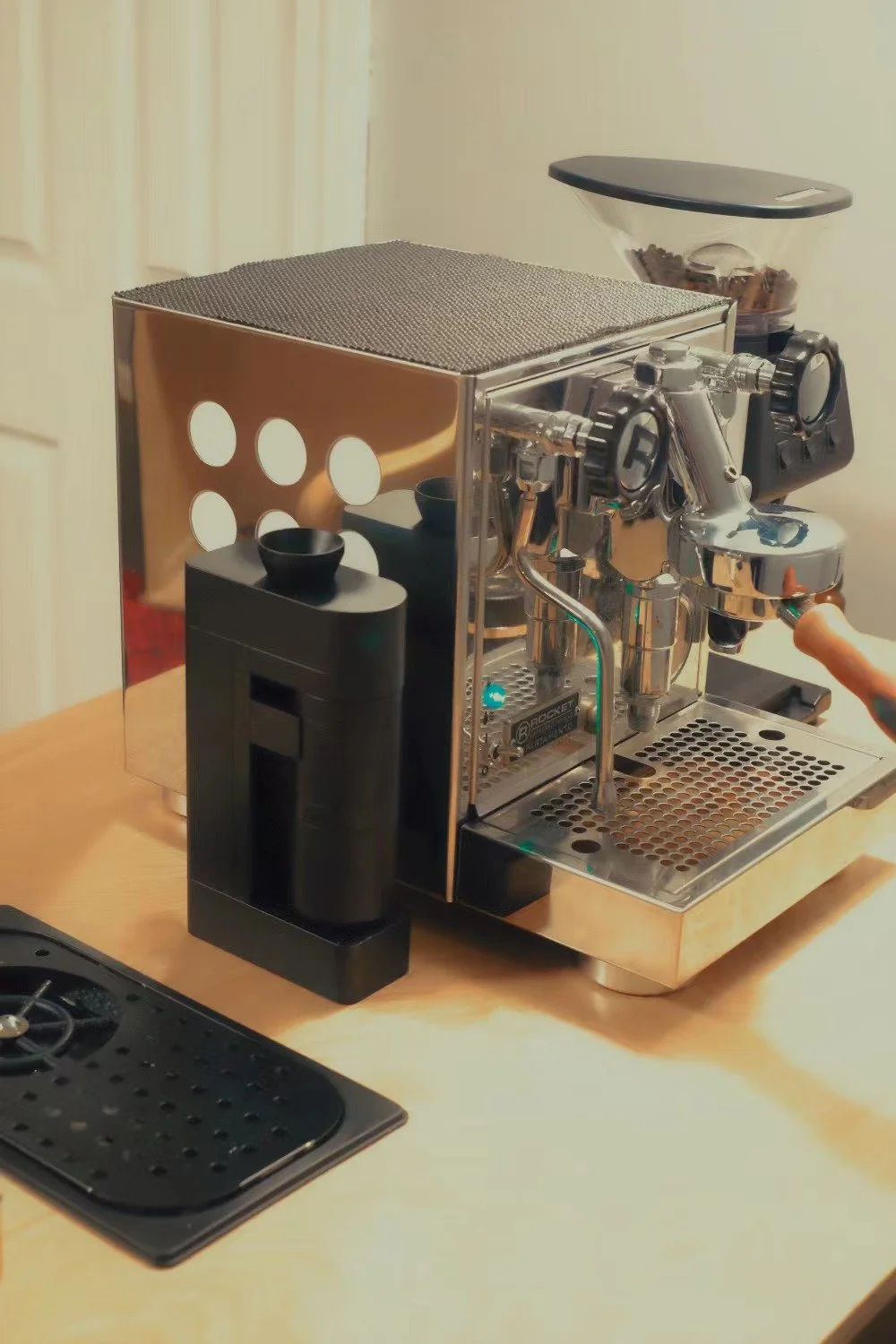
| Feature | Blade Grinder | Burr Grinder |
|---|---|---|
| Grinding Method | Shatters beans with a spinning blade | Crushes beans between two burrs |
| Grind Consistency | Highly inconsistent (dust and boulders) | Highly consistent and uniform |
| Control | Very little; based on time | Precise; adjustable settings |
| Heat Generated | High, can scorch the beans | Low, preserves coffee flavor |
| Best For | Spices, not coffee | All coffee brewing methods |
If you’re serious about your coffee, a burr grinder isn’t a luxury; it’s a necessity. Now, let’s get to the main event.
So, What Is a Single Dose Coffee Grinder, Anyway?
A single dose coffee grinder is a type of burr grinder designed to grind only the amount of coffee beans you need for one brew at a time, with minimal beans left behind in the grinder. Instead of a large hopper on top that holds a whole bag of beans, you weigh out your desired dose—say, 18 grams for a shot of espresso or 30 grams for a pour-over—and put just that amount into the grinder.
“Single dosing is a philosophy. It’s about treating every single cup of coffee as a unique experience, with maximum freshness and intention. It puts the brewer in complete control.” – Isabella Rossi, Certified Q Grader and Barista Champion
The core principle behind a what is a single dose coffee grinder is a workflow focused on freshness and precision. Traditional grinders with large hoppers are convenient, but they have a major flaw: the beans sit in the hopper, exposed to air and light, getting staler by the minute. By only grinding what you need, right before you brew, you ensure that every last drop of flavor potential in those beans makes it into your cup.
Hopper Grinders vs. Single Dose Grinders: The Big Showdown
Let’s break down the practical differences.
- Freshness: With a hopper, beans left overnight (or for days) lose their volatile aromatic compounds. With single dosing, your beans stay sealed in an airtight bag until seconds before brewing. Winner: Single Dose.
- Switching Beans: Want to have a decaf in the afternoon after your morning Ethiopian? With a hopper, you’d have to grind out all the old beans, creating waste. With a single dose grinder, you just weigh your new beans and go. It’s perfect for the coffee adventurer. Winner: Single Dose.
- Retention: This is a huge one. “Retention” refers to the amount of ground coffee that gets stuck inside the grinder after a cycle. Hopper grinders can retain several grams of old, stale coffee, which then gets mixed in with your fresh grind the next morning. Single dose grinders are specifically engineered for low retention or zero retention, ensuring what you put in is what you get out. Winner: Single Dose.
- Convenience: For a busy household that drinks the same coffee every day and just wants to push a button, a hopper grinder with a timed dose can be slightly faster in the morning rush. Winner: Hopper Grinder (for some).
Ultimately, the choice comes down to what you value most: ultimate freshness and variety, or push-button speed?
What Features Make a Great Single Dose Grinder?
If you’re sold on the idea, here’s what to look for when shopping. This isn’t just a list of specs; it’s a guide to how these features translate into better coffee in your cup.
1. Grind Settings: Stepped vs. Stepless
This determines how you “dial in” your grind size.
- Stepped: The grinder has a set number of clicks or settings. It’s easy to use and repeatable (e.g., “Setting 15 for my V60”). Good for pour-over, French press, and drip.
- Stepless: You have an infinite number of adjustments between the finest and coarsest settings. This micro-adjustment is essential for espresso, where a tiny change can be the difference between a perfect shot and a sink shot.
For a single dose grinder, especially if you plan to make espresso, stepless is the gold standard.
2. Burr Type, Size, and Material
The heart of the grinder!
- Conical vs. Flat Burrs: This is a deep rabbit hole, but in short: conical burrs often produce a slightly more forgiving grind and are common in all-purpose grinders. Flat burrs are known for producing extremely uniform grounds that can highlight clarity and sweetness, especially in espresso and light roasts. You can learn more in [our complete guide to burr types].
- Burr Size: Bigger is generally better. Larger burrs (typically 64mm and up) grind faster, produce less heat, and often provide better grind consistency.
- Material: Most high-quality burrs are made of hardened steel, which is durable and provides excellent sharpness. Ceramic burrs are also an option; they stay sharp longer but can be more brittle.
3. Low Retention Design
This is the defining feature of a what is a single dose coffee grinder. Look for grinders that advertise “zero retention” or “low retention.” This is usually achieved through:
- A direct, vertical grind path with few places for grounds to get stuck.
- A bellows or knocker to puff out any remaining grounds.
- Angled designs that use gravity to help clear the chamber.
Anything under 0.2 grams of retention is considered excellent for single dosing.
4. Motor Power and Speed (RPM)
A powerful motor can handle light-roast, dense beans without stalling. The speed, measured in RPM (revolutions per minute), is also a factor. Lower RPM grinders often generate less heat and static, which helps preserve the coffee’s delicate flavors and reduces mess.
Tips for Getting the Most Out of Your Single Dose Grinder
So you’ve got your new grinder. Here’s how to master the workflow:
- Get a Good Scale: Precision is key. You’ll need a coffee scale that measures to at least 0.1 grams to weigh your beans accurately.
- Use the Ross Droplet Technique (RDT): Static is the enemy of a clean workflow. To combat it, lightly spritz your beans with a tiny mist of water before grinding. Just a single spray is enough. This dramatically reduces static and helps achieve near-zero retention.
- “Dial In” Your Beans: Every new bag of coffee will require a slightly different grind setting. Don’t be afraid to experiment! Start with a recommended setting for your brew method and make small adjustments until your coffee tastes balanced and delicious. Check out [our guide on how to dial in for espresso].
- Keep It Clean: Even low-retention grinders need regular cleaning. Once a month, run some grinder cleaning pellets through it or disassemble the burrs for a deep clean with a brush. A clean grinder is a happy, long-lasting grinder.
Frequently Asked Questions (FAQ)
Let’s tackle some common questions I hear all the time.
Q: Is a single dose coffee grinder really worth the money?
A: If you value freshness, enjoy trying different types of coffee beans, and want the highest possible quality in your cup, then yes, absolutely. The improvement in flavor and consistency over a standard hopper grinder is significant and immediately noticeable.
Q: Can you single dose with a regular hopper grinder?
A: You can try, but it’s not ideal. Most hopper grinders have high retention, meaning you could have 3-5 grams of old coffee grounds mixing with your fresh dose. You’ll also be fighting more static and an inconsistent output. They simply aren’t designed for it.
Q: What is “zero retention” in a coffee grinder?
A: “Zero retention” is the ideal where the exact weight of beans you put into the grinder is what comes out as grounds. In reality, a tiny fraction of a gram might be retained, but top-tier single dose grinders get incredibly close to this goal, often with retention below 0.1 grams.
Q: How does single dosing improve my coffee’s flavor?
A: It improves flavor in two main ways. First, by using perfectly fresh beans for every brew, you preserve the delicate aromatic oils that degrade quickly when exposed to air. Second, by eliminating retained stale grounds, you ensure your cup isn’t tainted by the bitter, flat taste of old coffee.
Q: Do I need to buy expensive beans to benefit from a single dose grinder?
A: Not at all! A great grinder will make any bean taste better. It will elevate a good-quality supermarket bean to its maximum potential and will allow you to unlock the incredible nuances of a specialty single-origin coffee.
The Final Grind: Is It Right for You?
So, after all that, what is a single dose coffee grinder? It’s a tool for the intentional coffee brewer. It’s for the person who sees their morning coffee not just as a caffeine delivery system, but as a ritual. It’s for the flavor-chaser, the experimenter, and anyone who wants to take full control over their brew and unlock the absolute best that their coffee beans have to offer.
Investing in a quality single dose grinder is one of the most rewarding steps you can take on your coffee journey. It forces you to be more mindful, and it rewards you with unparalleled freshness and flavor clarity.
Now I want to hear from you. Are you a single-doser? What’s your favorite grinder, and what has your experience been? Drop a comment below and let’s talk coffee.